
Rental Property Inspection in Sacramento: The Landlord’s Complete Guide

Updated: Jun 16
What if the only thing standing between a routine check and a $500 penalty was simply knowing which side of the city line your property sits on? For many owners, managing a rental property inspection in Sacramento feels like walking a tightrope between shifting government mandates and tenant privacy laws. It is easy to feel overwhelmed by the subtle differences between City and County programs, especially when a single oversight can lead to a mandatory $164 re-inspection fee or a frustrating code enforcement audit.
We understand that you want to be a proactive, compliant landlord without the constant anxiety of a surprise inspection. This guide is designed to help you master the complexities of Sacramento’s mandatory programs while teaching you how to protect your investment through professional-grade walk-throughs. You'll learn how to navigate the Rental Housing Inspection Program (RHIP) with confidence, minimize your deferred maintenance costs, and create the clear documentation necessary to justify security deposit retentions. We will walk through the specific jurisdictional rules and the best practices for maintaining a positive, transparent relationship with your tenants throughout the process.
Key Takeaways
Identify the specific requirements for City versus County mandatory programs to ensure your property remains fully registered and compliant with local habitability standards.
Master the four essential types of walk-throughs, from move-in baselines to seasonal checks, to protect your physical asset and minimize long-term maintenance costs.
Learn how to use a comprehensive rental property inspection sacramento checklist to verify life safety systems and catch minor leaks before they lead to mold or structural damage.
Navigate California’s strict notice of entry laws to maintain professional boundaries with tenants while exercising your right to inspect and maintain the premises.
Discover how professional management tools, such as digital owner portals and real-time reporting, provide the meticulous documentation needed for security deposit justifications.
Table of Contents
Understanding Sacramento’s Mandatory Rental Housing Inspection Programs (RHIP)
Every residential rental property in the region is subject to the Rental Housing Inspection Program, commonly known as RHIP. This isn't just a suggestion or a simple registration; it's a mandatory oversight program designed to ensure every rental unit meets basic health and safety standards. The core objective is simple: ensuring habitability and code compliance for all residents. Whether you own a single-family home or a multi-unit complex, a rental property inspection sacramento official will eventually be part of your management lifecycle. Staying ahead of these requirements is the best way to avoid the stress of a surprise code enforcement audit.
Registration is the first step for any owner. In 2026, the process remains streamlined but strictly enforced. If you fail to register your property, you risk significant administrative penalties. Beyond the initial registration, the program involves periodic inspections to verify that life-safety systems, plumbing, and structural elements are in good repair. For those who keep their properties in top shape, the rewards include lower fees and less frequent government visits. However, if you ignore these mandates, you'll likely face increased audit frequency and higher costs for non-compliance.
City of Sacramento vs. Sacramento County Jurisdiction
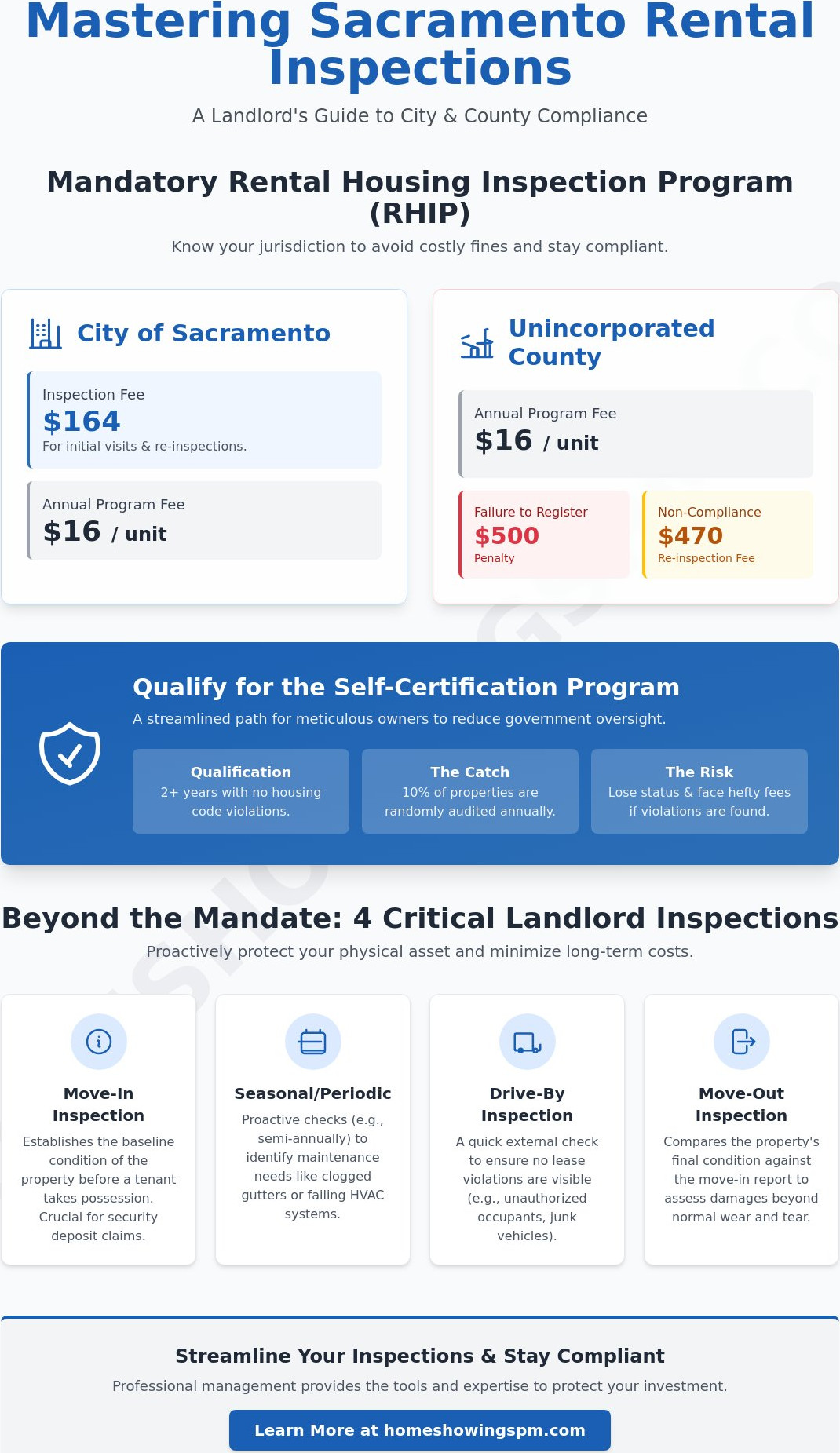
Determining whether your property falls under the City or the unincorporated County jurisdiction is vital because the rules and fees aren't identical. Properties within the City of Sacramento are subject to a $164 inspection fee for initial visits and re-inspections. In contrast, properties in unincorporated Sacramento County are assessed an annual program fee of $16 per unit, often through the county utility bill. Understanding these local nuances is a fundamental part of mastering landlord-tenant law as it applies to your specific investment. If you aren't sure which department to contact for billing or scheduling, check your property tax statement or the local assessor’s portal to confirm your exact jurisdiction.
Qualifying for the Self-Certification Program
If you're a meticulous owner, the Self-Certification Program is your best friend. This program allows qualified landlords to perform their own inspections and certify that their units meet code requirements, significantly reducing government oversight. To qualify, your property must have a clean track record with no housing code violations for at least the last two years. While this exempts you from routine government-led rental property inspection sacramento cycles, it doesn't mean you can relax your standards. The city and county both conduct random audits on roughly 10% of self-certified properties annually. If an auditor finds a violation during a random check, you'll lose your self-certification status and face hefty re-inspection fees, which can reach $470 in the county for non-compliance.
City Fee: $164 initial inspection or re-inspection fee.
County Fine: $500 penalty for failing to register a rental property.
County Re-inspection: $470 fee if corrections aren't made within the allotted time.
Annual Fee: $16 per unit, per year, for both City and County programs.
The 4 Critical Types of Inspections Every Sacramento Landlord Needs
While the government mandates discussed in the previous section ensure your property meets basic codes, they don't necessarily protect your bottom line. A comprehensive strategy for a rental property inspection sacramento involves four distinct phases that track the property's lifecycle. These go beyond checking for smoke detectors; they are about documenting the health of your investment and managing tenant expectations from day one. Implementing a structured schedule allows you to stay ahead of repairs and maintain a clear paper trail for any future disputes.
Move-In Inspections: This is your baseline. It establishes the exact state of the home before the tenant takes possession, ensuring there's no ambiguity about pre-existing damage.
Periodic (Seasonal) Inspections: We recommend these every six months. They allow you to spot slow leaks, HVAC issues, or unauthorized occupants before they become expensive headaches.
Drive-By Inspections: These are low-impact checks of the exterior. They help you ensure the yard is being maintained and that the property isn't violating neighborhood blight ordinances or HOA rules.
Move-Out Inspections: This is the final audit where you compare the current state to your move-in baseline to determine if security deposit deductions are necessary.
If you find yourself struggling to keep up with these schedules, our team at Home Showings Property Management can handle the entire oversight process for you, ensuring your asset is never left to chance.
The Move-In/Move-Out Comparison
In California, photo and video evidence is no longer just a "best practice"; it's essential for defending your security deposit justifications. Using a formal "Statement of Condition" form ensures both parties agree on the property's state at the start. You should also remember that tenants have a legal right to request an "initial inspection" up to two weeks before they vacate. This walk-through gives them a chance to fix identified issues, which often results in the property being returned in better condition and reduces the need for contentious deductions later.
Periodic Maintenance Walk-Throughs
A six-month inspection cycle is the sweet spot for Sacramento rentals. This timing allows you to check high-liability areas like water heaters and HVAC filters before the peak summer heat puts stress on your systems. During these walk-throughs, your goal is to distinguish between normal wear and tear, such as slightly faded paint, and tenant-caused damage, like a cracked window. Following the guidelines in California Civil Code § 1954 ensures you respect tenant privacy while performing these vital checks. Catching a small under-sink leak today can save you thousands in mold remediation and flooring replacement tomorrow.
Essential Rental Property Inspection Checklist for Sacramento Landlords
A successful rental property inspection sacramento requires more than a casual walk-through. It is about looking for the small indicators of future liabilities that a tenant might overlook or fail to report. While the mandatory RHIP program focuses on basic code compliance, your personal checklist should aim for total asset preservation. If you catch a slow drain today, you avoid a plumbing emergency on a holiday weekend. Using a structured approach ensures you don't miss the subtle signs of wear that lead to costly repairs.
Start with your life safety systems, as these are non-negotiable for habitability. You must test every smoke alarm and carbon monoxide detector to ensure they're functional and have not reached their expiration date. If your property includes a fire extinguisher, check the pressure gauge and the "last serviced" date. Pro Tip: Always verify that your water heater is double-strapped in the upper and lower thirds. This is a strict California seismic code requirement and a common point of failure during official government audits.
Next, focus on the kitchen, baths, and mechanical systems. Look inside cabinets for moisture or warped wood, which often signal active under-sink leaks. Check that all GFCI outlets near water sources trip and reset correctly to prevent electrical hazards. In the HVAC closet, verify that the filter is clean. A clogged filter doesn't just hurt air quality; it can cause the entire system to fail during a 105-degree Sacramento heatwave, leading to an expensive emergency service call.
Maintaining the appearance of your kitchen storage is also key for attracting high-quality tenants; to learn more about professional restoration options, visit Cabinet refinishing Denver.
Interior Habitability Standards
Security is a major habitability pillar that affects your liability. Check every window and door lock to ensure they operate smoothly and provide a tight seal. If a window is painted shut, it's an egress violation that must be corrected immediately. Inspect the flooring for any trip hazards, such as loose carpet or buckled laminate. If you provide appliances like a stove or refrigerator, run a quick cycle to confirm they're in good repair and meeting the latest state habitability requirements.
Exterior and Curb Appeal Checks
Sacramento's climate is notoriously tough on exteriors. Our wet winters and blistering summers can cause paint to peel and wood to rot if left unmanaged. Inspect the siding for signs of wood-destroying organisms or dry rot, especially near the ground level. Check the irrigation system to ensure water isn't spraying directly against the foundation or fence, which can lead to structural decay. Maintaining curb appeal isn't just about staying in favor with an Elk Grove HOA; it's about protecting the building's envelope from the elements year-round.
Navigating Tenant Rights and Notice of Entry Requirements
Maintaining your property requires access, but in California, that access is strictly regulated to protect a tenant’s right to privacy. If you enter a unit without following the specific protocols outlined in California Civil Code Section 1954, you risk legal friction and a breakdown in the landlord-tenant relationship. A rental property inspection sacramento must be conducted with a clear understanding of these boundaries. Balancing your need for asset preservation with the tenant's right to quiet enjoyment is a delicate task that requires both legal knowledge and professional empathy.
If a tenant refuses entry despite you providing proper notice, it's best to avoid a direct confrontation. Instead, document the refusal and attempt to communicate the necessity of the visit. Often, anxiety stems from a lack of information rather than a desire to hide violations. If the situation remains at an impasse, you may need to seek legal counsel or mediation. However, most conflicts can be avoided by simply adhering to a consistent, transparent notice process that respects the tenant's schedule and privacy.
Proper Notice Procedure in 2026
To legally enter a unit for a non-emergency rental property inspection sacramento, you must provide at least 24 hours' written notice. This document must include the date of entry, an approximate time window, and the specific purpose for the visit. Acceptable delivery methods include handing the notice directly to the tenant, leaving it with a responsible person of suitable age at the property, or posting it on the front door. If you choose to mail the notice, you must add an additional six days to the lead time to account for delivery. All non-emergency entries must occur during normal business hours, which generally means Monday through Friday, 8:00 AM to 5:00 PM.
Building Positive Tenant Relationships through Transparency
The most effective way to handle inspections is to frame them as a benefit to the resident. When you explain that the walk-through is designed to keep their home safe and functional, resistance often disappears. We recommend using digital portals to share results and photos with your tenants immediately after the visit. This transparency builds trust and encourages them to report minor issues, like a dripping faucet or a loose handle, before they escalate. If you would prefer a professional team to manage these communications and ensure total legal compliance, contact Home Showings Property Management today to see how we streamline the process.
How Professional Management Streamlines the Inspection Lifecycle
Managing a rental property inspection sacramento schedule while balancing a full-time career or personal life is a heavy lift. It isn't just about showing up with a clipboard; it's about knowing exactly what the City or County auditors are looking for before they arrive. Professional management transforms this high-stress obligation into a routine, automated process. By placing your property in the hands of a local expert, you ensure that every mandate is met and every maintenance detail is documented without you ever having to step foot on the premises.
Our "boots-on-the-ground" presence in Sacramento and Elk Grove means we're never more than a short drive away from your asset. This local proximity is paired with a tech-savvy approach. We use modern owner portals that provide real-time access to inspection reports, high-resolution photos, and maintenance logs. If an issue is discovered during a walk-through, you'll see the evidence immediately. This level of transparency eliminates the anxiety that often comes with property ownership. You're always in the loop, but never in the weeds.
Real-Time Reporting: Instant access to digital walk-throughs via our secure portals.
Vetted Vendors: Immediate coordination of repairs through trusted, local professionals.
Compliance Oversight: 100% adherence to all RHIP mandates to avoid costly fines.
Asset Preservation: Catching minor issues early to prevent expensive system failures.
The Home Showings Property Management Advantage
We've developed a systematic approach to property preservation that goes far beyond the basics. We handle the complex "Self-Certification" paperwork and compliance requirements for both City and County programs so you don't have to navigate government portals or track registration deadlines. If a repair is needed, we coordinate it immediately through our vetted vendor network. This ensures work is completed by professionals who understand local codes and won't overcharge for simple fixes. Our goal is to provide a narrative of total coverage, where every detail of your investment is managed with meticulous care.
Ready for a Worry-Free Rental Experience?
The transition from the daily grind of self-management to professional oversight often feels like a weight being lifted. Regular, professional inspections lead to higher tenant retention because residents feel their home is being cared for and kept safe. More importantly, it preserves the long-term value of your asset by catching small problems before they become catastrophic failures. If you're ready to trade anxiety for controlled stability and professional results, Protect your Sacramento investment-schedule a consultation today!
Secure Your Investment Through Proactive Oversight
Mastering the rental property inspection sacramento process doesn't have to be a source of constant stress. By understanding the specific mandates of the City and County RHIP programs and implementing a structured four-phase inspection cycle, you've already taken the most important steps toward protecting your asset. You now have the tools to document property conditions meticulously, respect tenant privacy rights, and catch maintenance issues before they turn into major liabilities.
Success in this industry comes down to consistency and local expertise. Whether you're navigating the self-certification process or coordinating a complex repair after a seasonal walk-through, having a steady hand at the helm makes all the difference. We provide the "boots-on-the-ground" knowledge and tech-savvy systems, like secure digital owner portals and comprehensive maintenance coordination, to ensure your property remains a high-performing investment. This level of oversight turns potential headaches into a predictable, well-ordered process that benefits both you and your tenants.
If you're ready to move from reactive management to proactive stability, we're here to help. Get a Professional Property Management Quote for Your Sacramento Rental and discover how a partnership built on transparency can transform your ownership experience. Your investment deserves the highest level of care, and we're ready to provide it. You can rest easy knowing every detail is being managed by local professionals who care about your success.
Frequently Asked Questions
Is a rental inspection mandatory in the City of Sacramento?
Yes, participation in the Rental Housing Inspection Program is mandatory for all residential rental properties within the City of Sacramento. Owners must register their units and pay the annual program fee to remain compliant with local housing codes. Failing to register can result in administrative penalties and a higher likelihood of a government-led rental property inspection sacramento to verify the safety and habitability of the unit.
How much does the Sacramento Rental Housing Inspection Program cost?
The program costs include a $16 annual fee per rental unit, which applies to both City and unincorporated County properties. In the City of Sacramento, the unit inspection fee is $164 for initial visits and any necessary re-inspections. These fees are designed to cover the administrative costs of code enforcement and ensure that all local housing stock meets established health and safety standards.
What happens if my rental property fails a Sacramento County audit?
If your property fails a Sacramento County audit, you'll be required to correct the violations and pay a cost-recovery re-inspection fee of $470. Additionally, properties that fail audits or routine checks are typically disqualified from the Self-Certification Program for at least two years. This means your investment will be subject to more frequent government oversight until you demonstrate a consistent track record of compliance.
Can a tenant refuse a property inspection in California?
A tenant cannot legally refuse a rental property inspection sacramento if you have provided at least 24 hours' written notice for a permitted reason. Under California law, a government-mandated inspection is a valid reason for entry. If a tenant still refuses, it's best to document the interaction and explain the legal necessity of the visit rather than attempting to force entry without professional assistance.
How often should a landlord inspect a rental property in Elk Grove?
We recommend that landlords in Elk Grove and the surrounding Sacramento area conduct a thorough interior inspection at least every six months. While the RHIP may only require government visits every few years, semi-annual checks allow you to catch small leaks or HVAC issues before they become expensive. This frequency balances your need for asset protection with the tenant's right to quiet enjoyment of their home.
What is the difference between normal wear and tear and damage?
Normal wear and tear refers to the expected decline in a property's condition due to everyday use, such as worn carpet in high-traffic areas. Damage is the result of negligence, abuse, or accidents, such as a cracked window or a hole in the drywall. Distinguishing between the two is vital when determining security deposit deductions and ensuring your documentation stands up to legal scrutiny.
Do I need to be present for a City of Sacramento RHIP inspection?
You or an authorized representative, such as a professional property manager, must be present to provide the inspector with access to the unit. The inspector will need to verify interior safety features like smoke alarms and plumbing. Having a manager present is often beneficial as they can immediately discuss any findings with the official and begin coordinating necessary repairs to avoid a failed report.
How do I register my new rental property with the City of Sacramento?
You can register your property through the City of Sacramento’s online portal or by submitting a paper registration form by mail. You'll need to provide property details, owner contact information, and pay the $16 per unit annual fee. Keeping your registration current is the only way to remain eligible for the Self-Certification Program, which can save you significant time and money on routine government inspections.


Comments