
Roseville Rental Property Security Deposit Disputes: When Deposits Are Due Back

A security deposit isn't a blank check for move-out costs. In Roseville rental property security deposit disputes, California landlords must return the deposit or provide an itemized statement of deductions within 21 days after the tenant moves out, according to California Legislative Information. Deductions may cover certain unpaid rent, cleaning needed to restore the unit to its move-in level of cleanliness, and tenant-caused damage, but not normal wear and tear.
It’s understandable to question a cleaning charge or repair bill when the line between ordinary use and damage feels unclear. The key is whether the charge complies with California rules and is supported by an accurate record of the property’s condition and the work performed.
This article explains what landlords may deduct, the deadline for returning a deposit, and why carpet cleaning and normal wear and tear often lead to disputes. It also covers how clear move-in and move-out records help both sides understand the final accounting.
Table of Contents
What Can the Landlord Deduct From Your Security Deposit?
California landlords may use a security deposit for specific move-out costs, including unpaid rent, unpaid utility bills, eligible cleaning, and tenant-caused damage. Clear records of the rental’s condition help show whether a claimed cost relates to a new problem or a condition that existed at move-in.
Move-In Condition Records
Move-in condition records document the rental’s condition when the tenant takes possession, using written notes and photographs. They matter because a landlord needs to distinguish existing wear from damage that occurred during the tenancy. For example, a photo of a cracked tile at move-in can clarify a later repair claim. A landlord’s detailed inspection record also helps connect each proposed charge to the unit’s actual condition.
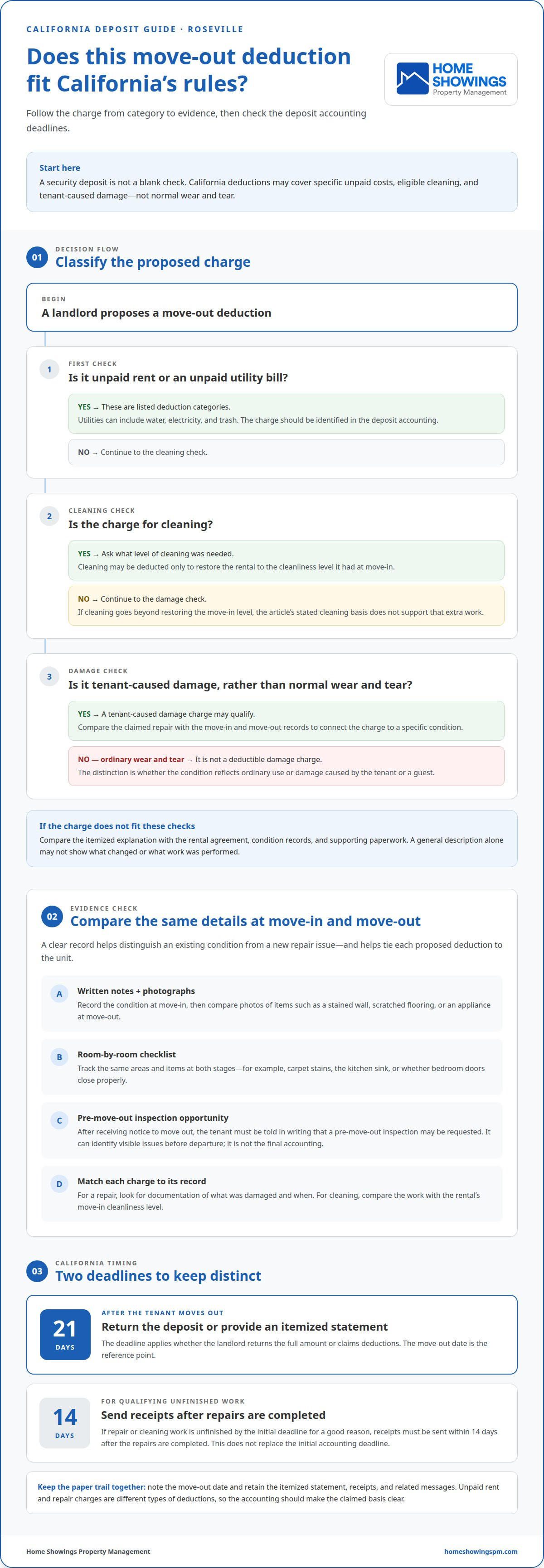
After receiving notice to move out, California landlords must tell tenants in writing that they may request a pre-move-out inspection. This gives the tenant a chance to learn about potential deductions before leaving. The landlord can point out visible issues, such as a damaged cabinet door, and the tenant can address items where appropriate. The inspection is not the final accounting; the property’s condition must still be assessed at move-out.
Photographs add useful detail to written records. A landlord can compare images of a stained wall, scratched flooring, or an appliance with the move-in record. This evidence can help show whether repairs address damage caused by a tenant or guest, rather than ordinary use. Specific records connect a repair charge to a particular condition instead of relying on a general description.
Move-In and Move-Out Checklists
A move-in and move-out checklist records the same areas at both stages of a tenancy. Comparing entries helps the landlord and tenant identify changes, such as a missing window screen or a new hole in a door. The checklist is most useful when it describes individual rooms and items instead of applying a broad label like “good condition.”
For example, a checklist might note visible stains on the living-room carpet, the kitchen sink’s condition, and whether each bedroom door closes properly. At move-out, the landlord can record changes to those same features. Photos paired with checklist notes can help distinguish a pre-existing mark from a new repair issue.
These records also help keep deposit deductions tied to eligible costs. A landlord may deduct unpaid rent or utility bills, including water, electricity, and trash. Cleaning charges may cover only the work needed to return the rental to the cleanliness level it had at move-in. A checklist of the initial condition gives both parties a concrete basis for evaluating those charges.
When a dispute arises, compare each proposed deduction with the agreement, inspection notes, photographs, and checklist entries. For a repair on the final accounting, the records should help identify what was damaged and when. Without a move-in record, that comparison can be harder. A consistent paper trail gives the landlord and tenant a clearer basis for discussing the deposit.
Security deposit return deadlines
In California, a landlord must return the security deposit or provide an itemized statement of deductions within 21 days after the tenant moves out, according to California Legislative Information. The deadline applies whether the landlord returns the full amount or claims deductions.
Deposit Return and Claim Deadlines
A deposit deadline sets when the landlord must send the money or explain deductions after the rental ends. It matters because an unpaid balance or a repair claim doesn’t remove the duty to account for the deposit on time. For example, a landlord claiming costs for damage still needs to provide the required statement within California’s 21-day period.
The move-out date is the key reference point for California’s deadline. A tenant who returns keys and leaves the rental unit should keep a record of that date, such as a written handover message. That record can help clarify when the 21-day period began if the landlord and tenant disagree about timing. The date also helps both sides organize communications about unpaid rent, repairs, or other proposed deductions.
California Return Timing
California’s 21-day rule requires the landlord to return the deposit or send an itemized deduction statement after move-out. This gives tenants a clear point to compare against the date they left the rental unit. If the landlord deducts money, the statement identifies the claims affecting the amount returned, rather than leaving the tenant to guess why the full deposit wasn’t sent.
Some repair or cleaning work may remain unfinished when the 21-day period ends, if there’s a good reason. In that case, the landlord must send receipts within 14 days after completing the repairs. This later receipt deadline applies to that unfinished work; it doesn’t replace the initial accounting deadline. Keeping the statement and later receipts together helps show how an estimate became a final charge.
Tenants should note the move-out date and keep the landlord’s statement, receipts, and related messages. If the statement lists a repair, compare its description with the property’s condition and any supporting documents. Unpaid rent is different from a repair charge, so the itemization should make clear what type of deduction is claimed.
Wisconsin uses a separate rule, so its deadline shouldn’t be substituted for California’s. In Wisconsin, a landlord generally must send the deposit or an itemized list of deductions within 21 days of the applicable lease-ending or vacancy event. The qualifying event can vary, including certain early move-outs or evictions. Roseville tenants should apply California’s move-out deadline, not Wisconsin’s separate event-based timing.
Permitted security deposit deductions
California landlords may deduct certain unpaid rent, eligible repair costs, and other permitted charges from a security deposit. Tenants can assess each charge by reviewing its stated reason and supporting records.
To send a security deposit demand letter in California, a tenant can write to the landlord identifying the rental, move-out date, deposit, and amount requested. Keep a copy and delivery record with the itemized statement and related correspondence.
Rent, Damage, and Lease Charges
Permitted deductions cover specified debts and costs connected to the rental agreement or damage caused by the tenant or guests. A charge in the lease alone doesn’t make every expense deductible. Unpaid rent, for example, differs from a repair for tenant-caused damage, and ordinary wear isn’t a damage charge.
California Civil Code section 1946.7 provides a specific protection for certain early lease endings. According to California Legislative Information, when a tenant gives written notice ending a rental agreement early because they or someone they live with was a victim of violence in the previous 180 days, the deposit cannot be used as an early-termination penalty or for rent after the lease ends.
A landlord may charge to restore or replace furniture or other personal items only if the rental agreement includes those items and the damage exceeds normal wear and tear. If the landlord or an employee performs the repair, the itemized statement must describe the work, time spent, and hourly rate. The rate must be reasonable.
Itemized Deductions and Repair Receipts
An itemized statement breaks the amount withheld into identifiable charges and explains the work or debt behind each one. This lets a tenant compare each line with the rental agreement, records, and evidence of the property’s condition, rather than respond to one unexplained total.
For deductions exceeding $125.00, California Legislative Information says the landlord must attach copies of invoices or receipts to the itemized statement. For landlord-performed repairs, the statement must also describe the work, time, and hourly rate.
Previous-tenant records follow a separate Wisconsin rule, not California’s. In Wisconsin, a landlord who receives a tenant’s request for the previous tenant’s security deposit deductions must provide the list within 30 days or seven days after notifying the previous tenant of deductions, whichever is later. That rule concerns Wisconsin rentals, so it shouldn’t be applied to a Roseville tenancy.
Normal wear and tear and carpet cleaning
California landlords may deduct repair costs for damage caused by a tenant or guest, but not for ordinary wear and tear. For cleaning, the standard is the rental’s cleanliness at move-in, not a new or improved condition. This distinction matters when a move-out statement includes carpet cleaning or repair charges.
Normal wear and tear is deterioration from ordinary use over time. Examples can include minor scuffs in a frequently used hallway or carpet fibers compressed where people regularly walk. These differ from a fresh burn mark, a deep tear, or a large hole caused by a tenant or guest. The cause and condition matter more than simply labeling an item “damaged.”
A useful comparison starts with the carpet’s move-in condition and ends with its condition at move-out. If it was clean when the tenant arrived but has new, substantial stains at departure, cleaning may be needed to restore its prior cleanliness. If it shows only ordinary wear, a landlord cannot treat routine deterioration as tenant-caused damage. Move-in photos, inspection notes, and a specific description of the cleaning help explain the difference.
Carpet cleaning is not automatically a valid deduction just because the lease has ended. In California, a landlord may deduct move-out cleaning costs only to return the rental to the cleanliness level it had at move-in. If the carpet was already stained, for example, charging the departing tenant to make it spotless would go beyond restoring its original condition. New spills that leave the carpet dirtier may, by contrast, support a reasonable cleaning charge tied to that change.
Repair claims depend on the cause as well. A small mark consistent with normal use differs from a broken fixture or damaged flooring caused by careless handling. A landlord should connect the repair to the tenant’s or guest’s actions, not charge for routine upkeep or pre-existing issues. Tenants can compare the claim with dated move-in and move-out records.
For a carpet dispute, consider three points: its initial condition, the visible change at move-out, and the work needed to restore it, not upgrade it. A cleaning charge should address that difference, while a repair charge should identify damage beyond ordinary wear. This framework helps both sides distinguish normal use from a condition that warrants a deposit deduction.
California security deposit basics
For a Roseville rental, the deposit cap depends on whether the unit is furnished or unfurnished. California’s statewide rules also set a return deadline and explain how tenants can pursue a dispute.
A landlord must return a tenant’s security deposit or provide an itemized statement of deductions within 21 days after the tenant moves out, according to California Legislative Information. California’s statewide deposit limits are the rules to apply to the cap in Roseville; the furnished status determines the maximum.
California Deposit Limits
California limits residential security deposits based on whether the rental is furnished. Tenants can compare the proposed deposit with the rent and the unit’s furnishings before signing an agreement.
For an unfurnished rental, a landlord may hold up to two times the rent amount. Furnished rentals may be subject to a higher security-deposit limit than unfurnished rentals. These are maximums, not required deposit amounts.
When reviewing a proposed deposit, first identify whether the unit is furnished, then compare the amount with the applicable rent-based cap. Reviewing the lease and the unit’s furnishings can help you assess which limit may apply. Keep the signed agreement and payment records together to document the amount requested and paid.
Roseville Rules Beyond State Law
For the deposit cap and return timing covered here, Roseville renters should use California’s statewide rules. The furnished or unfurnished status sets the cap, while the 21-day move-out deadline sets when the deposit or itemized statement is due.
That statewide framework also gives tenants a path to challenge a disputed deposit. A tenant may sue for up to $12,500 in small claims court over a security deposit dispute, according to the Judicial Council of California. The amount is a court limit, not an automatic award; the claim still concerns the deposit dispute itself.
Keep the lease, proof of the deposit payment, move-out date, itemized statement, and messages about deductions together. If a tenant disagrees with a charge, these documents show the amount paid, the landlord’s explanation, and the timing. Written records are especially useful when a dispute involves several deductions rather than one clearly identified cost.
California tenants may also seek damages of up to two times the security deposit if a landlord retained it in bad faith. This potential remedy is separate from the deposit amount itself. For a Roseville dispute, organize the timeline and documents before deciding whether to pursue a claim.
Home Showings Property Management: Rental Marketing
Home Showings Property Management manages the rental process through rental marketing, tenant screening, rent collection, and property management. For owners preparing to rent a home, coordinated marketing and screening support a clear start to the tenancy, while consistent rent collection keeps payment records organized. Those records can help when questions arise about unpaid rent or a deposit accounting.
Security deposit rules still apply regardless of who manages the rental. Clear records of the agreement, payments, inspections, and move-out accounting help owners handle each tenancy with care. If you’d like support with the rental process, contact Home Showings Property Management.
Make Rental Records Part of a Stronger Plan
Treat deposit documentation as part of an ongoing rental management process, not an isolated move-out task. For owners, that means keeping tenancy records organized as decisions happen, so details remain accessible when questions arise. A consistent system also makes it easier to manage responsibilities throughout the rental.
That forward-looking approach can reduce confusion for both owners and tenants, while keeping communication grounded in records rather than recollection. If Roseville rental property security deposit disputes have prompted you to rethink how your rental is managed, consider putting a more organized process in place before the next tenancy begins.
Contact Home Showings Property Management to discuss support for your rental. A steady, well-organized approach can help you move ahead with greater confidence.
Frequently Asked Questions
What Happens if I Do Not Give the Security Deposit Back?
A tenant can challenge a landlord’s failure to return the deposit or explain deductions, and may pursue the dispute in small claims court. A tenant may sue for up to $12,500 over a security deposit dispute, according to the Judicial Council of California. In Roseville rental property security deposit disputes, keep the lease, payment records, and landlord communications together. If the landlord kept the deposit in bad faith, the tenant may also seek damages of up to two times the deposit.
Can the tenant use their deposit to pay for previous month’s rent?
A tenant shouldn’t treat the security deposit as automatic payment for a previous month’s rent. A landlord may deduct unpaid rent from the deposit, but that doesn’t mean the tenant’s rent obligation disappears before the landlord accounts for the deposit. If rent remains unpaid, for example, keep payment records and discuss the balance in writing. The lease and any written agreement about applying the deposit provide important context.
Do Security Deposits Include Fees and Prepaid Rent?
A security deposit, a fee, and prepaid rent are different payment categories, so the lease and payment records should identify each separately. A refundable deposit is held against permitted tenancy costs; rent paid ahead applies to a rental period. A receipt that labels a payment “last month’s rent,” for example, helps distinguish it from a security deposit. Review the agreement and receipts together before deciding what amount is subject to deposit accounting.
How Should a Tenant Protect Their Security Deposit?
Keep the signed agreement, deposit receipt, rent payments, landlord messages, and condition evidence together. Save move-in photos in a dated folder and keep the original files, rather than relying only on edited copies. At move-out, retain the landlord’s itemized statement and any receipts or messages explaining charges. These records help connect each deduction to a specific payment, condition, or communication if questions arise.
How can I prove that I did not cause the damage?
Use records to show that a condition existed before the tenancy or that the reported damage differs from the move-out condition. A dated move-in photo of a chipped countertop, paired with a written inspection note, can help challenge a charge for that same chip. Keep unaltered images and related messages together. A dated written account from someone who witnessed the condition can add context, though it doesn’t replace the property records.
What Should Tenants Do Before Leaving an Apartment?
After giving notice, read the landlord’s written information about a pre-move-out inspection and request one if you want to identify potential issues before leaving. Record the property’s final condition, including areas that could lead to a cleaning or repair claim. Keep a copy of your move-out communication and key-return record. These records help establish the timeline and condition for the final deposit accounting.
Which Roseville, California laws govern rental security deposits?
California’s statewide security-deposit rules govern the deposit issues discussed for Roseville rentals. California Civil Code section 1946.7 also addresses a tenant’s written early termination notice in certain violence-related circumstances. Keep the rental agreement and any notice in writing, since the details of the lease ending can affect how the deposit is treated. A local question beyond these deposit rules should be considered separately from the statewide requirements.
What itemized deductions can a Roseville landlord make from a security deposit?
A Roseville landlord may itemize eligible unpaid rent, unpaid utility bills, qualifying cleaning, and repairs for damage caused by a tenant or guest. A charge for a newly broken fixture, for instance, differs from routine upkeep or ordinary deterioration. In Roseville rental property security deposit disputes, specific line items help tenants compare charges with the lease and property records. An itemized statement is more useful than one unexplained total.



Comments