
Roseville Landlord Guide to Pet Deposits, Fees, and Rent

A no-pets rule isn’t the final word for every California rental. A Roseville landlord guide to setting pet policies should begin with the key distinction: landlords can generally prohibit or limit pets, but disability-related assistance animals may require an exception. Pet deposits are part of the security deposit, not a separate nonrefundable charge, while monthly pet rent is permitted.
Clear boundaries around property damage, noise, and other concerns are reasonable, and a written policy can set expectations before a lease is signed. The challenge is defining those rules without applying pet restrictions or charges to assistance animals as if they were pets.
This guide explains when landlords can restrict animals, how disability-related accommodation requests affect a no-pets policy, and how California rules apply to pet deposits and rent. It also covers practical ways to document approvals and set consistent expectations for residents and their animals.
Table of Contents
1. Exceptions to no-pets policies for tenants with disabilities
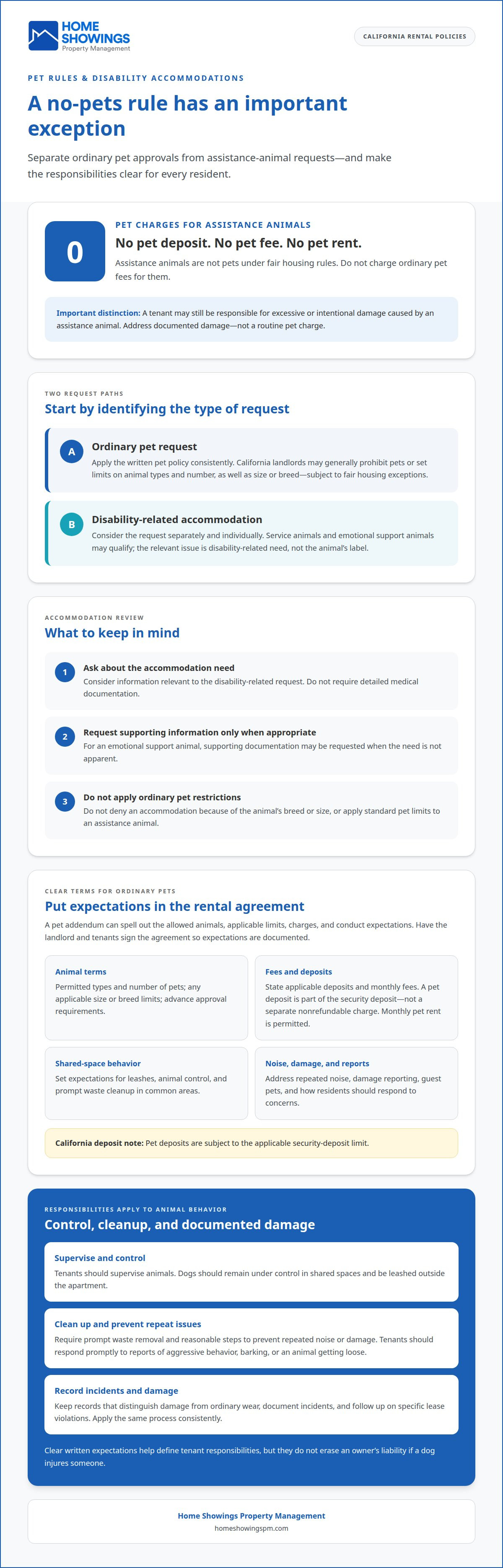
A no-pets clause doesn’t resolve every request involving an animal. Federal fair housing laws prohibit disability discrimination in renting and require reasonable accommodations when needed for equal use and enjoyment of a home. Assistance animals aren’t pets under these rules. A landlord may therefore need to make an exception to a standard pet policy when a tenant with a disability needs an assistance animal.
Handle an accommodation request separately from ordinary pet approval. Ask whether the tenant is requesting an accommodation for a disability-related need, then consider information relevant to that request. You can’t require detailed medical documentation. Supporting documentation may be requested for an emotional support animal when the need isn’t apparent. Don’t deny an accommodation because of an animal’s breed or size, and don’t charge a pet deposit, fee, or pet rent for an assistance animal.
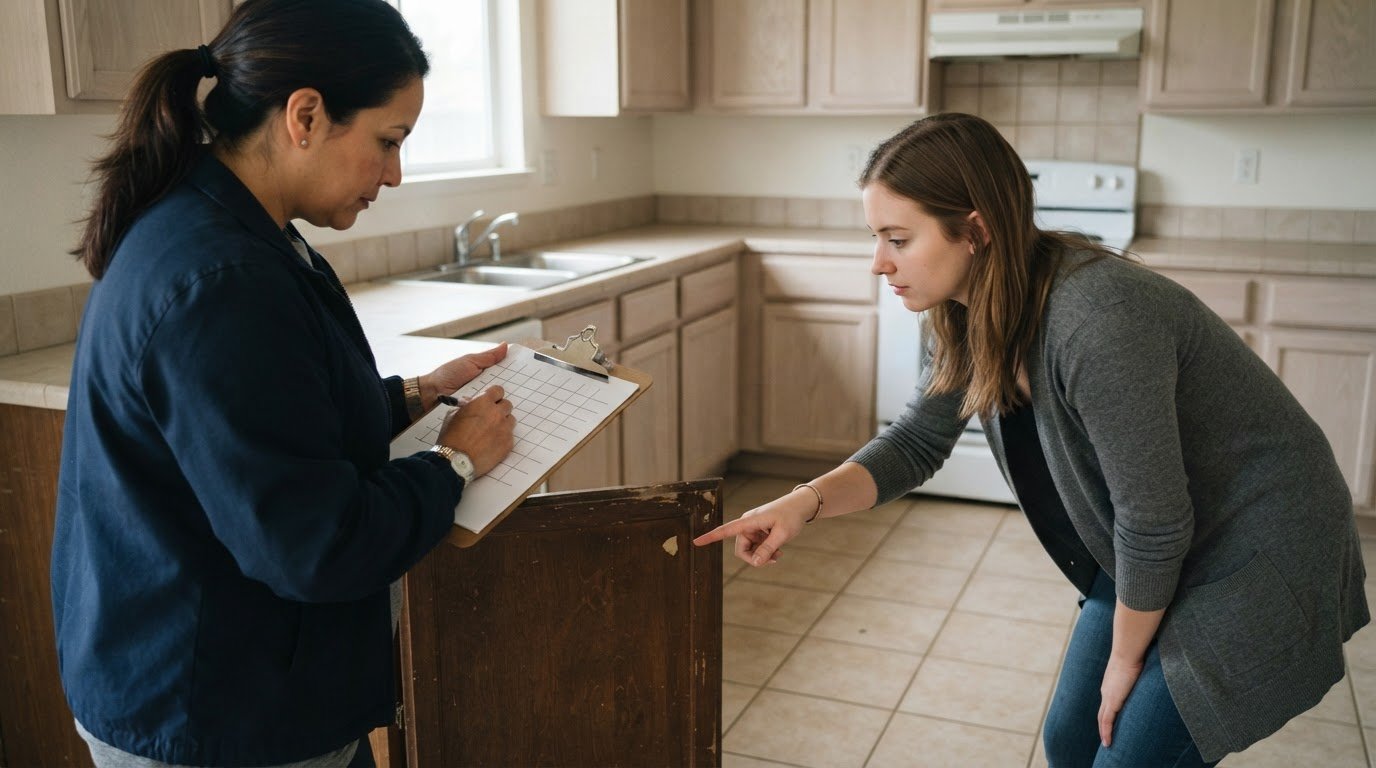
An accommodation doesn’t remove a tenant’s responsibility for an animal’s behavior or damage. A tenant may be required to pay for excessive or intentional damage caused by an assistance animal. For example, if an animal damages a door beyond ordinary wear, address the documented damage rather than charging a routine pet fee. Keep records that distinguish damage from normal use, and apply the same process consistently.
Dog-related injuries can also raise liability concerns for property owners. A written expectation that tenants control their animals can help address practical risks, but it doesn’t erase liability if a dog injures someone. Specify that dogs must remain under control in shared spaces, and require tenants to respond promptly to reports of aggressive behavior, barking, or an animal getting loose. Record incidents and follow up on specific lease violations.
Put care and cleanup duties in writing. Tenants should supervise animals, remove waste promptly, and prevent repeated noise or damage. For example, require residents to pick up dog waste in shared areas and keep dogs leashed outside the apartment. These expectations should apply to approved pets, while assistance-animal requests remain a separate accommodation matter.
Allowing pets can widen the pool of prospective tenants and may support longer tenancies, but it can also bring property damage, allergens, barking, and injury concerns. A balanced policy separates ordinary pet rules from disability-related exceptions, then sets clear conduct expectations for every animal. This gives tenants practical guidance without treating an assistance animal as a fee-generating pet.
2. Allowing, prohibiting, or limiting animals in rentals
Federal Fair Housing laws prohibit disability discrimination in housing and require reasonable accommodations when needed for equal use and enjoyment. In California, landlords may generally prohibit pets or limit their types and number, but those rules must allow for disability-related assistance-animal accommodations. A Roseville landlord guide to setting pet policies should distinguish ordinary pets from assistance animals rather than treating every animal request alike.
Service animals and emotional support animals can qualify as assistance animals under fair housing rules; the relevant issue is the disability-related need, not the animal’s label. A no-pets policy doesn’t automatically resolve an accommodation request. Consider each request individually, avoid applying ordinary pet limits to an assistance animal, and don’t charge pet rent or a pet deposit for it. Detailed medical documentation can’t be required, though supporting documentation may be requested for an emotional support animal when the need isn’t apparent.
For ordinary pets, choose a policy that fits the rental property and apply it consistently. California landlords may set limits on the number of pets, animal types, size, or breed, subject to fair housing exceptions. For example, a lease may require advance approval for a tenant’s dog and state whether cats are permitted. Assessing an individual dog’s behavior and history is another way to evaluate concerns without relying only on breed labels.
A Roseville landlord guide to setting pet policies can also help make the pet addendum more useful. Identify permitted animal types and the number of pets allowed, then state any applicable size or breed limits, deposits, monthly fees, and conduct expectations. Include rules for leashes in shared areas, waste cleanup, noise, guest pets, and damage reporting. For example, specify that residents must remove dog waste from common areas and keep dogs leashed outside their apartments. Have the landlord and tenants sign the agreement so expectations are documented.
If a tenant asks to keep a pet in a no-pets rental, first determine whether the request concerns an ordinary pet or a disability-related accommodation. Apply the written pet policy to ordinary pet requests; handle accommodation requests separately and assess each individually. Keep a record of the request, decision, and any agreed terms, without charging pet fees for an assistance animal.
Clear rental terms also support steadier property oversight: consistent tenant screening can help assess an applicant’s rental history and pet-related information. Friendly rentals may appeal to a wider pool of prospective tenants, while rules for cleanup, control, and property care help define responsibilities. A balanced policy makes the number of pets and the expectations for each animal clear, without confusing pet approval with fair housing accommodations.
3. Why Don't Most Landlords Allow Pets?
Allowing pets can make a rental more appealing to prospective tenants. Pet-friendly rentals may rent more quickly, and households with pets may stay longer. Owners should weigh that potential stability against property damage, allergens, barking, and injuries caused by animals. A practical decision starts with the property’s layout, shared spaces, and likely maintenance concerns, rather than a blanket assumption about every pet.
Some landlords worry that a dog may scratch floors, soil carpets, or disturb neighbors. Others consider whether an animal could trigger allergies or injure someone in a common area. These risks vary by animal and property. A large dog in a small unit, for example, may raise different noise or space concerns than a quiet cat. Clear conduct rules can address specific risks without assuming every animal will cause damage.
Before approving an ordinary pet, gather information about the animal and its behavior. Ask about the pet’s rental history, house training, and any past aggression. Meeting the prospective tenant and pet can offer a chance to observe how the animal responds to people and its surroundings. References from prior landlords may add context. Keep the pet’s name, description, and photo with the rental records to help identify the approved animal later.
Use a signed pet agreement to state permitted animal types, breeds, sizes, and the number of pets. Spell out expectations for supervision, waste removal, noise, and reporting animal-related damage. For instance, the agreement can require tenants to leash dogs in shared areas and pick up waste promptly. Apply ordinary pet terms consistently, while handling fair housing accommodation requests separately.
If an animal appears at the rental without approval, don’t rely on a hallway conversation alone. Record the date, location, and relevant observations, then communicate the concern in writing and refer to the lease terms. A tenant may have a disability-related accommodation request, so determine whether the animal is an ordinary pet or part of such a request before treating it as unauthorized. Keep records of communications and the steps taken to resolve the issue.
A balanced policy can help owners attract tenants while making responsibilities clear before move-in. Pet-friendly rentals may support longer stays, but approval should still reflect the property’s needs and the animal’s circumstances. Documenting the approved pet and signed agreement gives both sides a shared reference if questions arise. The goal is a consistent process that considers rental appeal, specific risks, and fair housing obligations without treating every pet alike.
4. Pet deposits, fees, and monthly pet rent
Separate a refundable pet deposit from monthly pet rent and any proposed one-time pet fee. The name alone doesn’t determine how a charge is treated. Under California Civil Code § 1950.5, a pet deposit is part of the security deposit and is refundable under the same conditions. That means it must fit within the applicable total security-deposit limit, which includes all types of deposits. A separate line in the rental agreement doesn’t make the pet deposit exempt from that limit.
Monthly pet rent is different: California landlords may charge it, and it’s nonrefundable. State the amount and payment schedule in the lease or pet agreement so renters know whether it’s due with monthly rent. For example, the agreement can list the recurring charge separately from the refundable deposit. Don’t describe a deposit as rent or rent as a deposit; each is treated differently when the tenancy ends.
A proposed nonrefundable pet fee needs legal review before it appears in a California lease. Don’t assume that calling a charge a “fee” makes it permissible or exempts it from deposit rules. Consider how the charge functions, what it covers, and the applicable state requirements. Keep the written terms precise, especially if the agreement lists a deposit, monthly pet rent, and another one-time charge.
Set charges only for ordinary pets. Assistance animals aren’t pets under fair housing rules, so landlords shouldn’t charge pet deposits, fees, or pet rent for them. A tenant’s request for an assistance animal must be handled as an accommodation request, not as a reason to add a recurring charge. Keeping these decisions separate helps prevent a standard pet schedule from being mistakenly applied to a disability-related request.
For each approved pet, document the animal covered, the applicable deposit, and any recurring rent in the signed agreement. If a tenant has two approved cats, for example, make clear whether the stated terms apply per animal or to the household. Avoid vague language such as “pet charges may apply.” Specific terms help pet owners and landlords understand what’s owed and when.
Renters’ insurance is another policy consideration, but don’t require tenants to carry it unless state and local law allow that requirement. If insurance is required, its terms should address pet-related incidents rather than exclude them through a dog-bite limitation. Keep the insurance condition separate from pet rent and deposits. This gives the agreement clear, distinct terms for recurring rent, refundable deposits, fees, and insurance restrictions.
5. California pet deposits and pet rent
California’s security-deposit limit applies to the combined deposits a landlord collects, not just the amount labeled “security deposit.” A pet deposit counts toward that total, so it doesn’t create a separate allowance beyond the applicable cap. Add all deposits together before setting a pet-related amount. This calculation matters whether the rental allows one pet or several.
California Civil Code § 1950.5 treats a pet deposit as part of the security deposit, refundable under the same conditions. List it clearly in the agreement, then include it when calculating the total deposit. A separate label or ledger entry doesn’t change its legal treatment. This Roseville landlord guide to setting pet policies emphasizes the distinction so owners can record deposits accurately from move-in through move-out.
Monthly pet rent follows a different rule. California landlords may charge it, and it’s nonrefundable. State the recurring amount and due date separately from base rent and deposits in the lease or pet agreement. For example, list monthly rent and pet rent as separate payment entries, and identify the refundable security deposit apart from both. Clear records help tenants understand what recurs and what may be returned.
When a tenant moves out, handle the pet deposit through the ordinary security-deposit process rather than treating it as a nonrefundable fee. Document the property’s condition and any claimed animal-related damage. Keep move-in and move-out records together so the basis for any deduction is clear. Make this recordkeeping part of the rental process, not an afterthought, as explained in this Roseville landlord guide to setting pet policies.
Pet charges don’t apply to assistance animals as they do to ordinary pets. Fair housing rules distinguish assistance animals from pets, so don’t add a pet deposit, fee, or pet rent for an assistance animal. Keep accommodation decisions separate from ordinary pet pricing. This helps prevent the standard pet schedule from being applied to a disability-related request.
Insurance addresses a separate concern. Require renters’ liability insurance only where state and local law allow it. If required, the coverage should include pet-related incidents and avoid dog-bite exclusions or similar limits. State insurance expectations separately in the rental documents rather than treating insurance as a substitute for deposit rules.
For Roseville property owners, the practical approach is to total deposits, distinguish recurring pet rent, and keep the agreement and payment records aligned. That makes it easier to explain what tenants owe during the tenancy and what may be refundable afterward. Get help managing rental agreements with pet-related terms set out clearly.
Pet deposits count toward California’s applicable security-deposit cap; allowing pets doesn’t create a separate deposit allowance. Add all deposits together when setting the total.
Home Showings Property Management
Home Showings Property Management helps Roseville rental owners put clear pet policies into practice through residential property management. If you’re deciding whether to allow pets, setting approval terms, or managing tenant applications, rental marketing and tenant screening can support a consistent process. Clear lease terms also set expectations for pet owners and document approved animals, charges, and responsibilities. Rent collection through Rentec can keep recurring pet rent recorded separately from other rental payments.
If you’d like support managing your rental and its pet-policy details, contact Home Showings Property Management.
Put Your Pet Policy Into Practice
A written policy is useful when it guides everyday decisions, not just lease signing. Before the next vacancy, decide how pet requests will be recorded, who will review them, and where approved terms will be kept. A consistent process helps prevent rushed decisions when an applicant is ready to move forward.
Use this Roseville landlord guide to setting pet policies as a starting point for an approach that fits your property and supports fair, consistent treatment. Revisit the process as your rental needs change, and ensure everyone handling applications and tenancy records follows the same policy.
If you’d like support with the rental process, contact Home Showings Property Management. A clear plan can help you move forward with greater confidence.
Frequently Asked Questions
Can You Say No Pets When Renting in California?
California landlords may generally prohibit pets or limit which pets tenants can keep, but a no-pets rule doesn’t override fair housing duties. A tenant may request an assistance animal as a disability-related accommodation, and that request must be considered separately from ordinary pet approval. For example, a lease can restrict household pets while providing a distinct process for accommodation requests.
Thinking About Breed Restrictions?
Breed restrictions may be part of an ordinary pet policy, but they don’t justify denying an assistance animal based on breed or size. For household pets, landlords can also assess an individual dog’s history and behavior instead of relying only on breed. A documented record of prior aggression, for example, offers specific information to consider under consistently applied rental rules.
What Is the New Pet Law in California for Renters?
The key rules addressed here come from fair housing protections and California Civil Code § 1950.5. Fair housing protections require reasonable accommodation for a disability-related need, while § 1950.5 treats pet deposits as part of the security deposit. For renters, the practical distinction is whether an animal is an ordinary pet or an assistance animal, since different accommodation and charge rules apply.
Why Don't Most Landlords Allow Pets?
Landlords may be concerned about damage, allergies, noise, or injuries involving animals. Those concerns can be especially relevant in a building with shared halls, carpeted rooms, or nearby residents affected by barking. Allowing pets can also attract prospective tenants and support longer stays. Owners can weigh these factors by setting clear conduct terms and reviewing each ordinary pet’s history.
Can Roseville landlords charge pet rent, pet deposits, or pet fees, and what limits apply?
California landlords may charge monthly pet rent, but assistance animals aren’t subject to pet rent or pet deposits. A pet deposit is refundable and counts toward the total security deposit, so it can’t take the combined deposits above the applicable limit. Treat a separate nonrefundable pet fee cautiously; calling a charge a fee doesn’t determine its legal treatment. State each permitted charge clearly in the lease.
How can Roseville landlords set breed, size, number, and type restrictions for pets?
For ordinary pets, state permitted animal types and any breed, size, or number limits in the written policy. Apply the same criteria consistently, and distinguish household pets from disability-related assistance animals. For example, the lease can identify whether cats and dogs are allowed and require advance approval for each pet. Consider assistance-animal requests separately from ordinary restrictions.
How should landlords screen pets and verify vaccination, licensing, and insurance?
For an ordinary pet, request its rental history and information about house training or prior aggression. A meeting and references can add context; keep identifying details, such as a photo, with the tenant’s records. Roseville landlords can include vaccination and licensing requirements that align with applicable local ordinances. Require renters’ liability insurance only where state and local law allow it, with coverage for pet incidents and no dog-bite exclusion.
Who is responsible for pet damage, waste, noise, and injuries under California law?
Tenants should follow written lease terms for animal control, waste removal, and noise, and may be responsible for excessive or intentional damage caused by an assistance animal. For example, record a reported incident, describe the damage, and keep relevant communications with the tenancy file. Dog-related injuries can raise liability concerns for property owners, so document what happened and the steps taken afterward.
Comments