
The Ultimate Preventative Maintenance Plan for Rental Property in Sacramento (2026)
- Steven Lunetta
- 1 day ago
- 11 min read

Imagine it's a 108-degree July afternoon and your tenant's AC unit just quit, leaving you to scramble for an emergency technician who is already booked out for a week. It's a stressful, expensive situation that many local owners face, especially as maintenance costs have climbed over 28% since 2021. Between navigating the latest California habitability laws and managing rising labor rates, keeping your investment profitable can feel like a moving target. You likely already know that being a landlord in the Central Valley requires a steady hand and a lot of patience to stay ahead of the curve.
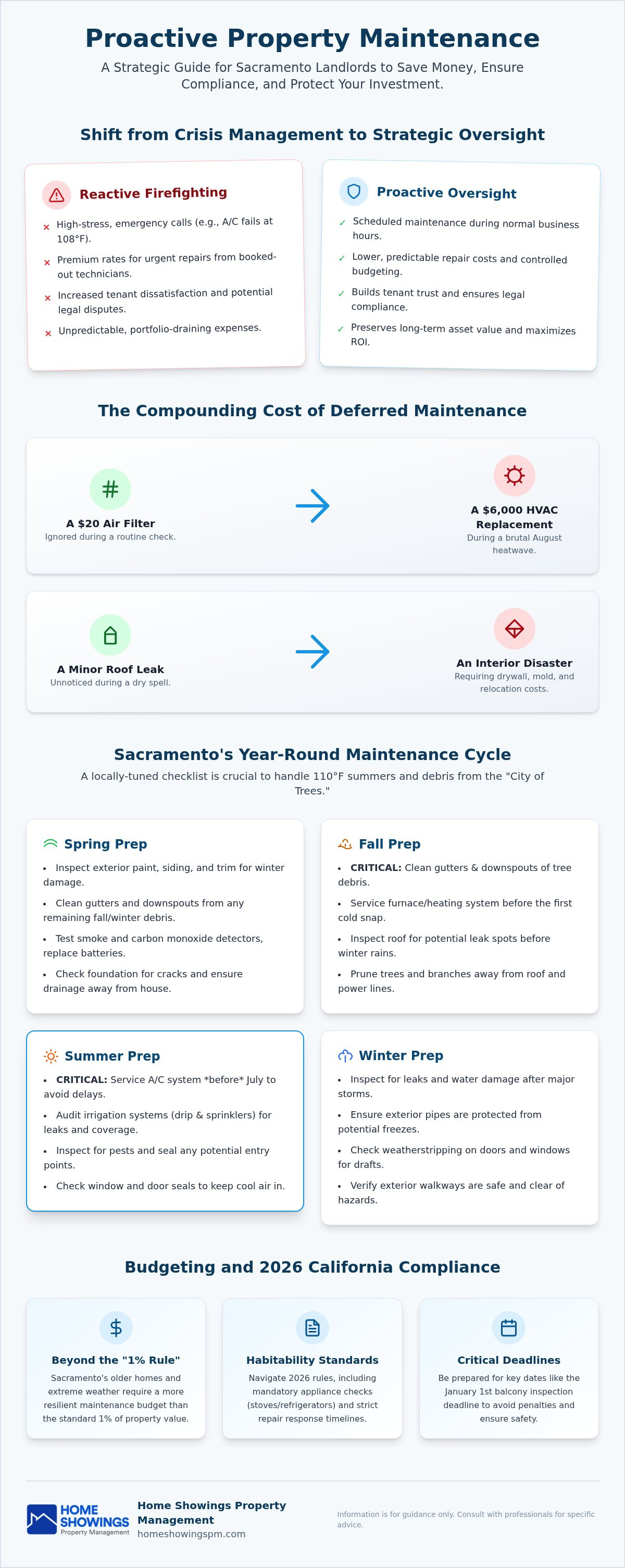
The good news is that you don't have to wait for a crisis to protect your bottom line. By implementing a comprehensive preventative maintenance plan for rental property sacramento, you can transition from reactive firefighting to strategic oversight that saves money and keeps you legally compliant. This proactive approach doesn't just lower repair costs; it builds trust with your tenants and secures your long-term ROI. In this guide, we'll walk through the essential 2026 maintenance milestones, from mandatory stove and refrigerator checks to the January 1st balcony inspection deadline, ensuring your property remains a safe, high-performing asset.
Table of Contents
Understanding Preventative Maintenance for Sacramento Rentals
The Seasonal Maintenance Cycle: Protecting Sacramento Properties Year-Round
Compliance and Habitability: California Landlord vs. Tenant Maintenance Roles
Building a Resilient Maintenance Budget and Local Vendor Network
Professional Oversight: The Value of Full-Service Maintenance Management
Understanding Preventative Maintenance for Sacramento Rentals
At its core, a preventative maintenance plan for rental property sacramento is a disciplined, systematic strategy designed to service essential building systems before they fail. Instead of waiting for a tenant's midnight call about a flooded kitchen, you're checking the supply lines during a scheduled walkthrough. This proactive stance is the cornerstone of effective property maintenance management in Sacramento, focusing on asset preservation rather than crisis management.
Many investors rely on the "1% Rule," which suggests setting aside 1% of the property's value annually for repairs. In Sacramento's 2026 market, this often falls short. Older Victorians in Midtown or properties facing 110-degree summer spikes require a more nuanced budget that accounts for increased wear on HVAC systems and aging plumbing. There's also a psychological shift when a tenant sees a landlord who cares. A crisp, well-maintained home attracts residents who are more likely to treat the property with respect and pay rent on time. It's a cycle of mutual care that stabilizes your investment.
Defining Preventative vs. Reactive Care
Reactive care is the most expensive way to run a rental. It's high-stress and involves paying premium emergency rates to contractors. By contrast, Understanding Preventative Maintenance allows you to schedule work during normal business hours. While preventative care involves scheduled inspections and minor adjustments, some tech-savvy owners are moving toward predictive maintenance. This uses historical data to anticipate system lifespans, such as replacing a water heater at year nine rather than waiting for it to burst at year ten.
The Financial Impact of Deferred Maintenance in the Central Valley
Neglect has a compounding effect. Ignoring a $20 air filter can lead to a $6,000 HVAC replacement when the system chokes during a brutal August heatwave. Consider a common scenario in Folsom: a small, unnoticed roof leak during a dry spell. When the first major winter storm hits, that minor issue becomes an interior disaster requiring drywall repair, mold remediation, and potential tenant relocation costs. Staying ahead isn't just about being tidy; it's about avoiding the financial compounding interest of property neglect. A robust preventative maintenance plan for rental property sacramento ensures these small vulnerabilities don't turn into portfolio-draining catastrophes.
The Seasonal Maintenance Cycle: Protecting Sacramento Properties Year-Round
Sacramento isn't just another dot on a map. A generic national checklist fails here because it doesn't account for our 110-degree summer spikes or the massive debris from our "City of Trees" canopy. A robust preventative maintenance plan for rental property sacramento must be built around the Central Valley’s specific rhythm. Timing your exterior and interior tasks based on local weather forecasts ensures you aren't paying emergency premiums when the weather turns. Documenting every seasonal check is equally vital. In 2026, having a paper trail of your diligence is your best defense against habitability claims or disputes over repair timelines.
Building a Resilient Maintenance Budget often starts with leveraging local resources. SMUD and PG&E frequently offer system audits or appliance rebates that can offset the cost of modernizing your units. Aligning your maintenance schedule with these utility programs allows you to optimize your property's energy efficiency while keeping your capital expenditure predictable. If you find the logistics of these seasonal rotations daunting, our team at Home Showings Property Management can step in to manage the entire process for you.
Summer Prep: HVAC and Irrigation Systems
Don't wait for July's first triple-digit day to service the A/C. By then, every reputable technician in the valley is booked weeks in advance. Beyond the cooling system, perform a full audit of your drip and sprinkler lines. Sacramento’s intense dry heat causes soil to pull away from foundations, and poorly aimed sprinklers can lead to dry-rot on siding or fencing. Check window seals and attic insulation during the spring to ensure your tenants aren't facing astronomical cooling bills, which often leads to higher turnover rates.
Winter Readiness: Roofing and Gutter Management
Sacramento is famous for its canopy, but those beautiful trees become a liability in October. Following professional standards from experts like Statement Tree Care for regular trimming and pruning is the best way to prevent falling limbs and excessive debris. Heavy foliage clogs gutters quickly, and if they aren't cleared before the first November rains, you're looking at inevitable interior water damage. Test the heating system in early fall to avoid a 24-hour emergency repair deadline during a cold snap. As temperatures drop, local pests look for warmth. Sealing small entry points in the crawlspace or attic now prevents a costly infestation that could compromise the health and safety of your residents.
California law is very clear: every residential lease contains an "Implied Warranty of Habitability." This is a non-negotiable legal promise that you will keep the property fit for human occupation throughout the tenancy. A preventative maintenance plan for rental property sacramento serves as your primary shield against legal disputes. If a tenant claims a unit is uninhabitable, your documented history of regular inspections proves you've met your duties. For a detailed breakdown of these requirements, refer to our ultimate rental inspection checklist to ensure you're fully compliant with local standards.
The regulatory environment in 2026 is stricter than ever. Sacramento has expanded its Rental Housing Inspection Program to include all properties with four or more units, making professional oversight essential. If you fail to address an emergency repair, such as a lack of heat or water, within the mandatory 24-hour window, you could face fines starting at $500. Staying proactive isn't just about property preservation; it's about avoiding the escalating penalties and relocation assistance costs that come with non-compliance.
California Habitability Standards and Legal Compliance
Essential services like heat, water, and electricity must remain operational at all times. As of January 1, 2026, California landlords are also required to provide and maintain working stoves and refrigerators under Assembly Bill 628 for all new or amended leases. You must also ensure that smoke and carbon monoxide detectors meet current safety codes. In our local climate, mold prevention is a top priority. Proper ventilation and immediate leak repair aren't optional; they are required protocols to prevent health hazards that could make a unit uninhabitable for more than 14 days, triggering mandatory relocation payments.
Defining Normal Wear and Tear vs. Tenant Damage
Distinguishing between expected aging and actual damage is a frequent point of friction. Faded paint, worn carpet in high-traffic areas, or minor scuffs are considered normal wear and tear, which is your responsibility to refresh. However, large holes in the wall, broken windows, or excessive filth fall under tenant damage. We recommend documenting move-in and move-out conditions with high-resolution digital photos. Communicating these maintenance expectations clearly in the lease helps tenants understand their role in keeping the home in good condition, which reduces disputes when it's time to process a security deposit.
Building a Resilient Maintenance Budget and Local Vendor Network
A successful preventative maintenance plan for rental property sacramento requires more than just a checklist; it needs a financial engine and a reliable team. While we've discussed compliance and seasonal timing, the actual execution relies on your ability to fund repairs and find experts in Roseville or Elk Grove who can respond quickly. With maintenance costs having increased by over 28% since 2021, your budget needs to be more robust than ever to protect your ROI.
Setting aside a "Capital Expenditure" (CapEx) reserve is the best way to handle large-scale replacements. While routine maintenance covers the small stuff, CapEx is for the $6,000 HVAC unit or the $15,000 roof. Balancing DIY tasks with professional services is another way to maximize your returns. If you're local, you might handle the minor aesthetic fixes, but for complex systems, a centralized vendor list is your greatest asset. It ensures that when a crisis hits, you aren't scrolling through Yelp; you're calling a trusted partner who knows your property.
Estimating Maintenance Reserves for Sacramento Rentals
Many owners struggle with how much to set aside. The "Square Foot" method (budgeting a set dollar amount per square foot annually) often works better for older Sacramento homes with complex layouts. Newer builds might stick to the "Percentage" method, reserving 10% to 15% of the monthly rent. You must also plan for the lifespans of major assets. Most appliances in 2026 have a 10-year lifecycle, while roofing materials vary between 20 and 30 years. Don't forget Sacramento-specific line items like annual tree trimming to manage the canopy and quarterly pest control to handle the valley's heat-driven insect activity.
Vetting Reliable Local Contractors in Elk Grove and Folsom
Finding a contractor who is both available and competent is a common hurdle for independent landlords. Always verify California State License Board (CSLB) credentials before any work begins. It's tempting to hire an uncertified "handyman" for a lower rate, but if they lack Workers' Comp and Liability insurance, you're the one holding the risk if an accident occurs on your property. "Cheap" contractors often cost more in the long run because they may use subpar materials or fail to meet the latest 2026 safety codes. If you would rather skip the stress of vendor management, you can learn more about our coordinated property maintenance services.
Professional Oversight: The Value of Full-Service Maintenance Management
Managing a comprehensive preventative maintenance plan for rental property sacramento involves dozens of moving parts, from coordinating vendor schedules to tracking compliance deadlines. For many owners, the sheer volume of administrative work becomes a second full-time job. Professional management changes that dynamic by shifting the burden of coordination from your shoulders to a dedicated team. At Home Showings Property Management, we act as the central hub for your investment, ensuring that every filter change and roof inspection happens on time without you ever needing to pick up the phone.
The true value of professional oversight lies in its ability to turn maintenance from a source of anxiety into a predictable business process. By utilizing a "boots-on-the-ground" approach, we identify "silent" issues before they escalate into the expensive emergencies we discussed earlier. This level of meticulous care is the ultimate tool for property preservation, ensuring your asset remains competitive in the local market while you enjoy the stability of a truly passive investment.
Technology-Driven Maintenance Tracking and Reporting
Modern property management relies on efficiency and transparency. We integrate all maintenance data directly into our Online Owner Portal, giving you a clear window into the health of your property at any time. When a tenant submits a request through their portal, the system automatically triggers a workflow that alerts our vetted vendors and tracks the repair through completion. This technology allows us to maintain a digital "health record" for your home, which is invaluable for long-term planning and financial reporting. You'll see every expense in real-time, making it easier to manage your CapEx reserves and understand your property's performance without digging through a mountain of paper receipts.
How Proactive Inspections Maximize Long-Term Asset Value
Regular inspections are about more than just checking smoke detectors; they are a vital safeguard for your property's value. During our walkthroughs, we look for subtle signs of trouble that a tenant might not notice, such as a slow drip under a vanity or a small crack in the siding. These visits also allow us to verify that the lease terms are being respected. Catching unauthorized pets, smoking, or extra occupants early prevents the kind of accelerated wear and tear that can slash your ROI. By protecting the curb appeal and structural integrity of your home, we ensure it stands out in competitive neighborhoods from Land Park to Elk Grove. If you're ready to secure your investment's future, contact us for a custom maintenance evaluation to see how a professional preventative maintenance plan for rental property sacramento can work for you.
Securing Your Sacramento Investment for the Future
Transitioning from a reactive to a proactive mindset is the most significant step you can take to stabilize your rental portfolio. By aligning your maintenance schedule with the Central Valley's unique climate and staying ahead of 2026 California habitability standards, you protect your cash flow from unpredictable spikes. Implementing a comprehensive preventative maintenance plan for rental property sacramento doesn't just save you from expensive emergency repairs; it builds a foundation of trust with your tenants and preserves the structural integrity of your home.
You don't have to manage these complex systems alone. Our team brings deep expertise in the Sacramento and Elk Grove markets, providing you with a dedicated network of licensed local vendors and transparent digital reporting. With real-time updates through our owner portals, you can rest easy knowing every detail is being handled with meticulous care. Protect your investment with professional property management from Home Showings Property Management. Let us help you turn property maintenance into a steady, worry-free process that supports your financial goals for years to come.
Frequently Asked Questions
What is included in a standard preventative maintenance plan for Sacramento rentals?
A comprehensive preventative maintenance plan for rental property sacramento typically includes bi-annual HVAC tune-ups to handle valley heat, seasonal gutter cleaning to manage the city's heavy tree canopy, and irrigation audits. It also covers mandatory 2026 safety checks for smoke detectors and water heaters. Regularly scheduled walkthroughs allow for early detection of plumbing leaks or structural wear, ensuring the property remains compliant with California's updated 2026 habitability standards.
How often should I inspect my rental property in California?
You should perform a formal interior inspection at least twice a year. While California law requires a 24-hour notice for entry, regular walkthroughs are your best defense against deferred maintenance. For properties with four or more units in Sacramento, remember that the 2026 expansion of the local inspection program now mandates annual safety reviews. Consistent documentation during these visits helps track the property's condition and ensures you meet all state-mandated repair timelines.
Are landlords responsible for pest control in Sacramento?
Landlords are generally responsible for pest control as part of maintaining a habitable environment. If an infestation is caused by structural issues like gaps in the foundation or roof, the duty falls on the owner. However, if a tenant's poor housekeeping or trash management leads to the problem, you may be able to hold them responsible. In Sacramento's climate, proactive sealing of entry points and seasonal treatments are essential to prevent pests from compromising the unit's safety.
Can I charge my tenant for HVAC repairs if they didn't change the filters?
You can potentially charge a tenant if the lease explicitly states they are responsible for filter changes and their negligence caused the failure. However, proving that a specific missed filter change led to a total system breakdown is difficult. It's often more effective to include filter replacements in your preventative maintenance plan for rental property sacramento. This ensures the work is done correctly and protects your expensive HVAC equipment from the Central Valley's dust and high-use summer cycles.
What are the most common maintenance issues in Sacramento rental homes?
HVAC failures during triple-digit July heatwaves are the most frequent emergency calls in our region. In older neighborhoods like Midtown or East Sacramento, plumbing leaks in aging galvanized pipes are also common. Additionally, the city's massive tree canopy leads to clogged gutters and roof damage if not managed. 2026 data shows that neglecting these "big three" issues accounts for the majority of emergency repair costs and tenant dissatisfaction across the local market.
How much should a landlord set aside for annual maintenance in 2026?
You should budget approximately 1.5% to 2% of the property's value annually to account for rising labor and material costs. Maintenance expenses have climbed over 28% since 2021, making the old 1% rule less reliable. For a typical Sacramento home, this fund should cover routine servicing and contribute to a Capital Expenditure reserve for major items like roofs or 2026-mandated appliances. Proper budgeting ensures you can meet the mandatory 24-hour emergency repair window without financial strain.
Does a preventative maintenance plan satisfy California habitability laws?
A preventative plan is your strongest tool for demonstrating compliance, but you must still respond to tenant-reported issues. California’s 2026 laws mandate strict repair timelines, such as 24 hours for emergency services and 72 hours for safety issues. While your plan prevents many problems, it also provides the documentation needed to prove you've maintained "essential services" like heat and water. Diligent record-keeping through an owner portal is vital to defending against potential legal claims or fines.


Comments