
Sacramento Move-Out Inspection Laws: The 2026 Landlord’s Compliance Guide
- Steven Lunetta
- 1 day ago
- 12 min read

What if a single missing photograph of a kitchen floor could cost you three times the value of a security deposit in a Sacramento small claims court? It's a scenario that keeps many local property owners awake at night, especially as California's rental regulations continue to tighten. You likely already know that the 21-day deadline to return a deposit is non-negotiable, and the line between normal wear and tear and actual tenant damage often feels frustratingly thin. Staying compliant with sacramento move-out inspection laws has become a high-stakes balancing act that requires more than just a quick walkthrough and a handwritten list.
We're here to help you turn that stress into a streamlined, bulletproof system. By mastering the specifics of California Civil Code 1950.5 and the latest 2026 documentation requirements, you can protect your rental investment while maintaining a professional relationship with your departing tenants. This guide provides a clear roadmap through the mandatory pre-move-out inspection process, the new AB 2801 photo evidence standards, and the itemized deduction rules you need to follow to avoid costly legal disputes. You'll learn exactly how to preserve your property's value and ensure your move-out process is legally sound from start to finish.
Table of Contents
California Move-Out Inspection Laws: The Legal Framework for Sacramento Landlords
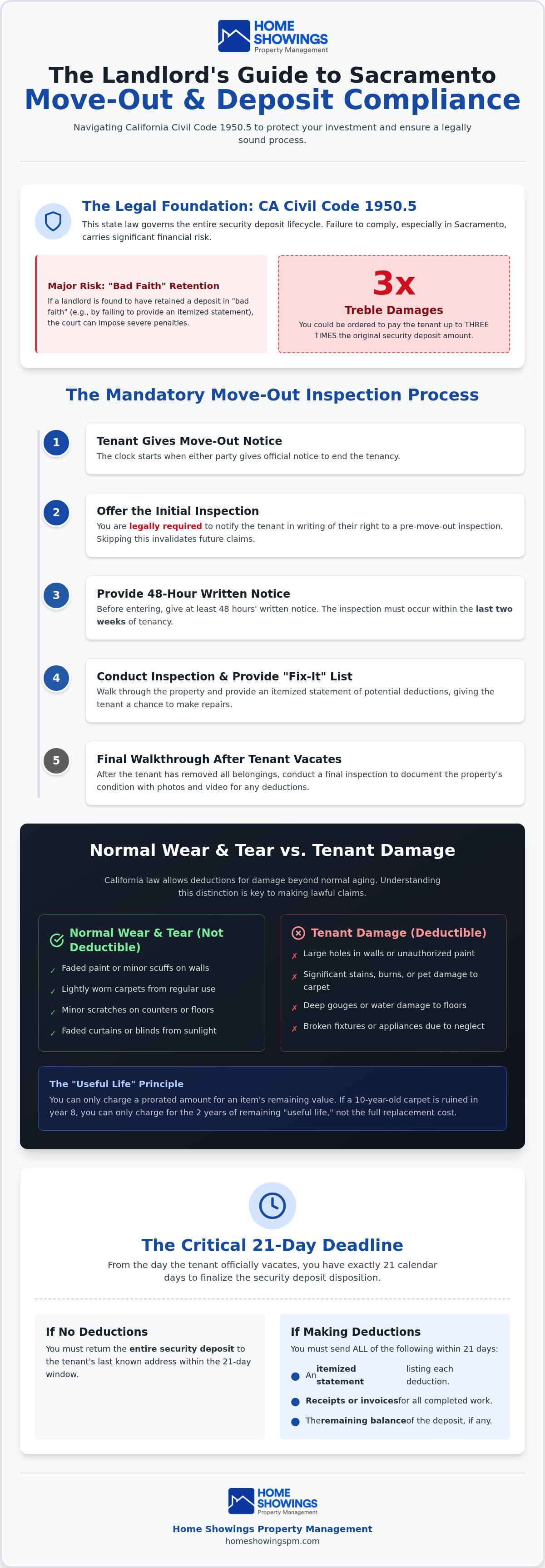
Understanding the legal landscape of sacramento move-out inspection laws begins with California Civil Code Section 1950.5. This statute governs every aspect of the security deposit process, from the initial collection to the final itemized statement. While it provides a statewide standard, it's rooted in the broader principles of U.S. Landlord-Tenant Law, which balances the property rights of owners with the habitability rights of residents. In Sacramento, failing to adhere to these rules isn't just an administrative oversight; it's a financial risk. Local judges in small claims court can award "treble damages," which means you could be ordered to pay the tenant three times the amount of the security deposit if you're found to have acted in bad faith.
Beyond state mandates, the Sacramento Tenant Protection Program (TPP) introduces specific nuances you need to track. While the TPP primarily focuses on rent stabilization and just-cause evictions, it creates a heightened environment of scrutiny for all landlord-tenant interactions. If a dispute arises during the move-out phase, many local residents turn to the Sacramento Renters Helpline. This service provides free guidance to tenants, so you should expect your residents to be well-informed about their rights regarding inspections and deposit returns. Staying compliant isn't just about following the law; it's about maintaining your reputation as a fair and professional provider of housing.
The Definition of a Move-Out Inspection in 2026
A move-out inspection is a legal right granted to the tenant that allows them to identify and repair specific damages before vacating to preserve their security deposit. This is a two-stage process. First, the Initial Inspection occurs within the final two weeks of the tenancy, giving the tenant a "fix-it" list based on your observations. Second, the Final Walkthrough happens after the tenant vacates to confirm what was actually addressed. Some landlords try to include "as-is" clauses in their leases to skip these steps. However, California law is clear: you can't contract away a tenant’s statutory right to an inspection, regardless of what the lease says.
Sacramento-Specific Resources and Ordinances
The City of Sacramento Tenant Protection Act and local ordinances in nearby Elk Grove require a meticulous approach to timing and documentation. For instance, if your property has four or more units, you're now subject to annual safety inspections as of June 1, 2026. These local requirements often overlap with move-out procedures, making digital record-keeping even more critical for property preservation. If you feel overwhelmed by these shifting rules, seeking Professional Property Management in Sacramento can provide the stability you need. Using a local expert ensures your processes stay compliant with both state law and regional Sacramento County specifics, protecting your asset from avoidable legal claims.
Right to Initial Inspection: Pre-Move-Out Process
You can't just show up on moving day and expect to withhold a security deposit without prior communication. Under AB 2330, you're legally obligated to notify your tenant of their right to an initial inspection. This notification must happen within a reasonable timeframe once a move-out notice is given. If you manage properties in high-demand pockets like Natomas or Rancho Cordova, staying ahead of these dates is vital for a smooth turnover. Following sacramento move-out inspection laws means giving the tenant at least 48 hours’ written notice before you step foot in the unit for this specific walkthrough.
Skipping this step is a gamble you don't want to take. If a tenant isn't offered this inspection, your eventual security deposit deductions become legally vulnerable. California courts view this as a failure of due process, which can lead to the "bad faith" penalties mentioned earlier. To stay informed on the broader context of these rules, you can review the official guide on California Landlord-Tenant Issues provided by the Department of Justice.
Timing and Notice Requirements for the Pre-Inspection
Conduct the inspection within the last two weeks of the tenancy. This "reasonable time" window gives the resident enough time to actually fix the issues you point out. You should draft a formal "Notice of Right to Initial Inspection" and send it as soon as the move-out notice is received. If the tenant chooses to decline the walkthrough, make sure you get that waiver in writing. A signed document stating they've declined the inspection is your best defense if they later claim they weren't given the chance to remedy damages.
Creating the Preliminary Itemized Statement
Once the walkthrough is finished, you must provide the tenant with a preliminary itemized statement. This list serves as a roadmap for the tenant to "save" their deposit by cleaning or repairing specific items before they hand over the keys. It's a transparent way to manage expectations and reduce friction during the final days of the lease. Only items identified during the initial inspection (or hidden damage) can be deducted later. This means if you miss a visible hole in the wall during the pre-inspection, you generally can't charge for it after they leave.
Our property inspections ensure every detail is documented via secure portals, keeping you compliant and your asset protected from avoidable disputes.
Normal Wear and Tear vs. Tenant Damage: The Evaluation Framework
The most common friction point in sacramento move-out inspection laws is the debate over what constitutes damage versus normal wear and tear. Legally, normal wear and tear refers to the gradual deterioration that occurs when a property is used as intended. Damage, however, results from negligence, accidents, or abuse. If you don't have a clear framework to distinguish the two, you risk losing a small claims case. Your strongest defense in these disputes is a comprehensive move-in checklist that establishes the baseline condition of the unit before the tenant ever moves a box.
California’s "Useful Life" guidelines are essential for making fair deductions in 2026. For example, the state generally views the useful life of interior paint as two to three years and carpet as eight to ten years. If a tenant ruins a five-year-old carpet, you can't charge them for a brand-new replacement; you can only charge for the remaining "life" of that asset. For more detail on these calculations, see our guide on Normal Wear and Tear Meaning for California Rentals. Using these benchmarks keeps your deductions grounded in reality rather than guesswork.
Common "Wear and Tear" Examples in Sacramento Rentals
Identifying the difference requires a meticulous eye. In the Sacramento region, environmental factors often play a role in property aging. We typically look for these distinctions:
Paint: Faded paint caused by the intense afternoon sun in North Lake Sacramento is wear and tear. Deep scuff marks or holes from wall-mounted TVs are damage.
Flooring: Carpet pile that has flattened in high-traffic hallways is normal. Pet urine stains or cigarette burns are clear damage.
Plumbing: A slow drain due to old galvanized pipes is your responsibility. A backup caused by flushing prohibited items is a deductible repair.
Documenting Deductible Damages for Court
If you decide to withhold funds, your evidence must be undeniable. We follow a "Photo-First" rule because high-resolution, time-stamped images are the only way to prove condition in court. Video walkthroughs are equally valuable. They provide the scale and context that a single photo might miss. At Home Showings Property Management, we use secure digital portals to archive these records for years. This ensures that move-in photos from the start of a long-term lease are instantly accessible when it's time for the move-out evaluation. This proactive documentation turns a potential argument into a factual, data-driven conversation.
The 21-Day Security Deposit Deadline: Compliance and Documentation
Missing a deadline by even 24 hours can be the difference between a successful turnover and a court-ordered full refund. In the eyes of sacramento move-out inspection laws, the 21-day security deposit window is a matter of strict liability. The clock starts ticking the moment the tenant vacates the premises. Within 21 calendar days, you're required to either return the full deposit or provide an itemized statement detailing any deductions along with the remaining funds. If you fail to meet this window, you forfeit your right to retain any portion of the deposit for damages or cleaning.
Managing major repairs during a turnover can be challenging. If the work can't be completed within three weeks, California law allows for a "Good Faith Estimate." You must send this estimate to the tenant within the 21-day period to stay compliant. Once the repairs are finished, you have exactly 14 calendar days to send the final itemized statement and actual receipts to the former resident. Navigating sacramento move-out inspection laws during these complex renovations requires a methodical approach to avoid claims of bad faith withholding.
Compiling the Final Itemized Statement of Deductions
To comply with Civil Code 1950.5, your final statement must be granular and transparent. You need to list specific labor hours, hourly rates, and a breakdown of materials used for every repair. If any single repair or cleaning service exceeds $125, you're legally required to attach a copy of the invoice or receipt. While you can document your own labor if you perform repairs yourself, you must charge a "reasonable" hourly rate. Be careful here; charging excessive rates for your own time is a frequent trigger for small claims disputes in Sacramento County.
Handling Security Deposit Disputes and Small Claims
Even with meticulous records, you may receive a "Demand Letter" from a tenant challenging your deductions. This is often the first step before they file in small claims court. When this happens, stay calm and review your evidence. Sacramento County offers mediation options for rental disputes, which can often resolve the issue without a formal court hearing. For a complete checklist of what to include in your final reporting, review our California Landlord Tenant Law Summary.
If you're worried about managing these tight timelines on your own, the team at Home Showings Property Management provides the expert oversight needed to keep your documentation bulletproof and your deadlines met.
Mitigating Risk with Professional Property Management in Sacramento
Managing a rental in the Sacramento region often feels like a full-time legal assignment. As we've detailed throughout this guide, the requirements for sacramento move-out inspection laws are precise and unforgiving. One missed notice or a poorly documented deduction can lead to a triple-damage penalty in small claims court. This is where professional property management shifts from being a luxury to a critical risk-mitigation strategy. At Home Showings Property Management, we provide the steady hand and local expertise needed to navigate these transitions without the typical owner anxiety.
We act as your "boots-on-the-ground" representative during what is often the most contentious phase of a tenancy. By serving as a neutral third party, we remove the emotion from the move-out process. Our established maintenance networks allow us to get repair quotes and complete work quickly, ensuring we meet the strict 21-day deadline while keeping costs affordable. This proactive approach doesn't just keep you compliant; it preserves the high asset value of your property for the next resident.
The Home Showings PM Advantage: Tech-Savvy Oversight
We believe that transparency builds trust. Our clients use dedicated digital portals to access real-time financial reporting and high-resolution inspection photos. This tech-savvy oversight ensures that you can see exactly what our team sees, from the initial walkthrough to the final repair receipts. Additionally, our rigorous tenant screening process reduces the likelihood of significant move-out damage before a lease is even signed. When a tenant does move, you can rest easy knowing a local expert is managing the 48-hour notices and the 21-day countdown on your behalf.
Protecting Your ROI Through Asset Preservation
Compliance is just the baseline. Our goal is to ensure your rental remains a high-performance investment. We use the move-out inspection as a standard part of our "Property Preservation" model, identifying long-term maintenance needs like aging HVAC systems or roof wear before they become emergencies. Once the unit is restored, we transition immediately into a high-impact rental marketing strategy to minimize vacancy. This seamless flow from inspection to re-leasing is how we help owners maintain consistent cash flow in the Sacramento and Elk Grove markets.
Protect your Sacramento investment with Home Showings PM today and experience the peace of mind that comes with professional oversight.
Securing Your Rental Investment Beyond the Final Walkthrough
Mastering the complexities of sacramento move-out inspection laws doesn't have to be a source of constant stress. By prioritizing the pre-inspection notice and maintaining a clear distinction between normal wear and tear and deductible damage, you protect both your asset and your reputation. Remember that the 21-day deadline is a strict legal boundary. Staying organized with digital records and receipts is your best defense against potential disputes in small claims court.
If managing these meticulous details feels overwhelming, our team is here to provide the steady hand you need. We specialize in property preservation through transparent reporting and deep local expertise in the Sacramento and Elk Grove markets. Our digital portals keep every photograph and receipt organized, ensuring you're always prepared and compliant. Let us handle the heavy lifting of tenant transitions so you can focus on growing your portfolio with confidence.
Get Expert Property Management in Sacramento & Elk Grove and start protecting your investment today.
Frequently Asked Questions
Does a landlord have to offer a move-out inspection in California?
Yes, under California Civil Code 1950.5, you're required to notify the tenant in writing of their right to an initial inspection within a reasonable time after a termination notice is given. This mandatory step gives the resident an opportunity to remedy identified issues before they vacate. If you fail to offer this walkthrough, you risk losing the legal right to deduct for any damages that the tenant could have reasonably fixed themselves.
What can a landlord deduct from a security deposit in Sacramento?
You can deduct for unpaid rent, cleaning to restore the unit to its move-in condition, and repairs for damage beyond normal wear and tear. In 2026, sacramento move-out inspection laws require meticulous documentation for these claims. You can't deduct for pre-existing conditions or deterioration caused by ordinary use, such as faded paint or worn carpet pile in high-traffic areas. Always ensure your deductions are backed by receipts if they exceed $125.
How long does a landlord have to return a security deposit in California 2026?
You have exactly 21 calendar days from the date the tenant vacates to either return the full deposit or provide an itemized statement of deductions. Within this window, you must mail the statement along with any remaining funds. If repairs aren't finished, you can send a good faith estimate; however, you must follow up with final receipts within 14 days of the work being completed to stay fully compliant with state law.
Can a landlord charge for cleaning if the tenant cleaned before moving out?
Yes, but only if the tenant's cleaning didn't return the unit to the same level of cleanliness it had at move-in. You can't charge for a "deep clean" if the unit is already in its original condition. If you do deduct for cleaning, you must provide receipts if the cost exceeds the $125 threshold. Detailed documentation like "before and after" photos is your best protection if the tenant challenges the necessity of the service.
What happens if a Sacramento landlord misses the 21-day deadline?
Missing the deadline usually means you forfeit the right to keep any part of the security deposit. The tenant can sue in small claims court for the full return of their funds. If a judge finds you acted in "bad faith" by intentionally missing the window, you could be ordered to pay up to twice the amount of the deposit in statutory damages, in addition to returning the original deposit amount to the tenant.
Is a move-in checklist required to make deductions at move-out?
While not strictly required by state law to make a deduction, it's practically impossible to win a dispute without one. A signed move-in checklist establishes the baseline condition of the property. Without it, you can't prove that a specific hole in the wall or floor stain wasn't already there when the lease began, making your sacramento move-out inspection laws compliance much harder to defend in a legal setting.
Can I deduct for "professional carpet cleaning" automatically in California?
No, automatic "non-refundable" cleaning fees are illegal in California. You can only deduct for carpet cleaning if it's necessary to return the carpet to its move-in condition. If the carpet only has normal wear and tear, you can't charge the tenant for a professional service. You must be able to point to specific stains, odors, or heavy soiling that go beyond ordinary use to justify the deduction on your itemized statement.
What are the rules for move-out inspections in Elk Grove vs. Sacramento?
Both cities follow California state law for the core inspection process, but local administrative nuances vary. In Sacramento, residential properties with four or more units now face mandatory annual safety inspections as of June 2026, which creates a higher bar for documented habitability. Elk Grove owners should maintain consistent regional property preservation standards. Regardless of the specific city, you must provide 48 hours of written notice before any pre-move-out walkthrough occurs to remain compliant.


Comments