
The Hidden Risks of Self-Managing Rental Property in California: A 2026 Guide
- Steven Lunetta
- 3 days ago
- 12 min read

Could a single missing refrigerator or an outdated screening process cost you an entire year's rental profit? In 2026, the risks of self-managing rental property California have shifted from minor maintenance chores to high-stakes legal liabilities. You likely started this journey to build long-term wealth and security, not to spend your weekends tracking the latest Sacramento housing codes or worrying about a lawsuit over a security deposit refund.
It is natural to feel the weight of constant state-level changes, especially with new mandates like the March 2026 relocation assistance rules and strict caps on tenant screening fees. This guide will show you how to shield your investment from expensive compliance errors and regain your peace of mind. We will explore the critical 2026 updates you must follow, such as mandatory appliance maintenance and electronic deposit return rules, and provide a clear path to maximizing your property's value without the 24/7 stress of DIY management.
Table of Contents
The Evolving Landscape of California Landlord-Tenant Laws in 2026
California's regulatory environment has always been complex, but 2026 marks a turning point for property owners. The sheer density of new rules turns a simple investment into a full-time legal compliance role. One of the primary risks of self-managing rental property California is the assumption that a lease agreement from even two years ago still protects you. It doesn't. By 2026, the legal framework has reached a level of intricacy that can quickly overwhelm anyone without professional systems. This isn't just about following rules; it's about the mental exhaustion of second-guessing every interaction with your tenant. The emotional burnout of trying to stay ahead of the curve is a hidden cost many owners don't consider until they're already stressed.
The 'Just Cause' eviction trap is particularly dangerous for DIY landlords. You can't simply choose not to renew a lease because you want a fresh start. Unless you meet specific legal criteria under the Tenant Protection Act (AB 1482), the tenant has a right to stay indefinitely. If you issue an invalid termination notice, you're not just back to square one; you could be liable for significant statutory damages. Understanding these nuances is the foundation of modern Landlord-Tenant Law in our state. Relying on an outdated lease is like driving a car with no brakes; you might be fine for a while, but the eventual crash will be expensive.
Rent Control and Just-Cause Eviction Nuances
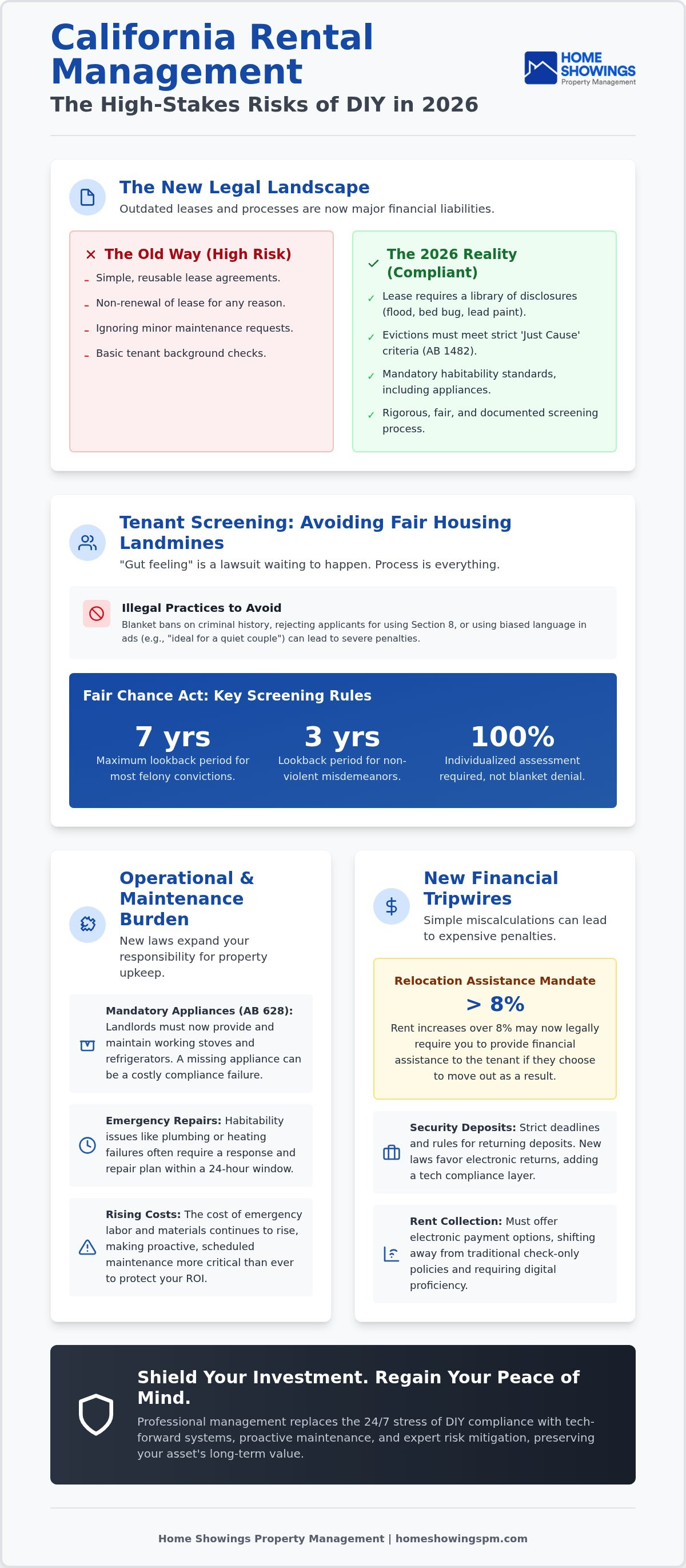
In the Sacramento and Elk Grove regions, you have to balance statewide rent caps against local ordinances. If you miscalculate a rent increase or fail to provide the required notice period, you could trigger the new 2026 relocation assistance requirements. For example, rent increases over 8% now require you to provide financial help to the tenant if they move. The financial penalty is a heavy blow, but the sleepless nights spent wondering if you've triggered a legal defense are often much worse for your well-being.
The Burden of Mandatory Disclosures
Your lease needs more than just a signature; it needs a library of disclosures. By 2026, you're required to include specific language regarding flood zones, bed bug history, and lead paint. Missing even one addendum can make your entire lease agreement unenforceable in court. Habitability standards require that a property is fit for human occupation, which includes maintaining essential services like plumbing and heating, often necessitating repairs within a 24-hour window for emergency issues. Beyond basic shelter, new laws like AB 628 now require you to provide and maintain working stoves and refrigerators, adding another layer to your risks of self-managing rental property California if you aren't prepared for the maintenance load.
Tenant Screening Compliance: Avoiding Fair Housing Landmines
Choosing the wrong tenant is one of the most expensive mistakes you can make, but the legal process of finding the right one is now fraught with danger. In the past, many landlords relied on a "gut feeling" during a showing. In 2026, that intuition is a massive liability. The risks of self-managing rental property California often stem from unintentional bias or failing to follow the strict procedural requirements of the Fair Chance Act. Under this law, you must avoid blanket bans on criminal history and instead conduct individualized assessments. For most offenses, the lookback period is now capped at seven years, and only three years for non-violent misdemeanors. If you don't document your reasons for denial meticulously, you're leaving yourself open to a costly discrimination claim.
Marketing your vacancy requires more than just high-quality photos; it requires a deep understanding of the Evolving Landscape of California Landlord-Tenant Laws. A seemingly innocent phrase in a Craigslist or Zillow ad, such as "ideal for a quiet couple," can be interpreted as familial status discrimination. You must also navigate complex "Source of Income" regulations. It's illegal to reject a tenant simply because they use Section 8 vouchers or other subsidies. To stay protected, you should review our California Tenant Screening Laws Guide to ensure your criteria meet every state and federal standard before you hit "post" on your listing.
The Fair Housing Act and Local Ordinances
Fair housing lawsuits often start with a single poorly worded email or text message. Beyond federal protected classes like race and religion, California adds layers of protection for gender identity, sexual orientation, and immigration status. If an applicant feels they were treated differently during the initial inquiry, they can file a complaint that triggers a lengthy investigation. This is why having a standardized response for every lead is no longer optional; it's a vital shield for your assets.
Professional Screening vs. DIY Background Checks
DIY background checks often provide a false sense of security. Instant online reports frequently miss local court records or fail to provide the context required by 2026 standards. Additionally, application fees are strictly capped at $65.16, and you can only charge the actual cost of the report. If you're struggling to verify employment without being "ghosted" by HR departments, it might be time to consider how professional residential leasing can streamline this process. Implementing a consistent, written set of criteria is the only way to defend your selection process if a rejected applicant questions your decision. By moving from a casual approach to a data-driven system, you protect your investment and your peace of mind.
The Operational Burden: Maintenance and Property Preservation
Owning a rental in the Central Valley means your property is constantly battling the elements. The operational risks of self-managing rental property California often manifest at the most inconvenient times, like a burst pipe at 2:00 AM or an HVAC failure during a July heatwave. When you handle these calls yourself, you aren't just losing sleep; you're often making rushed financial decisions under pressure. Rental maintenance costs have increased by over 28% since 2021, meaning a single inefficient repair can wipe out your monthly cash flow. Deferred maintenance is the silent killer of your property's equity. If you ignore a small leak today, you're inviting a massive remediation bill tomorrow that could have been avoided with a proactive system.
One of the hardest parts of DIY management is vetting vendors in the Sacramento area. It's tempting to hire a local handyman for a quick fix, but using unlicensed or uninsured contractors is a gamble with your entire investment. If a worker is injured on your property and doesn't have their own coverage, you could be held liable for their medical bills and lost wages. This is why professional oversight is so critical. By shifting to a structured approach, you ensure that every technician stepping onto your land is fully vetted and capable of performing work that meets current safety standards.
Asset Preservation in Elk Grove and Sacramento
The local climate in the Central Valley presents unique challenges for roofing and HVAC systems. Our triple-digit summers can push an older air conditioning unit to its breaking point, often leading to emergency dispatch fees that are double the standard rate. To protect your ROI, you need a boots-on-the-ground strategy that identifies issues before they become crises. Utilizing a comprehensive California Rental Property Inspection Checklist helps you stay ahead of tenant-induced erosion. Regular walk-throughs allow you to spot signs of neglect, such as unauthorized pets or unreported leaks, which are essential for long-term property preservation.
Vendor Liability and Insurance Risks
You have a legal duty to maintain a safe environment under the implied warranty of habitability. If a tenant reports a lack of heat or a plumbing failure, the clock starts ticking immediately. Failing to address these essential repairs can lead to rent withholding or even legal action. If you're feeling overwhelmed by the logistics of coordinating multiple trades, our guide on Property Maintenance Management in Sacramento offers a roadmap for protecting your assets. Balancing these risks of self-managing rental property California requires a dedicated network of reliable professionals who can respond quickly without overcharging for their services.
Financial Risks: Rent Collection, Deposits, and Accounting
Managing the financial life cycle of a rental requires more than a simple spreadsheet. One of the most overlooked risks of self-managing rental property California is the legal complexity surrounding the flow of money. If you handle rent collection manually, you're likely missing out on the stability and transparency that modern systems provide. Accepting a check in the mail in 2026 is a recipe for late payments and disputes. Even worse, if you accidentally accept a partial payment from a tenant you're trying to evict, you could invalidate your entire legal case and be forced to start the process over from day one. Professional systems prevent these errors by automatically rejecting payments that don't meet your specific criteria.
Co-mingling your personal funds with security deposits or rental income is another dangerous habit that can lead to a nightmare during an IRS audit. You need to maintain a clear digital paper trail for every transaction. Professional property management solves this by using dedicated owner portals to keep every penny accounted for. This level of meticulousness ensures that your investment remains a business rather than a source of financial anxiety. When your records are organized, tax season becomes a routine task instead of a stressful scramble for missing receipts.
Security Deposit Accounting and Disputes
Distinguishing between normal wear and tear and actual damage is where many DIY landlords end up in small claims court. Faded paint or worn carpet are typically considered normal wear, while large stains or holes in the wall qualify as damage that can be deducted. Under AB 12, security deposits are now limited to one month's rent for most properties, making it even more important to document every detail. Landlords must provide a tenant with an itemized statement and any remaining refund within 21 days after the unit is vacated. Documentation is your best defense. Without move-in and move-out photos, a judge is unlikely to side with your deductions if a dispute arises.
The Cost of Vacancy and Turnover
Every day your property sits empty in Sacramento or Elk Grove, your annual ROI drops. If a unit remains vacant for just 30 days, you lose approximately 8.3% of your yearly revenue. Finding a high-quality tenant quickly requires a proactive marketing strategy that goes beyond a "For Rent" sign. To protect your cash flow, you need a system that minimizes turnover time and ensures reliable payments. You can see how we use Online Rent Collection to stabilize cash flow and keep your investment on track. If you're ready to stop chasing checks and start seeing consistent returns, our rent collection services provide the professional oversight you need to thrive.
Why Professional Property Management is Your Best Risk Mitigation Tool
Transitioning from a "landlord" to an "investor" is the most significant step you can take to protect your long-term wealth. When you are the one answering every maintenance request and tracking every legislative update, you don't have an investment; you have a second job. The risks of self-managing rental property California often extend beyond the courtroom. They seep into your personal time and mental well-being. By partnering with a professional team, you replace the anxiety of "what if" with the confidence of "it's handled." This shift allows you to focus on your larger financial goals while we manage the meticulous daily details that keep your property profitable and compliant.
Our approach centers on digital transparency and proactive communication. Through our dedicated Owner Portal, you have real-time access to financial statements, inspection reports, and maintenance updates. You don't have to wonder if the rent was collected or if a repair was completed properly. This tech-forward system provides a clear paper trail that is essential for tax season and legal protection. It transforms the often-opaque process of property management into a clear, manageable narrative of growth and asset preservation.
The ROI of Peace of Mind
Many owners hesitate at management fees, but it's vital to compare those costs to the price of a single legal mistake or a prolonged vacancy. A single fair housing violation or an improperly handled security deposit can cost thousands in legal fees and penalties. Professional systems reduce these risks of self-managing rental property California by implementing consistent, written procedures for every tenant interaction. Additionally, having a professional "buffer" between you and your tenants preserves your privacy and ensures that every conversation remains business-focused and objective. This distance is often the key to maintaining high tenant retention and reducing the friction that leads to turnover.
Next Steps for Your Sacramento Investment
If you're ready to reclaim your time, start by evaluating how much your current DIY approach is truly costing you in stress and missed opportunities. Look for a firm that understands the specific local nuances of the Sacramento and Elk Grove markets, from local safety inspection programs to Central Valley climate challenges. A professional rental analysis can reveal where your current strategy might be underperforming. Whether you need help with residential leasing or full-service oversight, we are here to provide the steady hand and local expertise your investment deserves. Contact Home Showings Property Management today to discover how we can protect your equity and provide a worry-free ownership experience.
Secure Your Financial Future in the 2026 Rental Market
California's regulatory density requires more than just a casual effort; it demands professional-grade compliance and operational efficiency. From the strict 21-day security deposit windows to the nuances of the Fair Chance Act, the margin for error has disappeared. The risks of self-managing rental property California are no longer just about lost time; they are about protecting your equity from systemic legal and financial threats. You've worked hard to build your portfolio, and it deserves a strategy that prioritizes stability and growth.
By leveraging a rigorous tenant screening process and specialized knowledge of the Sacramento and Elk Grove markets, you can shift your focus from daily crises to long-term investment goals. Our comprehensive Owner and Tenant Portals ensure you stay informed with complete digital transparency without being overwhelmed by the details. You don't have to navigate these complexities alone. We provide the steady hand and local expertise needed to keep your property profitable and your mind at ease.
Protect your Sacramento investment with Home Showings Property Management. It's time to trade the stress of DIY management for the rewards of a truly passive investment. We're ready to help you succeed.
Frequently Asked Questions
Is it legal to manage my own rental property in California in 2026?
Yes, it is entirely legal to manage your own rental property in California. While the state allows DIY management, the 2026 regulatory landscape requires you to act as a professional compliance officer. You must stay updated on every new mandate, from mandatory appliances to electronic security deposit returns. If you choose this path, you are personally responsible for meeting all state and local codes without a professional buffer.
What are the most common lawsuits against self-managing landlords in California?
Security deposit disputes and habitability claims remain the primary drivers of litigation. Landlords often face lawsuits for missing the 21-day itemized statement deadline or failing to address emergency repairs within 24 hours. Additionally, unintentional fair housing violations during the screening process are rising. One of the major risks of self-managing rental property California is failing to document your selection criteria, which can lead to costly discrimination claims.
How much does a property manager typically cost in the Sacramento area?
Property management fees in the Sacramento and Elk Grove regions generally range between 8% and 12% of the monthly rent. You may also encounter flat-fee models or additional costs for tenant placement and lease renewals. It is important to look at these costs as a form of insurance against legal errors. While prices vary by company, the goal is to find a partner who offers digital transparency and specialized local knowledge.
What happens if I accidentally violate a California Fair Housing law?
Accidentally violating a Fair Housing law triggers significant legal consequences and financial penalties. The State of California does not differentiate between intentional discrimination and procedural errors. You could face an investigation by the Civil Rights Department, resulting in mandatory training, settlement payments, or high attorney fees. This is why having a consistent, written screening process is vital for every property owner to prove compliance and avoid lawsuits.
Can I still perform my own inspections if I hire a property manager?
You can certainly perform your own inspections, though most professional firms include regular property inspections as part of their core service. Many owners find that a professional inspector identifies issues that a landlord might miss, such as subtle signs of tenant neglect or early HVAC wear. If you choose to visit, you must still follow California's 24-hour notice requirements to avoid violating the tenant's right to quiet enjoyment.
How do I handle emergency repairs if I live far from my rental property?
Handling emergency repairs from a distance requires a pre-vetted network of 24/7 contractors who can respond immediately. If you live far away, the risks of self-managing rental property California increase because you cannot personally verify the quality or urgency of the work. Professional management solves this by using established vendor relationships and digital portals to coordinate repairs quickly, ensuring you meet your legal duty to maintain a habitable environment.
What is the new security deposit limit for California landlords in 2026?
As of 2026, security deposits are limited to one month's rent for most residential properties under AB 12. There is a specific exception for small landlords who own no more than two properties with a total of four or fewer units. These owners can charge up to two months' rent. Regardless of the amount, you must provide an electronic return option if the tenant pays rent electronically and both parties agree.
How does AB 1482 affect my ability to move back into my rental property?
AB 1482 allows for no-fault just-cause evictions if you or a close family member intend to occupy the unit. However, you must follow strict procedural steps, including providing the tenant with a written notice and relocation assistance. In 2026, relocation assistance is mandatory for specific no-fault moves or if the unit is made uninhabitable for more than 14 days. Failing to follow these steps precisely can invalidate the notice and lead to legal challenges.


Comments