
Squatters Rights California: The 2026 Guide for Property Owners
- Steven Lunetta
- 5 hours ago
- 12 min read

What if you returned to your investment property only to find that someone else had changed the locks, moved in their furniture, and was now claiming legal ownership of your land? It sounds like a nightmare scenario, but for many owners, the reality of squatters rights california feels like a constant shadow over their investments. You've worked hard to build your portfolio, and the frustration of "tenant-friendly" laws that seem to favor trespassers is enough to keep anyone up at night.
We understand the anxiety that comes with managing the legal system alone. This guide will show you exactly how California's adverse possession laws work and the precise steps you must take to protect your property from unauthorized occupants. We'll break down the specific five-year rule, explain how to use the latest Senate Bill 602 tools to your advantage, and provide a clear roadmap for legal removal. By the end of this article, you'll have a proactive plan to secure your assets and the peace of mind that comes with professional oversight and a steady, expert hand.
Table of Contents
What Are Squatters' Rights in California? Defining the 2026 Legal Landscape
A squatter is an unauthorized occupant who lives on a property without a legal title, a lease, or the owner’s permission. While it feels like a simple case of trespassing, the legal reality of squatters rights california is much more nuanced. California law protects these occupants because the state wants to discourage "self-help" evictions; these can lead to physical altercations or property damage. Instead, the legal system forces owners to use the courts to settle disputes. This doctrine is rooted in the concept of Adverse Possession, which suggests that land should be used productively rather than left neglected.
In 2026, we're seeing more sophisticated cases in areas like Sacramento and Elk Grove. These aren't just people seeking shelter. They're often individuals who understand how to exploit the system to their advantage. They use high-quality fake leases or digital utility setups to trick law enforcement into believing a civil dispute exists. Recent housing regulations have tightened the definition of occupancy, making it harder for owners to claim a property is "vacant" once someone has moved their personal belongings inside and established a presence.
The 30-Day Threshold: When a Guest Becomes a Problem
If a person stays in your property for 30 consecutive days, they often transition from a guest to a legal occupant. This window is critical for owners to monitor. Professional squatters often have mail delivered to the address or move in furniture to establish "possession" before the owner even notices. Once that 30-day mark passes, you can't just call the police for trespassing. You're now dealing with a civil matter that requires a formal eviction process. This is why regular property checks are non-negotiable for vacant units.
Why 'Self-Help' Evictions Are Your Biggest Risk
It's tempting to change the locks or shut off the water when you find an intruder in your rental. Don't do it. These "self-help" measures are illegal in California. If you take these steps, a judge could actually order you to pay damages to the person who broke into your home. Staying compliant with California landlord tenant laws 2024 is your only protection against these counter-lawsuits. A steady, legal approach is the fastest way to regain control of your asset without incurring massive legal liabilities or fines that could exceed the cost of the eviction itself.
The 5 Pillars of Adverse Possession in California
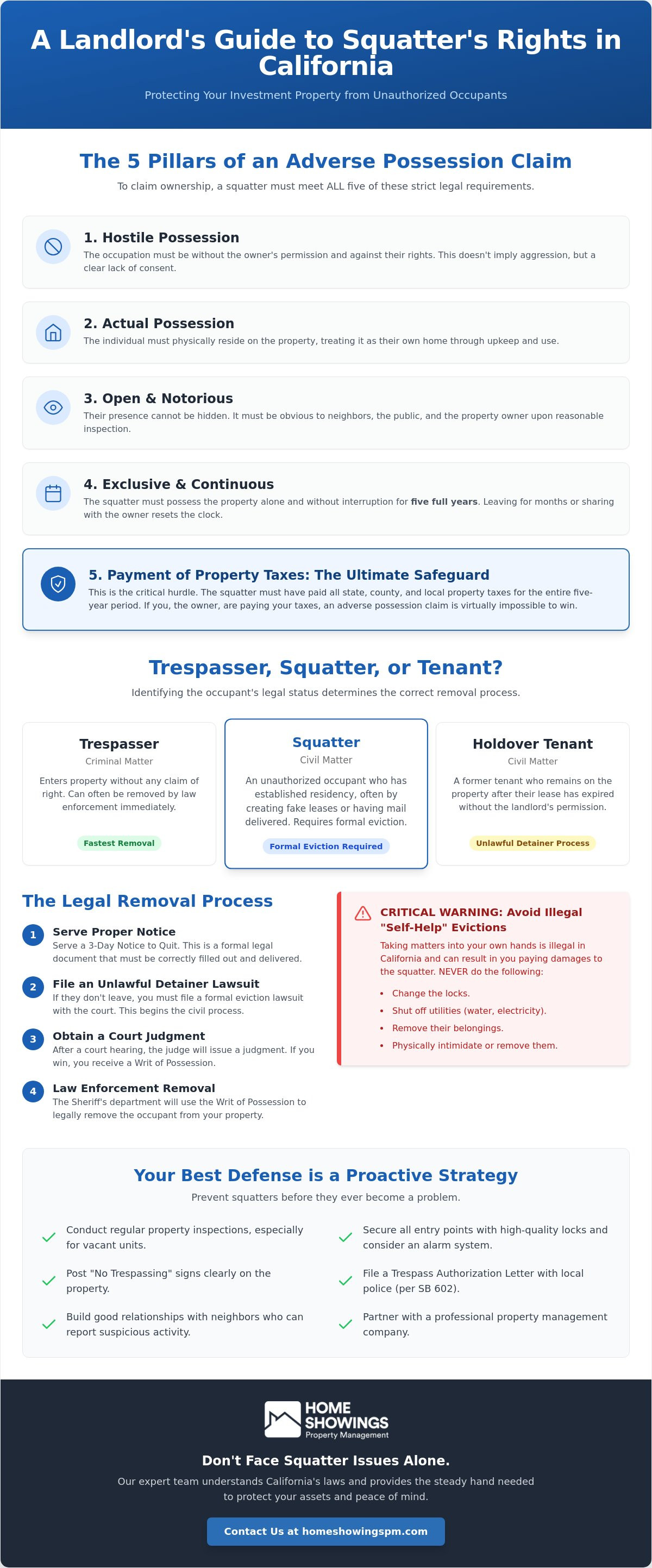
While many owners fear that an intruder can simply walk in and take a deed, the legal reality is governed by incredibly strict criteria. Under California Civil Code § 1007, an occupant must meet five specific "pillars" to even qualify for an ownership claim. These requirements are designed to be difficult to satisfy, ensuring that property titles aren't shifted easily or without significant cause. Navigating the complexities of squatters rights california requires a steady hand and a clear understanding of these legal thresholds.
Hostile Possession: This doesn't mean the occupant is aggressive. Legally, "hostile" simply means they're occupying the property without your permission and against your interests as the owner.
Actual Possession: The squatter must physically live on the property and treat it as their own home. This usually involves basic upkeep or making small improvements that a typical owner would perform.
Open and Notorious: The occupation cannot be a secret. Their presence must be obvious to any neighbor, passerby, or owner who conducts a basic inspection.
Exclusive and Continuous: The squatter must be the sole occupant for five uninterrupted years. If they leave for a few months or if you move back in for a week, the legal clock resets to zero.
The Tax Requirement: The Landlord’s Ultimate Safety Net
In California, there is a fifth pillar that acts as a massive hurdle for most squatters: the payment of property taxes. To claim adverse possession, the occupant must prove they paid all state, county, and local taxes on the property for the entire five-year period. If you are paying your own property taxes, it's virtually impossible for a squatter to win a title claim in Sacramento County. We always recommend checking your tax records annually. If you see an unexpected payment or a third party attempting to pay your bill, it's a major red flag that requires immediate legal attention.
Color of Title: A Legal Shortcut?
You might hear the term "Color of Title" during legal discussions. This happens when a squatter believes they have a valid deed, but the document is actually legally defective or fraudulent. While this can complicate a case, it doesn't exempt the occupant from the five-year rule or the tax requirements. It simply means they entered the property under a "claim of right." Protecting your property records from fraudulent deed transfers is a vital part of modern property management, as it prevents these "Color of Title" claims before they can even begin.
Squatters vs. Trespassers vs. Holdover Tenants
Not every uninvited guest is viewed the same way by the law. Understanding the distinction between a trespasser, a squatter, and a holdover tenant is the first step toward regaining control of your property. A trespasser enters with criminal intent and no claim of right. If you catch someone climbing through a window or breaking a lock, call the police immediately. This is usually a criminal matter that law enforcement can handle on the spot. However, squatters rights california become a factor when that intruder establishes a residence. If they've moved in furniture or started receiving mail, law enforcement often classifies the situation as a civil dispute rather than a simple crime.
This "grey area" is where many owners lose valuable time. If you fail to act quickly, a trespasser can "become" a squatter in the eyes of the law. Once they claim they have a right to be there, the police are often hesitant to remove them without a court order. This transition forces you into the civil court system, which is significantly slower than a criminal trespass report. Acting within the first 24 to 48 hours is vital to keeping the situation in the hands of the police.
The Holdover Tenant Trap
Holdover tenants are perhaps the most common source of frustration for local owners. These are individuals who once had a valid lease agreement california residential but refused to vacate after the term ended. If you accept even a partial rent payment after the lease expires, you've likely created a new month-to-month tenancy by accident. This mistake resets your legal standing and makes removal much more difficult. For a deeper look at lease terminations, our guide on what happens if you break a lease provides essential context on how these agreements should legally conclude.
When to Call the Police vs. When to Call a Lawyer
Knowing who to call depends on the nature of the entry. If there is clear evidence of "breaking and entering," such as a smashed window or a jimmied lock, the Sacramento or Roseville police are your first contact. Be clear that the person has no claim to the property and has damaged your asset to gain entry. If the person produces a lease, even a fraudulent one, the police may step back. This is when you need a lawyer. As noted in the Riverside County Bar Association guide to squatters' rights, proving the lack of a legal right to occupy requires specific documentation. Always keep a certified copy of your deed and your most recent property tax records ready to prove you are the rightful, active owner.
How to Legally Remove a Squatter in 2026
Regaining control of your property requires a methodical, legal approach that prioritizes documentation over emotion. If you discover an unauthorized occupant, your first action is to contact local law enforcement to file a trespassing report. This establishes a clear timeline and documents the unauthorized entry. Even if the police are unable to remove the person immediately due to claims of squatters rights california, having that official report is a vital piece of evidence for your subsequent civil case.
The legal removal process follows a specific sequence that must be followed to the letter. After the initial discovery, the steps include:
Serving a Formal Notice to Quit: This is the first legal requirement. It informs the occupant that they must vacate the premises within a specific timeframe.
Filing an Unlawful Detainer Lawsuit: If the occupant remains after the notice expires, you must initiate the formal eviction process california landlord by filing a lawsuit in the local superior court.
Attending the Court Hearing: You will present your evidence, including your deed and property tax records, to obtain a Judgment of Possession.
Professional Removal: Once you win your case, a Writ of Possession is issued, which gives the County Sheriff the authority to physically remove the occupant.
Avoiding Common Legal Pitfalls During Eviction
"Improper service" of notices is the number one reason cases get dismissed in California courts. You cannot simply tape a note to the door and assume the requirement is met; the service must follow strict statutory rules to be considered valid. In the Sacramento area, you should realistically expect a 4 to 8 week timeline for a standard removal. Additionally, be careful with "abandoned" property. If a squatter leaves furniture or personal items behind, California law requires you to store those items and provide a formal notice before you can legally dispose of them.
The Role of the Sheriff in Final Removal
You should never attempt to physically remove someone yourself, even after you have won your case in court. Doing so can lead to criminal charges or civil lawsuits against you. Instead, you must coordinate a formal "Lockout" with local law enforcement in Folsom or Rancho Cordova. The Sheriff will arrive to ensure the occupant leaves the premises safely. The moment the property is cleared, you should have a locksmith ready to secure all entry points. To prevent future vacancies from becoming targets, consider partnering with a professional property management team to provide consistent oversight and maintenance.
Proactive Property Management: Your Best Defense Against Squatters
The most effective way to deal with squatters rights california is to ensure they never have the opportunity to establish a claim in the first place. Squatters specifically look for the "Oversight Gap"—those periods when a property sits vacant, unmonitored, or neglected. If a house looks like no one is watching, it becomes a prime target. Professional property management sacramento ca services eliminate this vulnerability by maintaining a consistent, visible presence. When a property is actively managed, it's impossible for an occupant to meet the "open and notorious" or "continuous" pillars of adverse possession without being immediately discovered.
Beyond physical presence, keeping the property occupied is your strongest deterrent. Utilizing professional rental marketing services sacramento ensures that vacancies are filled quickly with vetted tenants. A home that is occupied by a legal resident isn't just generating income; it's being protected 24/7. Modern technology also plays a massive role in our oversight strategy. We utilize smart locks with unique access codes, motion-activated cameras, and digital owner portals to provide real-time monitoring and an audit trail of everyone who enters the property.
Securing your property also means having the right professionals on your side; for those with interests in Southern California, you can discover Ray Lyon Realty to find expert guidance on selecting a top-tier real estate broker in the Los Angeles area.
The Power of Regular Inspections
Quarterly walk-throughs are a standard part of a stable management plan. These inspections allow us to identify unauthorized occupants long before they reach the critical 30-day threshold where civil protections often begin. By documenting the property's condition and the identity of the legal residents regularly, we create a paper trail that can disprove any future "actual possession" claims. In the Sacramento region, it's especially important to secure properties during seasonal vacancies, such as the winter months when unmonitored homes are most at risk for break-ins.
Rigorous Tenant Screening as a Filter
Prevention starts at the application stage. Staying compliant with california tenant screening laws is your first line of defense against holdover tenants who might later refuse to leave. We look for specific red flags, such as a history of evictions or previous civil disputes over occupancy. At Home Showings Property Management, we use a meticulous screening process that goes beyond a simple credit check. We verify rental history and employment to ensure your investment is placed in the hands of someone who respects the legal boundaries of a lease. This proactive approach turns your property from a potential legal headache into a secure, high-performing asset.
Take Control of Your Property’s Future
Managing a rental portfolio requires more than just collecting checks; it demands constant vigilance and a clear understanding of the legal landscape. We've seen how the five-year tax rule and the critical 30-day occupancy window define the reality of squatters rights california. While these laws can feel daunting, they are manageable when you replace neglect with meticulous oversight. A proactive strategy is your most reliable tool for preventing unauthorized claims before they ever start.
Our team brings expert knowledge of California Landlord-Tenant Law and a commitment to protecting your assets through rigorous tenant screening and regular property inspections. With our dedicated owner portals, you'll always have transparent reporting at your fingertips. Protect your investment with professional Sacramento property management and regain the stability you deserve. Your property is a significant achievement, and we're ready to provide the confident, local expertise needed to keep it secure and thriving.
Frequently Asked Questions
How long does it take for a squatter to have rights in California?
A person can establish basic civil protections in as little as 30 days, which often makes removal a civil rather than criminal matter for law enforcement. However, to actually claim legal ownership through adverse possession, they must occupy the property continuously for five years. This longer window is a central part of the criteria for squatters rights california. We recommend taking action the moment you notice an unauthorized guest to prevent them from hitting that 30-day residency mark.
Can the police remove a squatter in Sacramento?
Police can remove a person if there is clear evidence of criminal trespassing, such as a broken window or forced entry caught in the act. If the occupant claims they live there or provides a fake lease, Sacramento officers will typically identify the situation as a civil dispute. In these cases, you must use the unlawful detainer process. Filing a 602 Trespass Authorization Letter annually can help local law enforcement act more decisively on your behalf.
Do squatters have to pay property taxes in California to claim ownership?
Yes, paying property taxes for five consecutive years is a mandatory requirement for any adverse possession claim in California. If the occupant fails to pay even one installment, their attempt to claim ownership fails legally. This rule serves as a significant safety net for owners. As long as you stay current on your own tax payments, it's virtually impossible for a third party to take your title through this specific legal process.
What is the difference between a squatter and a trespasser in California law?
Trespassing is a criminal act where someone enters a property without permission, often with the intent to commit a crime. Squatting is a civil matter where an individual occupies a property with the intent to live there. While a trespasser can be arrested immediately, a squatter who has established residency must be removed through the court system. Distinguishing between the two depends on how long they've been there and their demonstrated intent to reside.
Can I turn off utilities if a squatter is in my house?
No, you cannot shut off utilities, change the locks, or remove the occupant's belongings yourself. These "self-help" evictions are strictly prohibited under California law and can result in significant legal penalties for the owner. Even if you are frustrated, you must follow the formal court process to regain possession. Taking the law into your own hands often gives the squatter more legal leverage against you during an unlawful detainer hearing.
What is the 5-year squatter law in California?
The 5-year law refers to adverse possession, which allows an occupant to gain legal title if they meet five strict pillars of squatters rights california. They must occupy the land openly, notoriously, and exclusively while paying all property taxes for sixty consecutive months. This law is intended to ensure land is used productively. Because the requirements are so high, successful claims are extremely rare for properties that receive regular professional oversight and maintenance.
How do I prevent squatters from entering my vacant rental property?
Prevention is built on consistent oversight and modern security. We suggest installing smart locks and motion-activated cameras to monitor your property in real time. It's also vital to file a "602 Letter" with your local police department, which pre-authorizes them to remove trespassers from your vacant units. Regular property inspections ensure that any unauthorized entry is caught within days rather than weeks, stopping occupancy before it becomes a complex civil issue.
Does a squatter need a lease to have rights in California?
No, a squatter doesn't need a written lease to gain civil protections in California. If they can prove they have lived on the property for more than 30 days, they are often viewed as a tenant at sufferance by the courts. This status requires you to serve a formal notice and go through the eviction court to remove them. This is why we emphasize rigorous screening for every applicant to ensure no one enters your property without a legal, signed agreement.



Comments