
Lease Agreement California Residential: A Landlord’s 2026 Essential Guide & Template

What if a single missing disclosure or an outdated security deposit clause could leave you vulnerable to a costly legal dispute? In the wake of major 2026 legislative shifts, many Sacramento landlords are finding that their standard lease agreement california residential templates simply don't cut it anymore. It's frustrating to feel like the rules change every time you turn around, especially when you're just trying to manage your investment with integrity. You likely want to provide a great home for your tenants while protecting your own financial stability, but the overlap between state laws and local ordinances can feel like a moving target.
This guide will help you master the complexities of modern leasing by providing a meticulous breakdown of the latest compliance standards. We'll walk you through the new AB 628 habitability requirements for appliances and the specific electronic refund protocols mandated by AB 414. You'll gain a clear understanding of the 2026 mandatory addenda and how to navigate the expiration of the Tenant Protection Act rent caps. We've structured this information to give you the peace of mind that comes with a legally airtight lease designed to protect your property value and foster a stable, professional relationship with your tenants.
Table of Contents
Understanding the Essential Components of a California Residential Lease Agreement
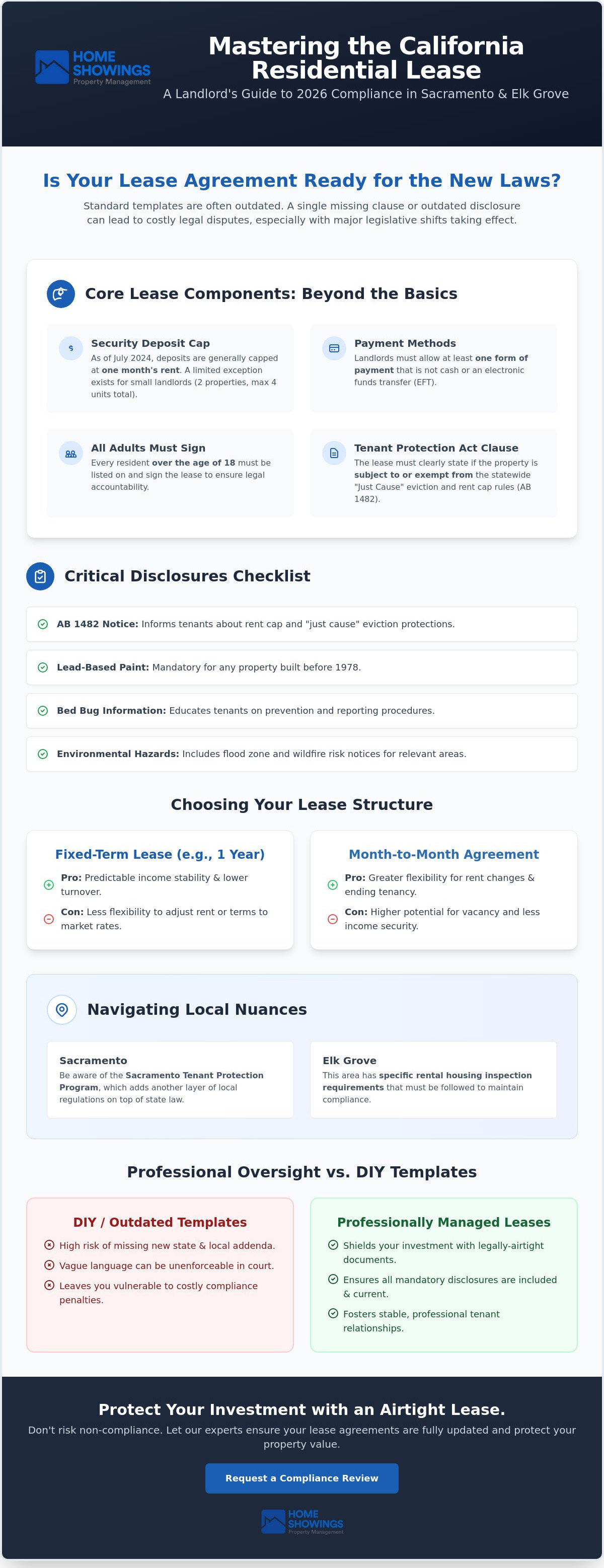
A lease agreement california residential is far more than a simple handshake or a basic receipt for rent; it's a legally binding contract that governs the use and occupancy of your investment. While the basics of understanding lease agreements start with who is paying and where they are living, 2026 standards require a much deeper level of detail. If you rely on a generic form from a decade ago, you're likely missing the specific language needed to satisfy modern California courtrooms. A solid lease acts as the primary defense for your property value and your peace of mind.
Today, "Just Cause" eviction protection is essentially the default assumption for most California tenancies. Your lease must reflect this reality by clearly stating whether the property is subject to or exempt from the Tenant Protection Act. Beyond these protections, the core elements of the document remain vital. You must accurately identify all legal parties, provide a precise description of the premises, and define the exact duration of the term. If these foundational pieces are vague, the rest of the document's protections may not hold up during a dispute.
Legally Binding Requirements for 2026
If you're still asking for cash-only payments, you're courting unnecessary legal trouble. California law requires landlords to allow at least one form of payment that isn't cash or an electronic funds transfer. Additionally, as of July 2024, security deposits are generally capped at one month's rent for most residential units. There is a small exception for "small landlords" who own no more than two properties with a total of four units, but for the majority of owners, the days of asking for two or three months' rent upfront are over. It's also critical that every resident over the age of 18 signs the lease agreement california residential. This ensures that every adult occupant is legally accountable for the terms of the tenancy.
The Role of the Lease in Property Preservation
A well-drafted lease acts as a shield for your physical asset. By defining maintenance responsibilities with precision, you prevent the kind of long-term asset degradation that happens when tenants assume the landlord handles every minor lightbulb change. You should set firm, clear expectations for property inspections and outline your rights to enter the property for necessary repairs or assessments. If the administrative burden of staying compliant with these evolving rules feels overwhelming, many owners find that partnering for professional property management in Sacramento, CA provides the steady hand needed to keep these documents updated. Meticulous oversight today prevents expensive headaches tomorrow.
Mandatory California Disclosures: What Your Lease Must Include
Missing a single disclosure in your lease agreement california residential can transform a routine tenant turnover into a legal nightmare. In California, transparency isn't just a best practice; it's a statutory requirement. If you fail to include the mandatory AB 1482 disclosure, for instance, you might inadvertently forfeit your right to exempt a single-family home from state rent caps. This specific notice must inform tenants whether the property is subject to the Tenant Protection Act’s "just cause" and rent limit rules. Following the California Civil Code on Rental Agreements ensures you remain protected from claims of non-compliance and keeps your investment on stable ground.
If your property was built before 1978, the federal Lead-Based Paint disclosure is non-negotiable. You also need to address modern concerns like bed bug infestations. You're required to educate tenants on prevention and provide clear instructions for reporting suspected issues. For those managing properties in the Sacramento Valley, flood zone and wildfire hazard disclosures are critical. These notices alert tenants to environmental risks that could affect their safety or personal property. Finally, don't forget the "death on premises" rule. If a fatality occurred on the property within the last three years, you must disclose it to prospective renters, though you aren't required to disclose if the death was related to HIV/AIDS.
Health and Safety Addenda
Asbestos and mold disclosures help shield you from liability by documenting the property's condition at the start of the lease. You should also clearly define your smoking policy; whether you allow designated smoking areas or enforce a total prohibition on the premises. If you use a Ratio Utility Billing System (RUBS) for shared meters, transparency is key. You must detail exactly how these costs are calculated to avoid disputes over utility bills. Providing this level of detail shows tenants you're a meticulous and fair provider.
Tenant Rights and Legal Notices
Your lease must include a Megan’s Law notice, which directs tenants to the state’s registered sex offender database. Prop 65 warnings are also standard to notify occupants of potential chemical exposures on the property. It's helpful to understand how California tenant screening laws influence the data you collect before the lease agreement california residential is even signed. If you're feeling overwhelmed by these moving parts, our team can help you streamline your property management strategy for 2026 compliance.
Standard 1-Year vs. Month-to-Month: Choosing the Right Lease Structure
Deciding between a fixed-term and a periodic tenancy is one of the most significant strategic choices you'll make when drafting a lease agreement california residential. While a standard one-year term is often the default for many owners, it's not always the most advantageous path for your specific goals. If your primary objective is predictable cash flow and minimized turnover costs, the stability of a fixed-term lease is hard to beat. It locks in a tenant for a set duration, providing you with a reliable income stream and reducing the frequency of expensive marketing and screening cycles. This structure offers a sense of controlled stability that many landlords prefer, especially when managing high-quality long-term rentals.
In the current Sacramento market, some owners are exploring more creative structures like "Lease-Option" or "Rent-to-Own" agreements. These can be particularly effective in neighborhoods where property values are shifting, as they attract tenants who have a vested interest in maintaining the home. However, it's vital to recognize that the structure you choose directly impacts the eviction process for California landlords. For instance, terminating a month-to-month agreement often requires different notice periods than addressing a breach of a fixed-term contract. Understanding these procedural differences before you sign is the best way to ensure your rights remain protected.
Pros and Cons of Fixed-Term Agreements
The biggest advantage of a fixed-term lease agreement california residential is the guarantee of occupancy. You won't have to worry about a sudden vacancy during the slow winter months when finding new tenants is more difficult. On the other hand, these agreements can become complex if a tenant needs to relocate before the year is up. Negotiating a lease break requires a meticulous approach to ensure you're compensated for the lost rent while fulfilling your legal duty to mitigate damages. A holdover status occurs when a tenant remains in possession of the property after the fixed term expires without signing a new agreement, typically converting the arrangement to a month-to-month tenancy by default.
When to Opt for Month-to-Month
Periodic tenancies offer a level of flexibility that fixed terms simply can't match. If you're planning significant renovations or considering selling the property in the near future, a month-to-month setup allows you to regain possession with relatively short notice. This structure is also a smart choice for high-turnover areas near universities or for properties that cater to seasonal workers. It's also helpful to have a clear understanding of what happens if you break a lease from both the owner and tenant perspective in these flexible arrangements. While you gain agility, you do sacrifice the long-term certainty of a locked-in contract, so the choice should always align with your broader investment timeline.
Navigating Local Ordinances: Sacramento and Elk Grove Nuances
Using a generic "California-wide" template for your lease agreement california residential is a common mistake that can lead to significant compliance gaps in the 916 area code. While state laws provide a baseline, local municipalities often layer on their own specific requirements. If your property is located within the city limits of Sacramento, for example, you're likely subject to the Sacramento Tenant Protection Program (STPP). This program adds another level of rent stabilization and "just cause" eviction rules that go beyond the state's AB 1482 standards. Navigating these overlapping layers requires a steady hand and a deep familiarity with the local landscape.
To stay compliant, you must first identify whether your property falls under Sacramento City or County jurisdiction. The City of Sacramento requires landlords to register their properties and pay an annual fee to support the STPP. Failing to do so can result in penalties and may even limit your ability to implement rent increases. These local ordinances also influence how you approach rental marketing services in Sacramento. Your listings and lease negotiations must accurately reflect local protections to build trust with prospective tenants and avoid regulatory scrutiny.
Sacramento City vs. County Rules
The distinction between city and county rules is vital for property owners. The City’s rent stabilization program has specific caps that may differ slightly from the regional Consumer Price Index (CPI) calculations used by the state. Additionally, registration requirements are strictly enforced within city limits. If you're managing a portfolio that spans across both areas, your lease agreement california residential needs to be modular enough to accommodate these nuances without sacrificing legal clarity. This meticulous approach ensures that your contracts remain enforceable regardless of which side of the city line your property sits on.
Elk Grove and Folsom Local Considerations
In suburban hubs like Elk Grove and Folsom, the focus often shifts toward rental housing inspections and business licenses. Elk Grove, for instance, has a specific approach to code enforcement where inspectors look for everything from functioning smoke detectors to proper landscaping maintenance. Your lease should include clear language regarding parking, HOA interactions, and landscaping responsibilities to align with these local expectations. It's also critical that your documents remain consistent with the california landlord tenant laws 2024 updates, which continue to influence how local codes are interpreted in 2026. Managing these details requires proactive oversight, which is why many owners choose to partner with a local property management expert to handle the heavy lifting of local compliance.
Why Professional Lease Management Protects Your Investment
In California's highly regulated rental market, a "good enough" contract is often a significant liability. Relying on a DIY template for your lease agreement california residential is a gamble that rarely pays off in the long run. One small error in phrasing or a missing 2026 disclosure can lead to months of lost rent, statutory penalties, or expensive legal fees. Professional management provides a necessary layer of insulation between you and these inherent risks. This protection begins long before the lease is signed; it starts with rigorous tenant screening to ensure that only the most qualified residents are moving into your property.
A quality screening process evaluates more than just a credit score. It looks at rental history, income stability, and background checks to ensure the lease starts on a foundation of mutual respect. When you have a professional managing the intake, you're less likely to deal with the "professional tenants" who know how to exploit weak lease language. This proactive approach sets the tone for the entire tenancy, making enforcement of the rules much simpler for everyone involved.
Operational Efficiency Through Technology
Modern property management relies on sophisticated systems to maintain order and transparency. Owner and tenant portals offer a secure, centralized record of every interaction, from the initial digital signature to annual renewals. This technology streamlines document storage, ensuring you never lose track of a critical addendum or a proof of service notice. Automating rent collection ensures the financial terms of your lease agreement california residential are met consistently, removing the need for manual tracking or awkward follow-ups. Professional management reduces vacancy through better lease structuring that anticipates seasonal market shifts and optimizes renewal timing.
Long-Term Asset Protection
True protection requires a "boots-on-the-ground" presence that paper documents alone cannot provide. Regular property inspections serve as a vital tool for verifying lease compliance and preserving your asset's condition. These visits allow a manager to catch minor maintenance issues before they escalate into major repairs, saving you money and protecting your property value. Managing the transition from move-in to move-out is another area where professional oversight prevents legal friction. By conducting meticulous walk-throughs and documenting every detail, you can navigate security deposit returns without the fear of a small claims court dispute. If you're ready to trade the stress of DIY management for a more stable and efficient approach, it's time to protect your investment with Home Showings Property Management.
Securing Your Rental Future in 2026 and Beyond
Managing a rental property in the Sacramento region requires more than just a standard contract; it demands a proactive strategy that evolves alongside state and local laws. You've seen how critical it is to include specific 2026 disclosures and why local ordinances in Elk Grove or Sacramento City can't be ignored. A meticulously drafted lease agreement california residential acts as the cornerstone of your investment, providing the clarity needed to prevent disputes before they start. By prioritizing transparency and staying ahead of regulatory changes, you build a foundation of trust with your tenants while shielding your property's value.
If the weight of these shifting requirements feels heavy, you don't have to carry it alone. Our team offers deep expertise in Sacramento and Elk Grove local ordinances, paired with secure digital portals that keep your records organized and accessible. We handle everything from full-service property preservation to meticulous maintenance, ensuring your home remains a high-performing asset. Request a Professional Lease Review & Management Quote today to see how we can streamline your operations. You've worked hard to build your portfolio, and we're here to help you protect it with confidence and ease.
Frequently Asked Questions
Is a written lease agreement required in California?
While oral agreements are technically legal for tenancies lasting less than one year, a written document is legally required for any term exceeding twelve months. Even for shorter stays, having a written record is the only way to ensure both parties understand their specific obligations. Without a signed paper trail, enforcing rules regarding maintenance or guest policies becomes nearly impossible in a courtroom setting.
Can a California landlord limit the number of occupants in a residential lease?
You can limit the number of occupants, provided your policy complies with federal fair housing guidelines and local health codes. Generally, California follows the "two-plus-one" rule, which allows two people per bedroom plus one additional person for the entire unit. Setting unreasonable limits that target families could lead to discrimination claims, so it's best to stick to established occupancy standards for your property.
What is the maximum security deposit a landlord can charge in California in 2026?
As of 2026, the maximum security deposit you can request for a lease agreement california residential is generally capped at one month's rent. This law applies regardless of whether the unit is furnished or unfurnished. A narrow exception exists for "small landlords" owning no more than two properties with a total of four units, who may still be able to charge up to two months' rent.
Does a lease agreement need to be notarized in California?
No, you don't need to notarize a standard residential lease in California. The contract becomes legally binding once all parties have signed and dated the document. While notarization isn't a requirement, ensuring that you've verified the identity of every adult occupant through a rigorous screening process is a much more effective way to protect your investment and ensure the lease is enforceable.
How much notice must a landlord give before changing lease terms?
For month-to-month tenancies, you must typically provide at least 30 days' written notice before changing any lease terms, such as adjusting utility responsibilities. If you're increasing the rent by more than 10%, state law requires a 90-day notice period. For fixed-term leases, you generally cannot change the terms until the current lease expires and a new agreement is negotiated between you and the tenant.
Are digital signatures legally binding for California rental agreements?
Digital signatures are fully legal and binding for California rental agreements under the Uniform Electronic Transactions Act. Using secure digital portals not only speeds up the signing process but also creates a reliable electronic audit trail. This modern approach is especially helpful for Sacramento landlords who need to manage document storage and ensure that every mandatory addendum is properly executed and easily accessible.
What happens if a lease agreement contradicts California state law?
If a clause in your lease agreement california residential contradicts state law, that specific provision is usually considered void and unenforceable. For example, if your lease claims a security deposit is non-refundable, a judge will ignore that clause because state law mandates that all deposits must be refundable. It's critical to keep your templates updated to avoid these illegal clauses that can undermine your entire contract.
Can I prohibit pets in my California residential lease?
You have the right to prohibit pets or set specific restrictions on breeds and sizes within your lease. However, you cannot prohibit service animals or emotional support animals (ESAs), as these aren't legally classified as pets under the Fair Housing Act. You also cannot charge a pet deposit or pet rent for these specific animals, even if your standard lease requires them for other household pets.



Comments