
Sacramento Residential Leasing: Guide for Rental Owners

What if finding a tenant depended on more than posting a listing and opening the door for showings? Sacramento residential leasing services can connect each step, from preparing and marketing your rental to screening applicants and coordinating lease arrangements. When inquiries, tours, and applications compete with your schedule, a clear process makes the work easier to manage.
It’s understandable to want a suitable tenant while treating every applicant fairly and keeping communication organized. You also want your property presented professionally and cared for through the transition. Home Showings Property Management brings leasing tasks together with direct communication and practical systems, so owners can stay informed as the process moves forward.
This guide explains what residential leasing services cover, how to prepare a Sacramento-area rental for the market, and how Home Showings manages marketing, showings, tenant screening, and related leasing steps. You’ll also see how leasing connects with ongoing property management, including rent collection, maintenance coordination, regular inspections, and owner portals. When these parts are organized as one process, it’s easier to see what has been handled and what comes next.
Table of Contents
What Sacramento Residential Leasing Services Handle for Rental Owners
How Sacramento Rental Marketing and Showings Build a Strong Leasing Process
How Tenant Screening and Lease Coordination Support Better Decisions
How to Evaluate Sacramento Residential Leasing Services for Your Property
How Home Showings Supports Residential Leasing in Sacramento
What Sacramento Residential Leasing Services Handle for Rental Owners
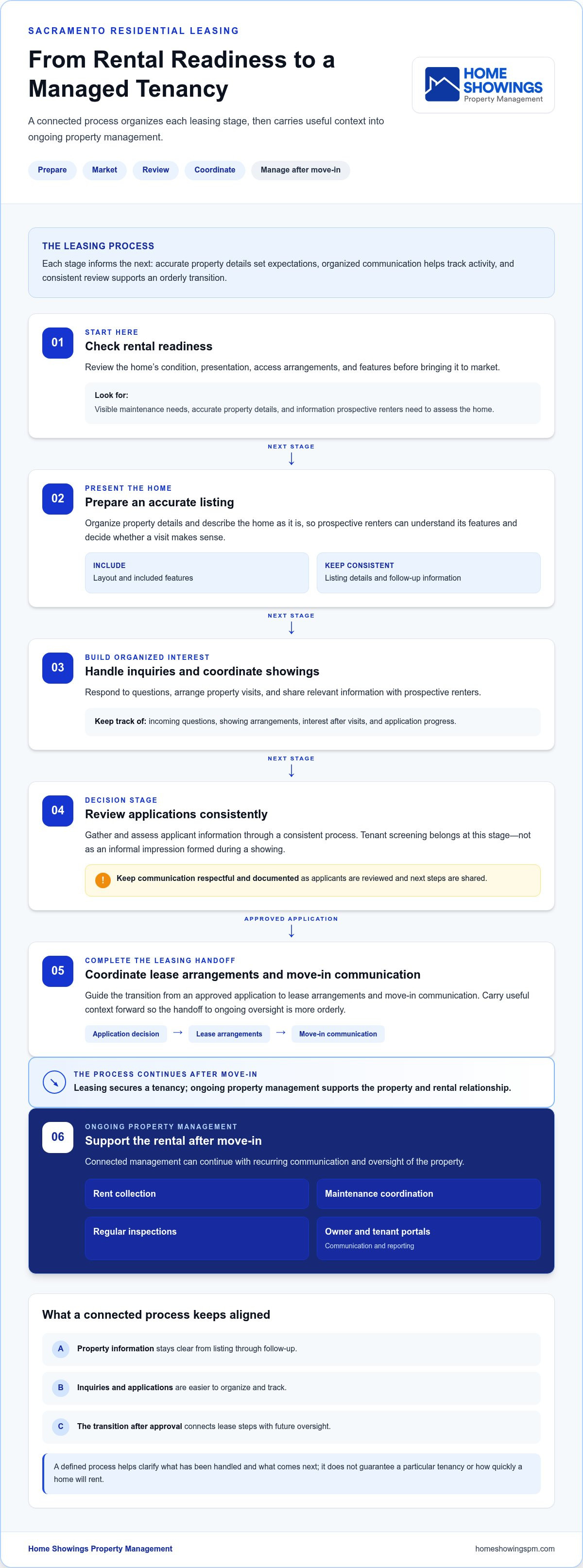
Leasing a rental involves more than publishing an advertisement and waiting for applications. Sacramento residential leasing services coordinate the practical steps that prepare a home for the market, connect with prospective renters, and move an application toward a tenancy. A defined process helps owners manage inquiries, scheduling, and paperwork without having to track each task separately.
A coordinated process doesn’t determine how quickly a home will rent or guarantee a particular tenancy. It does give each stage a clear purpose, helps keep information organized, and makes it easier to communicate next steps to applicants. That structure can make leasing more manageable for owners in Sacramento and nearby communities.
Which steps are part of a residential leasing process?
The process starts with rental readiness. Review the home’s condition, access arrangements, and features before preparing the listing. Make sure details such as the layout and included features are accurate, so prospective renters can assess whether the property suits their needs and get useful answers to their questions.
From there, leasing work typically includes:
Preparing the listing: Organize property details and describe the home accurately so prospective renters can assess its features.
Handling inquiries: Respond to questions and keep communications organized as interest develops.
Coordinating showings: Arrange property visits and share relevant information with prospective renters.
Reviewing applications: Gather and assess applicant information using a consistent process. Tenant screening belongs at this decision stage, rather than being treated as an informal impression formed during a showing.
Coordinating lease steps: Guide the transition from an approved application to lease arrangements and move-in communication.
Each step informs the next. A listing with accurate details helps set expectations before a showing. An organized inquiry and application process makes it easier to track progress, share updates, and identify what needs attention.
Leasing services versus ongoing property management
Leasing focuses on preparing for and securing a tenancy. Ongoing property management continues after move-in, supporting the property and the rental relationship through recurring communication, rent collection, inspections, and maintenance coordination. These responsibilities are connected, but they serve different stages of ownership.
With a disconnected approach, an owner may need to pass information between the person handling a listing, applicants, and whoever manages the home after move-in. A connected service can carry useful context forward, helping the transition from leasing to day-to-day oversight feel more orderly. Home Showings Property Management connects residential leasing with broader residential property management, with owner and tenant portals supporting communication and reporting.
Knowing where leasing ends and ongoing management begins helps owners choose a level of support that fits their time and involvement. Look for a repeatable process that connects marketing, applicant review, lease coordination, and future oversight as related parts of managing a rental property.
How Sacramento Rental Marketing and Showings Build a Strong Leasing Process
A rental listing is often a prospective renter’s first impression of a home. If key details are unclear or inquiries go unanswered, interested people may have trouble deciding whether to take the next step. A well-organized marketing and showing process gives them useful information at each stage while helping owners track interest and applications.
Effective rental marketing combines an accurate presentation of the home with organized responses to prospective renters’ inquiries. For Sacramento and nearby communities, that means moving from property preparation to a clear listing, timely responses, coordinated showings, and application review. Sacramento residential leasing services can bring those stages together and keep communication consistent.
Prepare the home and listing details
Before advertising begins, review the property’s condition, presentation, access arrangements, and listing information. Check that the description reflects the home as it is, including its features and details prospective renters need before scheduling a visit. Note visible maintenance needs so the marketing accurately represents the property and the owner can plan the next steps.
Clear, current information helps reduce avoidable questions. For example, an accurate description of the home’s layout and included features helps prospective renters decide whether a showing makes sense. Keeping those details consistent across the listing and follow-up messages also sets practical expectations.
Manage inquiries and coordinate showings
Once the listing is active, organize incoming questions and showing arrangements. A timely, informative response helps a prospective renter understand what to do next, while coordinated scheduling makes visits easier to manage. After showings, tracking interest and application progress gives owners a clearer picture of activity without relying on scattered messages.
Owners benefit from straightforward updates, too. Knowing whether prospective renters have viewed the property, where applications are in the review process, and what action is next can make the process feel more controlled. Direct communication and digital portals help keep relevant updates accessible as leasing moves forward.
A practical sequence keeps each stage connected:
Prepare: Review the home’s condition, presentation, access, and current property details.
Present: Create a listing that describes the rental accurately and clearly.
Respond: Organize inquiries and provide consistent information to prospective renters.
Show: Coordinate visits and keep track of interest as it develops.
Review: Move applications into a consistent review and tenant-screening process.
This sequence helps prospective renters get relevant information and gives owners an orderly way to handle each stage. Home Showings Property Management provides rental marketing in Sacramento as part of its residential leasing work. Owners who want listing preparation connected with inquiry and showing coordination can explore rental marketing and leasing support.
How Tenant Screening and Lease Coordination Support Better Decisions
An application deserves a careful review, not a rushed judgment based on a brief interaction. A consistent screening process gives owners a structured way to compare applications, track decisions, and communicate clearly with each applicant. It supports informed choices, though it can’t predict every aspect of a future tenancy.
Consistent screening means applying the same stated criteria to each application and documenting how each review moves forward. That approach helps keep applicant handling orderly and gives owners a clear record of the process. In Sacramento residential leasing, screening and lease coordination are connected steps: the review informs the decision, and organized follow-through supports the transition to tenancy.
What a consistent applicant-review process should explain
A well-organized review starts with a defined process for receiving applications, organizing the information provided, and assessing it against established criteria. Keeping records of application status and communications helps the owner see what has been reviewed and what remains outstanding. Applicants should receive respectful updates that explain the next step without implying an outcome before a decision is made.
Consistency also means avoiding standards that change from one applicant to another. A documented approach supports orderly decision-making and makes it easier to explain the process. Because screening requirements can involve state and local rules, owners should rely on current legal guidance for specifics. The article on California tenant screening laws covers that legal context in greater detail.
From approved application to move-in coordination
Once an application is approved, the focus shifts from review to organizing the steps before move-in. Lease documents need to be coordinated, relevant information shared, and practical arrangements communicated so everyone understands what happens next. Specific lease clauses and statutory timelines depend on applicable legal guidance.
Clear records connect the stages. An owner should be able to follow the path from application receipt to review, decision, lease coordination, and move-in communication without piecing together disconnected messages. A simple record can show when an application was received, which review stage it reached, and whether the next communication or document has been handled. That visibility helps prevent missed handoffs and makes it easier to answer questions about progress.
Respectful communication matters even when an applicant isn’t selected. Clear, professional messages help applicants understand where things stand, while organized documentation gives owners a practical reference if they need to revisit the decision process. Digital owner and tenant portals can support ongoing communication and reporting as the relationship moves from leasing into property management.
Screening is one part of responsible leasing, not a prediction of how a tenancy will unfold. Pairing a consistent review with orderly lease coordination gives owners a transparent process and helps applicants receive considered communication from application through move-in.
How to Evaluate Sacramento Residential Leasing Services for Your Property
The right level of leasing support depends on how much time you can give the process, what your property needs, and how involved you want to remain. Look for a clear explanation of who handles each step and how you’ll stay informed. Sacramento residential leasing services should make the path from marketing to lease handoff understandable, with local coordination for Sacramento and nearby communities.
Questions that reveal how a leasing process works
Look for a practical explanation of how listing preparation, inquiries, showings, applications, and lease handoffs fit together. Find out how owner updates are shared and where you can review relevant records. Predictable communication and accessible information make it easier to follow progress than vague promises about service or results.
Home Showings uses dedicated owner and tenant portals to support communication and reporting. Owners have a digital place to access updates, while direct communication helps keep the process personal and clear.
Match the support to your property and priorities
If you prefer hands-on involvement, you may want to stay closely engaged in listing details, showing coordination, and applicant decisions. A coordinated approach brings those tasks together and reduces the day-to-day follow-up you manage. Property condition, readiness, access, and your priorities all shape the work required, so choose a process that explains responsibilities and keeps you informed.
Use this framework to compare the operational fit:
Local coordination matters because each rental is in a specific community, and the process should reflect the property’s condition and your preferred level of involvement. A clear scope, reliable communication, and accessible records help you choose support that fits your needs.
For an approach that connects leasing with ongoing oversight, explore residential property management services from Home Showings.
How Home Showings Supports Residential Leasing in Sacramento
For rental owners, the value of a connected leasing process becomes clearest after the application is approved. Marketing, tenant screening, lease coordination, and move-in communication lead into ongoing responsibilities that keep the property organized and the owner informed. Home Showings Property Management brings residential leasing together with full-service property management across Sacramento and nearby communities.
Its Sacramento residential leasing services connect rental marketing and tenant screening with ongoing rent collection, maintenance coordination, and property oversight. Owners can work with one local management team across key stages of the rental relationship, rather than treating each task as a separate handoff. Direct communication and digital tools support the process while allowing for the needs of each property.
A coordinated process with local communication
Before a tenancy, rental marketing helps present the home, while tenant screening supports an organized applicant review. After leasing, rent collection and maintenance coordination address recurring management needs. Regular property inspections give owners updates about the property’s condition as management continues.
Owner and tenant portals provide a practical place for communication and reporting. Owners can use the portal to follow relevant updates, while tenants have a digital channel for property-related communication. These tools make records accessible, with direct communication available when a question or decision needs personal attention.
This connected approach helps owners treat leasing and ongoing oversight as parts of the same plan. Information about the rental and its management can carry forward after move-in, rather than leaving the owner to piece together the process from separate messages. Property needs vary, but clear records and coordinated communication help keep responsibilities visible.
Next steps for Sacramento-area rental owners
Before discussing support, consider what you want the property to accomplish and where you need help. A short list can make the conversation more focused:
Property goals: Identify your priorities for the rental and the type of oversight you want.
Current leasing needs: Note whether the home is being prepared for marketing, has active applicant interest, or is already occupied.
Preferred involvement: Decide which tasks you want to handle yourself and where coordinated management would be useful.
These details give the discussion a practical starting point. The focus can stay on your property, current leasing needs, and preferred level of involvement, rather than a one-size-fits-all process. If you’re considering Sacramento-area residential leasing and ongoing management, talk with Home Showings about your rental property.
Set Your Rental Up for a More Confident Next Step
Your next leasing decision can start with a simple question: what would make managing this rental feel more manageable for you? Consider how involved you want to be, what currently takes the most time, and what you’d like to understand more clearly before moving forward. Those priorities can help shape a practical plan for your property instead of leaving you to react to each new task as it appears.
The right Sacramento residential leasing services should fit the way you want to own and oversee your rental. A clear conversation about your goals can turn general concerns into useful next steps, whether you’re preparing for a new tenancy or considering ongoing support.
To discuss your property and priorities, talk with Home Showings about your Sacramento-area rental.
Frequently Asked Questions
What do Sacramento residential leasing services include?
Sacramento residential leasing services can cover rental marketing, inquiry handling, showings, tenant screening, and lease coordination. Leasing can also connect with ongoing property management, so owners can plan for responsibilities after move-in. Clarify how the transition connects to services such as rent collection and maintenance coordination. Understanding that handoff helps you know what support continues after a tenant is selected.
How long does it take to lease a home in Sacramento?
There’s no fixed timeline for leasing a home in Sacramento. The process can depend on whether the property is ready to show, how its pricing and presentation fit the owner’s strategy, the level of renter interest, and whether applicants meet the established criteria. Owners can help keep the process moving by preparing accurate property details and responding to decisions promptly. No particular leasing period or outcome is guaranteed.
Do residential leasing services include tenant screening?
Yes. Home Showings includes tenant screening as part of its residential leasing services. A practical process uses established criteria consistently, keeps application information organized, and communicates next steps respectfully. Screening supports an informed decision, but it can’t predict every aspect of a future tenancy. Owners should ensure the criteria and process are appropriate for their property and follow current requirements that apply to them.
Can a property manager handle showings and rental applications?
Yes. Home Showings coordinates prospective renter inquiries, showings, and applications as connected parts of leasing. After a showing, for example, prospective renters can be guided on how to submit an application, and its progress can be tracked through review. Coordinating these steps helps owners avoid piecing together scheduling messages and application updates. Clear communication helps prospective renters understand what to expect and gives owners a more orderly view of activity.
What is the difference between leasing services and property management?
Leasing services focus on bringing a new tenancy together, while property management supports the rental relationship and home over time. After a tenant moves in, recurring needs may include rent collection, communication, property inspections, and maintenance coordination. Some owners need help primarily during a vacancy; others prefer continued oversight after move-in. Defining which stage needs support helps set expectations about responsibilities, reporting, and the owner’s ongoing involvement.
Are residential leasing services available in Elk Grove and nearby Sacramento communities?
Yes. Home Showings Property Management serves rental owners in the Elk Grove and Sacramento regions, including Sacramento, Folsom, Roseville, Elk Grove, Rancho Cordova, Natomas, North Lake Sacramento, El Dorado Hills, Citrus Heights, and Carmichael. The company provides residential property management and leasing support across these communities. Property conditions and renter interest vary by location and home, so the leasing process should account for the specific rental rather than assume identical circumstances everywhere.


Comments