
How Elk Grove Landlords Can Protect Property From Difficult Tenants

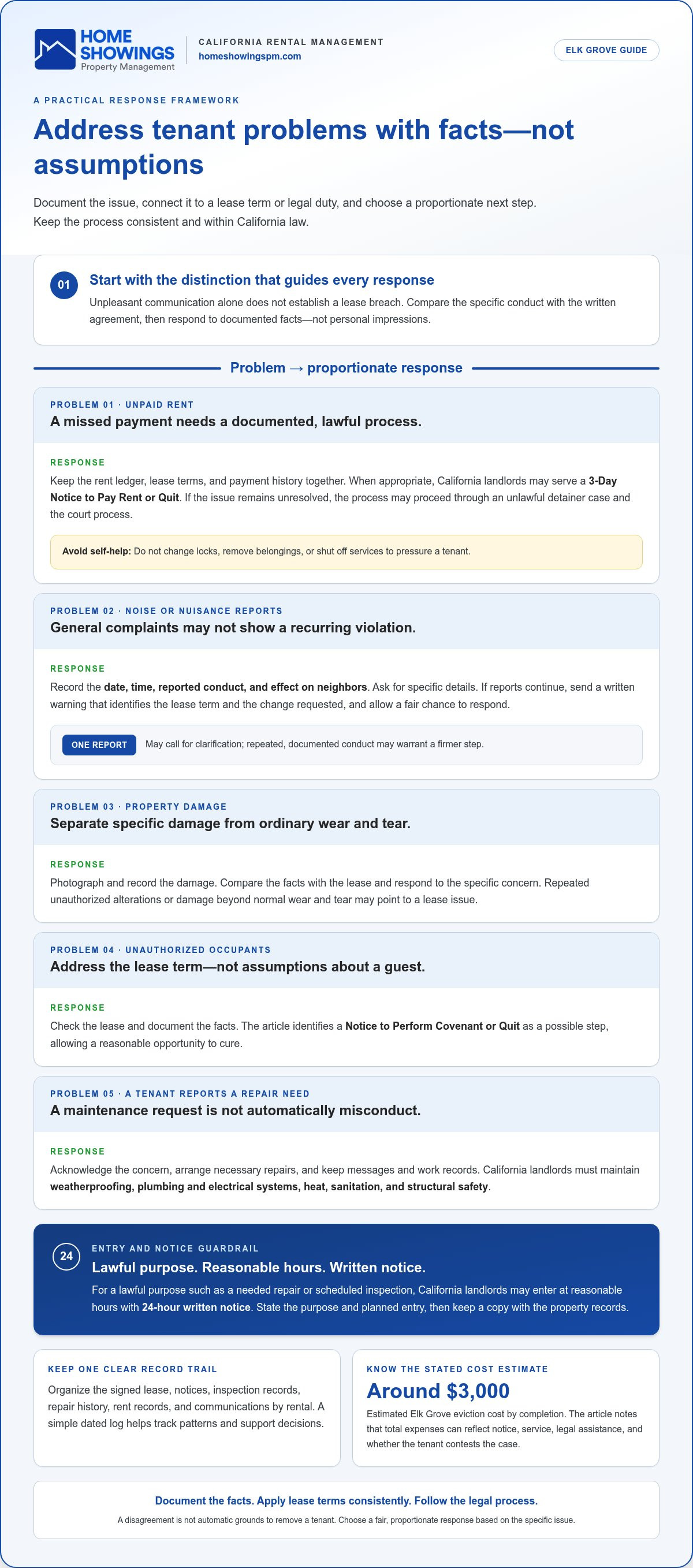
The best way to protect a rental is to set clear lease expectations, document issues as they arise, and respond consistently within California law. For managing difficult tenants in Elk Grove, that means addressing lease violations in writing and using the proper legal process rather than taking matters into your own hands. California landlords may enter a rental for a lawful purpose at reasonable hours with 24-hour written notice, according to the California Legislature.
It’s understandable to worry that a recurring problem could lead to property damage, missed rent, or a drawn-out dispute. A calm, organized response can help protect the property while treating tenants fairly. This guide explains how to document complaints, payments, repairs, and conversations; address issues such as noise, unauthorized occupants, and unpaid rent; and understand key California landlord-tenant protections.
You’ll also learn when a written warning may be appropriate, why consistent records matter, and how to avoid actions that could create additional legal risk. The goal is a practical plan for addressing problems early and making informed decisions if a tenant’s conduct continues.
Table of Contents
1. California landlord-tenant law compliance
Elk Grove landlords may enter a rental for a lawful purpose, at reasonable hours, with 24-hour written notice, according to the California Legislature. Examples include a needed repair or a scheduled inspection. Give written notice that states the purpose and planned entry, then keep a copy with the property records.
California’s rules also shape rent increases and eviction decisions. AB 1482 generally limits annual rent increases in Elk Grove to 5% plus regional CPI, subject to a 10% maximum. For covered tenancies, California AB 1482 provides just-cause protections after 12 months, according to the California Legislature. A qualifying individually owned single-family home needs an exemption disclosure in the lease under California Civil Code § 1947.12(d)(5) to use the rent-cap exemption. Check the lease and property status before taking action; a label alone does not establish an exemption.
Unpaid rent requires a documented, lawful response. California landlords may serve a 3-Day Notice to Pay Rent or Quit when rent is unpaid. Keep the rent ledger, lease terms, payment history, and notice together. Don’t change locks, remove belongings, or shut off services to pressure a tenant. Eviction requires legitimate grounds and compliance with applicable regulations, so avoid treating a disagreement as automatic grounds to remove someone.
Noise and nuisance complaints call for careful handling. Record the date, time, reported conduct, and effect on neighbors, then ask for specific details instead of relying on general claims. If reports continue, issue a written warning identifying the lease term and the change requested. Keep communication professional and allow a fair chance to respond. A single complaint may call for clarification; repeated, documented conduct may warrant a firmer step.
Respond to tenant complaints with the same care. Acknowledge the concern, arrange necessary repairs, and keep the messages and work records. California landlords must maintain weatherproofing, plumbing and electrical systems, heat, sanitation, and structural safety. A request about a leak or failed heat should not be dismissed as difficult behavior. Clear records help owners distinguish a genuine repair issue from an unrelated lease dispute.
Fair-housing-compliant screening starts with consistent, written criteria applied to every applicant. California’s Fair Employment and Housing Act sets anti-discrimination rules under Government Code section 12955. California housing protections include immigration status and source of income among additional protected characteristics. Use the same rental application process and screening standards for each applicant, and base decisions on relevant, consistently applied criteria. Document the reason for each decision rather than relying on assumptions or personal impressions.
When managing difficult tenants in Elk Grove, legal compliance should be part of routine operations, not a last-minute check. Keep the signed lease, notices, inspection records, repair history, and communications organized by rental. When a concern arises, identify the lease term or legal duty involved, document the facts, and choose a proportionate next step. This process supports fair treatment and helps protect the property.
2. What is the best method to protect your property against difficult tenants?
Apply clear lease terms consistently, while distinguishing unpleasant conduct from a documented violation. A tenant who communicates bluntly may be frustrating, but that alone doesn’t show a lease breach. Repeated unauthorized alterations or property damage beyond normal wear and tear, by contrast, may point to specific lease concerns. Identify the conduct, compare it with the written agreement, and respond to the facts rather than personal impressions.
Before signing, set out policies for rent due dates, maintenance requests, noise expectations, guest rules, and how tenants should report problems. Make each term specific enough to apply consistently across properties. For example, explain how to submit a repair request rather than simply telling tenants to “keep the home in good condition.” Review the lease before renewal, too. Clear language helps both parties understand what needs to change and what remains acceptable.
An Elk Grove eviction is estimated to cost around $3,000 by completion. Filing charges are one part of the total; expenses can also reflect required notice, service, legal assistance, and whether the tenant contests the case.
In Sacramento County, the process generally begins with a valid legal ground and the required notice. For unpaid rent, California landlords may serve a 3-Day Notice to Pay Rent or Quit. If the issue remains unresolved, the landlord may pursue an unlawful detainer case, then follow the court’s process and any resulting judgment.
Respond to each problem based on its facts: document late rent and use a notice when appropriate; record noise reports before issuing a written warning; photograph and record damage; and address unauthorized occupants with a Notice to Perform Covenant or Quit, allowing a reasonable opportunity to cure. Charge late fees only when clearly stated in the lease. Don’t treat every complaint as misconduct, especially when a tenant reports a repair need.
Enforcement is clearest when the same lease terms receive the same response. Keep a simple log with the date, relevant clause, communication, and follow-up action. If a tenant corrects a first-time issue, record the resolution rather than escalating automatically. If a documented violation continues after notice, consider a firmer lawful step. Consistency makes decisions easier to explain and reduces the risk of selective enforcement.
When considering renewal, weigh documented lease compliance, property condition, communication, and whether both parties can meet the agreement’s expectations. A respectful conversation before renewal can clarify concerns, confirm agreed changes in writing, and support tenant retention when the relationship remains workable. Screening tenants before move-in also helps owners set consistent expectations, but it doesn’t replace clear policies or active oversight during the tenancy.
3. Keeping records of payments, repairs, and communications
A reliable record turns a tenant challenge into a clear timeline. Keep a file for each rental, with dated rent entries, repair requests, inspection notes, and communications. Record payment amounts and dates, deposits, returned payments, and other property-related transactions. When a payment is late, note the amount due, the date received, and any written arrangement. A complete ledger helps landlords see whether a missed payment is isolated or part of a pattern.
For repairs, save the tenant’s original request, your response, work orders, invoices, and completion notes. Record the date, reported problem, action taken, and any follow-up. For example, keep a message about a leaking sink with the plumber’s visit details and the tenant’s confirmation that the issue was addressed. Keep inspection observations factual, such as “water stain under kitchen sink,” rather than labeling a tenant careless.
Photographs can support condition records. California AB 2801 requires move-out photographs for every tenancy beginning April 1, 2025, taken before cleaning or repairs and after the work is complete. It also requires move-in photographs for tenancies starting July 1, 2025, or later. A thorough move-in inspection gives owners a useful baseline. Store dated images with written notes, and keep the original files together with the tenancy record.
Keep records of emails, texts, phone calls, and in-person conversations. After a phone call, write a brief note with the date, participants, topic, and agreed next step. If a tenant reports damage, summarize the location and requested action without adding assumptions. Store copies of notices and delivery records in the same file. This organized approach makes it easier to handle later disagreements when details or recollections differ.
If a tenant doesn’t respond, send a concise follow-up through the usual communication channel. State the issue, the action needed, and a clear request for a response, without threats or personal remarks. For example: “The maintenance visit is scheduled for Tuesday; please confirm access arrangements.” Record the message and any reply. For a formal notice, follow applicable service requirements rather than treating an informal message as a substitute.
Professional communication can be kind and firm at the same time. Acknowledge the concern, explain the next step, and tie the request to a lease term or property need. “I understand the repair is disruptive; the contractor needs access at the scheduled time” is clearer than an angry warning. When a tenant raises a repair concern, address it directly and document what happens next. Timely, specific replies help prevent small misunderstandings from growing.
Use a consistent filing routine: record each payment, repair update, inspection, or conversation when it occurs. Property management software or a secure folder can organize records by category and date. Review the file before responding to a recurring complaint, disputed payment, or repair follow-up. This simple check helps landlords respond accurately, treat tenants consistently, and preserve a useful history of decisions.
4. Retaliation and fair housing protections
A tenant’s complaint can create a protected-activity concern, so separate the complaint from any later enforcement decision. In California, actions taken within 180 days of a tenant's protected activity are presumed retaliatory unless clearly justified, according to the California Legislature. Before issuing a notice or changing tenancy terms, identify the reason, relevant lease provision, and supporting records. A dated timeline helps show whether the action responds to documented conduct or follows a tenant’s request.
For example, if a tenant reports a needed repair and later misses rent, handle each issue on its own facts. Keep the repair request and response separate from the rent ledger and any notice. Don’t use an unresolved maintenance request as a reason to dismiss a separate concern from the tenant. A clear record of each decision helps property owners explain consistent action without relying on frustration or assumptions.
Fair housing rules also apply during rental marketing, screening, and tenancy management. The federal Fair Housing Act prohibits housing providers from discriminating based on protected characteristics. California’s Fair Employment and Housing Act sets anti-discrimination rules under Government Code section 12955. California also includes immigration status and source of income among additional protected characteristics in housing. Apply the same written screening criteria and communication process to each applicant and tenant.
Consistency matters in everyday decisions, not just during screening. Use the same process when tenants request repairs, ask about lease terms, or report concerns. Record when a request arrives, what action follows, and the reason for any different response. If two tenants report similar maintenance issues, document any difference in urgency or property condition. This keeps the response grounded in the facts rather than the person making the request.
Before taking adverse action, pause and review the file. Confirm the lease term involved, the history of similar issues, the tenant’s communications, and whether the planned response matches past practice. If the tenant recently made a protected complaint, record the independent reason for the decision and the evidence supporting it. Avoid remarks that could suggest punishment for reporting a problem, even during a tense conversation.
Fair treatment also means addressing legitimate residential needs instead of labeling every request difficult behavior. Route a maintenance complaint for review; don’t let an applicant’s income source replace objective screening criteria. Keep messages factual, respectful, and focused on the issue. For managing difficult tenants in Elk Grove, this disciplined approach helps protect the property and reduces the risk that ordinary enforcement appears discriminatory or retaliatory.
5. Common types of difficult tenants
“Difficult” describes an owner’s experience, not a legal category. Focus on specific conduct, lease terms, and documented impact before deciding how to respond. A tenant who asks frequent questions may simply need clear information. Repeated missed rent, unauthorized occupants, or documented property damage presents a different management concern. These distinctions help owners choose a proportionate next step instead of relying on labels.
Late-paying tenants can strain cash flow, especially when missed payments recur. Compare each payment with the lease schedule and keep a dated ledger. If rent remains unpaid, California landlords may serve a 3-Day Notice to Pay Rent or Quit. A payment plan or mediation may be worth exploring before eviction proceedings, depending on the circumstances. Apply the same process consistently, rather than making decisions based on personal frustration.
Noise complaints and conflicts with neighbors need specific information. Record when the disturbance reportedly occurred, what happened, and how the owner learned about it. Ask for details before treating a report as a lease violation. If records show repeated conduct that breaches the agreement, send a written notice describing the concern and expected change. Keep the response factual, even if neighbors demand immediate action.
Property damage, unapproved alterations, and unauthorized occupants can affect a rental in different ways. Compare the property’s condition with inspection records and identify any relevant lease term. California landlords can address unauthorized occupants or pets with a Notice to Perform Covenant or Quit, allowing a reasonable opportunity to cure. Don’t assume every visitor lives at the property; establish the facts before issuing notice or considering eviction.
Some tenants are hard to reach or repeatedly delay access needed for repairs. Use the usual communication channel, state the specific request, and save each attempt. If an inspection or repair visit is needed, explain its purpose and follow applicable entry requirements. A short, clear message is more useful than repeated calls without a written record. This gives both sides a timeline if the issue continues.
Preventive screening can help owners assess applications using consistent, written criteria. Review credit and income information only as part of a uniform process, and avoid assumptions about applicants or their housing needs. Once tenancy begins, respond to maintenance requests and payment concerns through clear procedures. Property management services can help coordinate these routines, but every response should still reflect the lease and documented facts. An Elk Grove eviction is estimated to cost around $3,000 by completion, making early, proportionate problem-solving valuable.
For help coordinating tenant screening, rent collection, and ongoing rental oversight, explore property management services for residential rentals.
Home Showings Property Management: Property Management
Home Showings Property Management helps owners manage residential rentals through full-service property management, from tenant screening and rental marketing to rent collection. Consider property management when handling tenant issues, organizing records, or coordinating the rental process takes more time than you can reasonably give.
Consistent screening establishes a clear process before a tenancy begins. During the rental period, organized rent collection supports payment tracking, while property management connects oversight to the rental’s day-to-day needs. These services don’t replace legal advice on a specific dispute, but they can help owners maintain steady operations and respond more systematically.
Contact Home Showings Property Management or visit homeshowingspm.com to discuss property management for your rental.
Set Up a More Sustainable Rental Routine
Decide which parts of rental ownership need your attention and which would benefit from structured support. If tenant concerns regularly interrupt your schedule, create a routine for reviewing communications, tracking recurring issues, and assigning follow-up. A steady approach to managing difficult tenants in Elk Grove can help you respond deliberately instead of letting each new issue dictate the day.
Home Showings Property Management offers property management, rental marketing, and tenant screening. These services support owners seeking organized oversight, a more deliberate start to a tenancy, or help managing the rental process. Consider support when daily coordination takes attention away from other priorities or when you want a consistent process for your rental.
Take the next step at your pace. Contact Home Showings Property Management to discuss support for your rental, and move forward with a clearer plan.
Frequently Asked Questions
What is the best method to protect your property against difficult tenants?
Use a written process that connects each concern to a lease term, evidence, and proportionate next step. For example, if a tenant reports damage after a repair visit, compare the report with the work order and inspection records before assigning responsibility. Track recurring issues separately from one-time misunderstandings. In Elk Grove, consistent records and even-handed decisions help owners protect their rental and keep tenant interactions professional.
What is the best way to respond to a disrespectful tenant?
Stay calm, keep your reply focused on the issue, and don’t match an angry tone. If a tenant sends an insulting message about a repair, acknowledge the repair concern and state the next action without responding to personal remarks. Move important conversations into writing, use neutral language, and save the exchange. If communication becomes threatening or raises an immediate safety concern, prioritize safety and document what occurred.
What are California landlord-tenant laws for dealing with difficult tenants?
California landlords must follow applicable lease, habitability, fair-housing, notice, and eviction rules rather than use self-help measures. For covered tenancies, AB 1482 provides just-cause protections after 12 months, according to the California Legislature. California landlords must also maintain essential conditions such as plumbing, heat, sanitation, and structural safety. A tenant’s difficult manner alone does not establish legal grounds for eviction; the facts and governing rules matter.
How do Elk Grove landlords document lease violations and tenant complaints?
Create a dated incident record identifying the property, concern, relevant lease term, and response. For a neighbor’s noise report, note the reported time and specific conduct, then keep the complaint and any written tenant response. Store related photos, repair documents, notices, and delivery records together. Separate observed facts from assumptions, and record how the issue was resolved or what follow-up remains.
What are the legal steps to serve a notice to cure or quit in California?
First identify the lease term at issue and confirm that the notice matches the violation. For unauthorized occupants or pets, California guidance recommends a Notice to Perform Covenant or Quit and a reasonable opportunity to cure. State the conduct and required correction clearly, follow applicable service rules, and retain proof of service. If the violation continues, assess the next lawful step rather than treating the notice as an eviction order.
What tenant protections and eviction limits apply in Elk Grove and California?
Protections can include rent-cap and just-cause rules for covered tenancies, fair-housing safeguards, and restrictions on retaliatory conduct. California AB 1482’s just-cause protections apply after 12 months for covered tenancies, according to the California Legislature. Actions within 180 days of a tenant’s protected activity are presumed retaliatory unless clearly justified, also according to the California Legislature. Applicability depends on tenancy coverage, property details, and the action being considered.
Should landlords hire a property manager or landlord-tenant attorney in Elk Grove, and what do they cost?
Choose based on the task: a property manager can coordinate routine rental operations, while an attorney can advise on legal disputes and eviction proceedings. Home Showings Property Management offers residential Property Management, including rental-process support. Management pricing depends on the case and is provided after a quote request; scope and services affect the price. Legal fees also depend on the work involved, such as reviewing notices or handling a contested case.
How can landlords screen tenants and prevent difficult-tenancy problems in Elk Grove?
Use written screening criteria consistently, verify application details, and base decisions on relevant information rather than impressions. The stated screening criterion for Elk Grove rentals requires gross household income of at least three times the monthly rent; apply criteria uniformly and within fair-housing rules. Before move-in, explain how to submit maintenance requests, make payments, and report concerns. A clear lease and documented property condition set useful expectations from the start.


Comments