
Sacramento Apartment Inspection Guide: Landlords & Tenants

Could a single missing photograph really be the difference between a smooth move-out and a heated legal dispute? In our local market, a poorly documented apartment inspection often leads to significant financial headaches for both parties. We know that the transition between tenants is a high-pressure window where owners and renters feel vulnerable to hidden costs or unfair claims. It's difficult to feel confident when the definition of "normal wear and tear" seems to change depending on who you ask.
If you want to avoid the stress of "he said, she said" disputes, you need a documented proof of condition that holds up under scrutiny. This guide will help you master the process by providing a professional checklist and essential California-specific legal insights. You'll gain a repeatable system to protect your property value and your security deposit. We'll explore the updated 2026 Sacramento Rental Housing Inspection Program requirements, including the expanded rules for buildings with four or more units and mandatory repair timelines. By the end, you will have a clear roadmap for documenting property conditions with the meticulousness of a local expert, ensuring you stay compliant with CA Civil Code while maintaining total transparency.
Table of Contents
The Strategic Importance of the Apartment Inspection
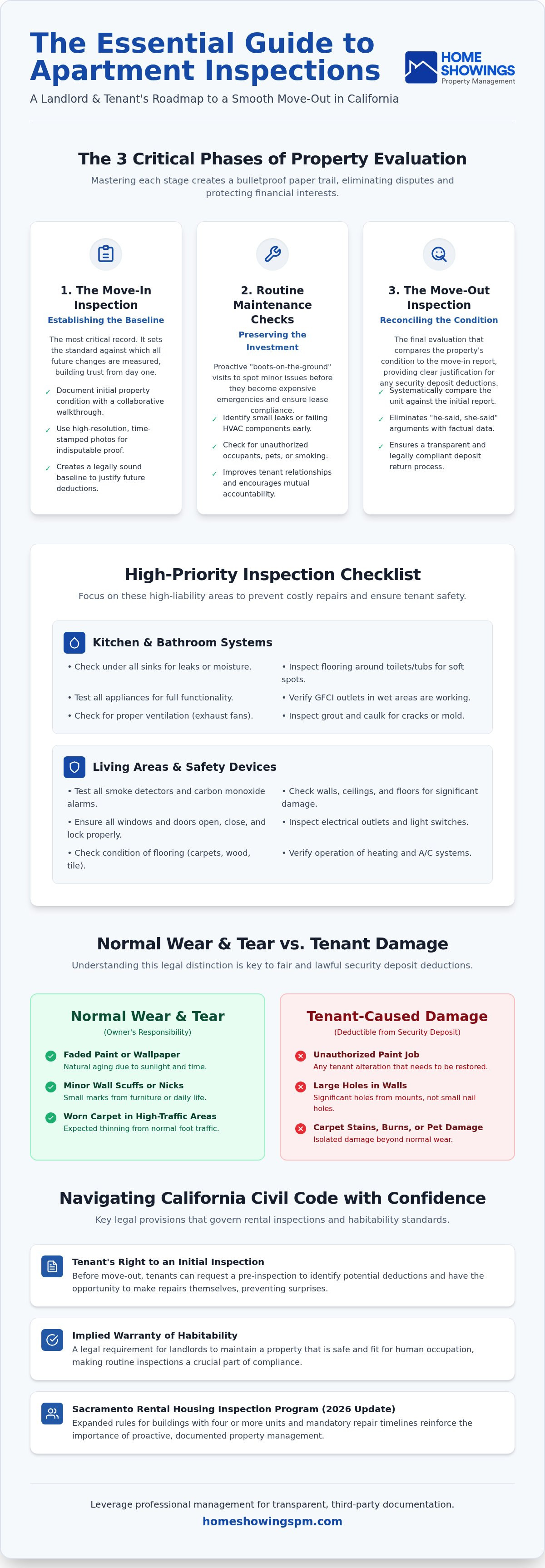
An apartment inspection isn't just a formality; it's a systematic evaluation of a rental unit's condition that serves as a financial safeguard for everyone involved. In the Greater Sacramento area, where property values and rental regulations are constantly evolving, these checks act as a neutral audit. We view the process in three distinct stages: move-in (the baseline), routine (the preservation), and move-out (the reconciliation). When you document every detail meticulously, you eliminate the "he-said, she-said" tension that often derails security deposit returns.
Beyond just documentation, regular oversight is a core component of the implied warranty of habitability. This legal principle requires owners to maintain a property that is safe and fit for human occupation. If you neglect these evaluations, you aren't just risking a tenant dispute; you're potentially jeopardizing the long-term value of your investment. It's much easier to maintain a building's worth through steady oversight than it is to recover value after years of deferred maintenance.
Move-In vs. Move-Out: Establishing the Baseline
The move-in inspection is arguably the most critical document a landlord will ever sign. This initial record sets the standard against which all future changes are measured. Tenants have a right to request a joint walkthrough before taking possession, and we highly recommend this collaborative approach. It builds trust from day one and ensures everyone agrees on the starting condition of the home.
To make this record indisputable, we use high-resolution, time-stamped photos through our digital portals. If a dispute arises later about a scuff on the floor or a cracked tile, these photos provide the ultimate proof. Without this clear baseline, it's nearly impossible to legally justify deductions for damages that exceed normal wear and tear. It's about replacing memory with data.
The Role of Routine Maintenance Checks
If you wait until a tenant calls about a flood, it's often already too late. Routine maintenance checks allow us to spot small leaks under sinks or aging HVAC components before they turn into multi-thousand-dollar emergencies. We treat these visits as a proactive "boots-on-the-ground" strategy to preserve the property and keep costs predictable for the owner.
These checks also serve a dual purpose of ensuring lease compliance. We look for signs of unauthorized occupants, unapproved pets, or indoor smoking that could damage the unit's longevity. At Home Showings Property Management, we find that these visits actually improve tenant relationships. When residents see that we are attentive to the property's condition, they feel more respected and are often more likely to take better care of the space themselves. It's a simple way to create a culture of mutual accountability.
The Essential Apartment Inspection Checklist: Room-by-Room
A successful apartment inspection requires more than a quick walk-through; it demands a structured technical audit. By following a repeatable checklist, you ensure that no detail is overlooked, from the smallest leak to the most critical safety device. We prioritize high-liability zones like kitchens and bathrooms because these areas often hide the most expensive maintenance issues. If you want to keep your property in peak condition without the weekend stress, our professional property inspections provide the systematic oversight you need to protect your investment.
Kitchen and Bathroom Systems
Water is the primary enemy of property value. When we evaluate these rooms, we look for any sign of moisture where it shouldn't be. We check under every sink for damp cabinets and inspect the flooring around toilets and tubs for soft spots. It's also vital to test all appliances for full functionality. We run the dishwasher through a short cycle and verify that the stove burners and microwave are operating correctly. Don't forget to test the Ground Fault Circuit Interrupter (GFCI) outlets; these are essential for safety in wet areas and are a frequent point of failure in older Sacramento rentals.
Living Areas and Safety Devices
Safety is a non-negotiable standard for any habitable home. California law is very specific about the requirements for smoke detectors and carbon monoxide alarms in every rental unit. The California Attorney General's Landlord-Tenant Guide details these habitability standards, which include ensuring all window locks and door deadbolts are fully secure. We also examine the walls and flooring for damage. While small nail holes from hanging pictures are usually considered normal wear, we document larger punctures or significant carpet stains that would require professional repair or replacement.
HVAC and Energy Efficiency
With Sacramento summers often reaching triple digits, the HVAC system is one of your most valuable assets. We check the responsiveness of the thermostat and ensure that air filters are clean to prevent system strain. We also inspect windows for seal failures or drafts that could drive up utility costs for the tenant. For properties with four or more units, which are now subject to annual safety inspections under the expanded 2026 Sacramento Rental Housing Inspection Program, we also verify that common areas and exterior lighting are fully functional. This proactive approach ensures you're always ready for a city or county audit.
Test all light fixtures and replace burnt-out bulbs immediately.
Verify that all doors open and close smoothly without sticking.
Check that every room has adequate ventilation to prevent mold growth.
Normal Wear and Tear vs. Tenant Damage
One of the most contentious moments of any apartment inspection occurs when a landlord and tenant disagree on what constitutes damage versus natural aging. California law protects tenants from being charged for the natural deterioration that comes with living in a home. We see this as a matter of fairness and legal compliance. If you've lived in a unit for five years, the paint and carpet won't look brand new, and that's perfectly acceptable. Landlords must understand that a security deposit isn't a fund for property upgrades; it's a specific protection against negligence.
The length of a tenancy heavily influences these evaluations through the concept of "useful life." For example, many housing standards suggest a five-year useful life for rental-grade carpet. If a tenant moves out after six years and the carpet is simply worn down from walking, the landlord usually cannot charge for replacement. At the end of a lease, we look for "broom clean" condition. This standard requires that floors are swept, cabinets are emptied, and all trash is removed, but it doesn't require the unit to be in a state of surgical sterilization unless it was delivered that way.
Defining Normal Wear and Tear
Normal wear and tear is the inevitable physical decline of a property's components that occurs through standard use within their projected useful life. This includes things like paint that has faded due to Sacramento sunlight or minor scuffs on baseboards in high-traffic hallways. You might also notice carpet pile that has become matted in the center of a room or door handles that have become slightly loose over several years. These are the expected results of a person simply living in a space, and they fall under the landlord's responsibility for ongoing maintenance.
Identifying Actionable Tenant Damage
Actionable damage is different because it results from abuse, accidents, or neglect. During a move-out apartment inspection, we look for clear signs of impact or misuse that exceed standard aging. Examples include large holes in drywall, broken window panes, or deep burns on kitchen countertops. These issues require specific repairs that go beyond routine turnover prep. Pet-related issues, such as deep urine stains in the subflooring or heavy odors that linger after cleaning, also qualify as damage because they require professional remediation to restore the unit's habitability. You can learn more about wear and tear definitions to help set clear expectations before the final walkthrough.
If you're unsure how to document these differences, using a digital portal with side-by-side move-in and move-out photos is the best way to remain objective. It's much easier to justify a deduction when you can show a tenant a photo of a pristine wall from three years ago next to a photo of a new hole. This transparency reduces friction and keeps everyone on the same page.
California Legal Requirements for Rental Inspections
Staying compliant with state law isn't just about following rules; it's about protecting yourself from costly litigation and administrative fines. In California, the balance of power between property owners and residents is carefully regulated, especially regarding privacy and security deposits. If you're managing property in our region, you must also account for local ordinances like the Sacramento Rental Housing Inspection Program. This program expanded on June 1, 2026, to include all buildings with four or more units. Understanding these layers of regulation ensures your apartment inspection is both legal and effective.
Notice of Entry Rules
California law generally prohibits landlords from entering a tenant's home without a valid reason and proper notice. For a routine apartment inspection, you're required to provide at least 24 hours of written notice. This notice should specify the date, time, and purpose of the entry. Legally, these visits should occur during normal business hours, typically Monday through Friday from 8:00 AM to 5:00 PM. Exceptions exist for true emergencies, such as a burst pipe or a fire, where immediate entry is permitted to prevent significant damage. Keep in mind that California law now mandates a 24-hour response for emergency repairs like lack of heat or water, so quick entry is often in everyone's best interest.
The Pre-Move Out Inspection Right
One of the most overlooked tenant rights is the "Initial Inspection" under California Civil Code 1950.5. Landlords must notify tenants in writing of their right to request this walkthrough before the lease ends. Ideally, this happens about two weeks before the move-out date. During this visit, the landlord identifies issues that might lead to security deposit deductions. We provide an itemized list of these potential charges on the spot. This gives the tenant a fair opportunity to fix the problems themselves before they vacate. It's a proactive step that significantly reduces disputes and ensures a smoother transition for everyone involved.
If you discover abandoned property during an inspection after a tenant has left, don't simply throw it away. California has specific procedures for notifying the former resident and storing the items for a set period. Managing these legal nuances requires a steady, experienced hand to avoid claims of privacy violations. If you want to ensure your property remains fully compliant with every state and local mandate, contact our property management experts to handle your inspections with professional precision.
Optimizing Inspections with Professional Management
Managing a recurring apartment inspection schedule across multiple units can quickly become a logistical burden for independent landlords. By partnering with a professional management team, you replace manual checklists with a standardized, high-efficiency system. We act as a neutral third party, which is invaluable during sensitive move-out reconciliations. When a professional conducts the walkthrough, it removes the emotional friction often present in direct landlord-tenant interactions, ensuring the focus remains strictly on the property's condition and lease compliance.
If a routine check reveals a maintenance issue, we don't just report the problem; we initiate the remedy. Our team coordinates repairs immediately, leveraging a network of trusted local vendors to keep your property in peak condition. This proactive approach is essential for meeting the strict California repair timelines mentioned earlier, such as the 72-hour window for health and safety issues. By handling these details on your behalf, we provide a worry-free experience that preserves your time and your investment's value.
Digital Portals and Transparent Reporting
Transparency is the foundation of a healthy rental relationship, and technology is the tool that makes it possible. We utilize dedicated Owner Portals to give you instant access to detailed inspection reports, complete with high-resolution photos and technical notes. This tech-forward approach ensures that every detail of the property's condition is documented and stored securely for future reference, leaving no room for ambiguity.
Tenants also benefit from these digital systems. They use their portals to document move-in conditions and submit maintenance requests with attached photos, creating a shared digital record from day one. This streamlined communication ensures that small leaks or appliance malfunctions are tracked and resolved before they escalate. You can explore the benefits of owner portals to see how integrated technology simplifies every aspect of property oversight, from inspections to cash flow management.
Local Expertise in Elk Grove and Sacramento
Our "boots-on-the-ground" presence in the Greater Sacramento and Elk Grove regions means we understand the specific municipal codes and habitability standards that local inspectors prioritize. We are intimately familiar with the Sacramento Rental Housing Inspection Program and its recent expansion, ensuring your property remains compliant with all local fees and safety audits. This local knowledge allows us to anticipate issues that out-of-area owners might overlook.
Beyond compliance, our local expertise helps reduce vacancy rates. By coordinating maintenance and cleaning services immediately after an apartment inspection, we ensure your property is "show-ready" the moment it hits the market. This efficiency is a core part of our full-service model, designed to protect your residential assets while providing a stable, high-quality home for your tenants. We take pride in being the meticulous organizers who keep your investment several steps ahead of potential issues.
Securing the Future of Your Rental Property
Mastering the apartment inspection process is about more than just checking boxes; it's about building a foundation of trust and transparency. By establishing a clear baseline at move-in and conducting routine checks, you protect your property's value while respecting tenant rights. Remember that thorough documentation, from time-stamped photos to itemized pre-move-out lists, is your most effective tool for avoiding security deposit disputes. Staying ahead of Sacramento's evolving rental housing codes ensures you remain compliant and your investment stays profitable.
If the complexities of California law and maintenance coordination feel overwhelming, you don't have to manage them alone. We provide comprehensive inspection reporting and expert local maintenance coordination to keep your properties in peak condition. Through our transparent digital portals for owners and tenants, you can monitor your assets with total confidence. Protect your investment with professional property management in Sacramento and enjoy the stability of a well-ordered rental business. With a proactive strategy and the right local experts by your side, you can turn property management into a worry-free experience.
Frequently Asked Questions
Do I have to be present for my apartment inspection in California?
You aren't legally required to be present for an apartment inspection in California, but we strongly advise it. Being there allows you to discuss potential issues in real time and reach an agreement on the spot. For the "Initial Inspection" before move-out, you have a specific right under Civil Code 1950.5 to be present. This transparency helps residents in Sacramento and Elk Grove avoid unexpected deductions later on.
Can a landlord charge for professional carpet cleaning at move-out?
Landlords in Sacramento can only charge for professional carpet cleaning if the unit's condition at move-out is less clean than it was at move-in. They can't charge you to fix normal wear and tear. If you've kept the home in good condition, a standard "broom clean" is usually sufficient. We always recommend that owners provide documentation of the original cleanliness to ensure any charges are fair and legally defensible.
What happens if a landlord does not perform a move-in inspection?
If a landlord skips the move-in inspection, they lose their primary evidence for claiming damages at the end of the lease. Without a documented baseline, it's nearly impossible to prove that a specific stain or scratch didn't exist before the tenant moved in. In our Sacramento property management practice, we use digital portals to ensure this baseline is never missed, protecting both the owner's investment and the tenant's deposit.
How much notice does a landlord need to give for a routine inspection in Sacramento?
A landlord must provide at least 24 hours of written notice before entering your home for a routine apartment inspection. This notice needs to include the date, approximate time, and the reason for entry. These visits should only happen during normal business hours. In the Greater Sacramento area, following these notice rules is essential for maintaining a positive relationship and staying compliant with California’s strict privacy regulations.
Can I lose my security deposit for small nail holes in the walls?
You typically won't lose your security deposit for a few small nail holes used to hang pictures or mirrors. California law considers these to be normal wear and tear. However, large holes from wall-mounted TVs, deep gouges, or excessive "Swiss cheese" walls may lead to deductions for repair and painting. We encourage tenants to check their lease agreements for specific rules regarding wall modifications before they start decorating.
What is the "useful life" of apartment paint and flooring in CA?
While California law doesn't set a rigid number, the "useful life" of interior paint is generally considered two to three years. For rental-grade carpet, the industry standard is often five years. If a tenant moves out after these periods, the landlord shouldn't charge for painting or carpet replacement due to natural aging. Understanding these timelines helps Sacramento owners and tenants set realistic expectations for move-out costs and property maintenance.
What happens if I refuse to allow a routine inspection?
If your landlord provides proper 24-hour notice, you generally can't refuse a routine inspection without risking a lease violation. Landlords have a legal right to enter to ensure the property is safe and well-maintained. If the proposed time is genuinely inconvenient, most managers in the Elk Grove area are happy to reschedule for a better window. Open communication usually prevents these situations from turning into formal legal disputes.
Does a landlord have to provide a copy of the inspection report?
Yes, if you request an "Initial Inspection" before moving out, the landlord must provide an itemized statement specifying required repairs or cleaning. This document gives you the chance to fix those issues before your final move-out date. For routine checks, we provide our owners and tenants with digital reports through our secure portals. This ensures everyone has a clear, documented record of the home's condition at all times.


Comments