
Sacramento Rental Property Lease Requirements: 2026 Landlord Compliance Guide

A single outdated clause can instantly derail an eviction or expose your rental business to severe statutory penalties. If keeping up with shifting state mandates and city-level rules feels like trying to hit a moving target, you are certainly not alone. Truly mastering Sacramento rental property lease requirements requires harmonizing hyper-local municipal ordinances, such as the City's Tenant Protection Program, with strict California mandates governing security deposits, habitability standards, and entry notifications.
You shouldn't have to lose sleep wondering whether your agreement will stand up under legal scrutiny. In this comprehensive guide, you'll discover how to implement mandatory California statutory disclosures, city-specific registration rules, and essential protective clauses designed to safeguard your rental investment. We'll walk step-by-step through the required disclosures, recent statutory updates, and operational onboarding practices to keep your Sacramento property fully compliant and protected.
Table of Contents
Mandatory California and Sacramento Lease Disclosures for 2026
Executing an enforceable residential contract in the Capital City means satisfying multiple overlapping regulatory layers. Generic templates often overlook how municipal codes intersect with statewide rules, leaving property owners exposed to administrative citations and contested evictions. Meeting comprehensive Sacramento rental property lease requirements begins with assembling mandatory statutory addenda before a tenant ever receives the keys.
Federal and State Statutory Disclosure Addenda
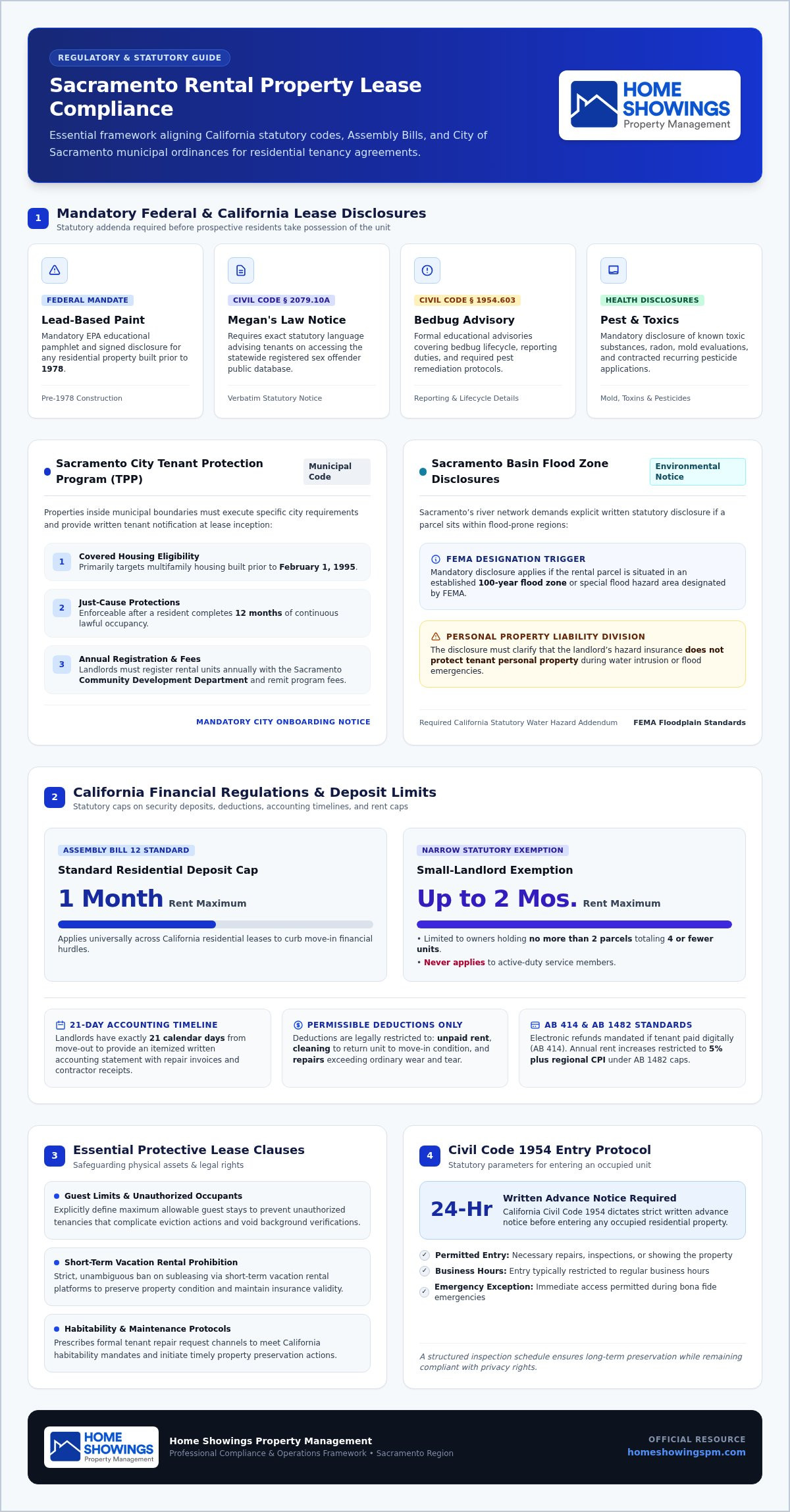
Every legally binding contract relies on proper disclosure execution. In California, residential lease agreements must provide specific statutory advisories alongside core financial terms. Omitting these addenda undermines the agreement's legal standing from day one:
Lead-Based Paint: Federal law mandates providing the EPA pamphlet and a signed disclosure for any residential unit built before 1978.
Megan's Law Notice: California Civil Code Section 2079.10a requires verbatim statutory language informing residents about the statewide registered sex offender database.
Bedbug Advisory: Per Civil Code Section 1954.603, landlords must distribute formal educational notices detailing bedbug biology, reporting instructions, and pest control protocols.
Environmental Hazards & Pest Treatments: Landlords must disclose known toxic substances, lead, radon, mold assessments, and periodic pesticide applications by contracted pest services.
Sacramento City Tenant Protection Program (TPP) Requirements
Beyond state mandates, properties within the City of Sacramento boundaries face distinct local oversight. Under the Sacramento Tenant Protection Program (TPP), landlords must determine whether their parcel falls under municipal limits and provide written notification of TPP rights at the inception of tenancy. Covered units, primarily multifamily housing built prior to February 1, 1995, carry specific just-cause protections once a tenant completes 12 months of continuous occupancy. Additionally, city landlords must register their rental units annually with the Community Development Department and stay current on municipal program fees.
Environmental Hazard and Flood Disclosures in the Sacramento Basin
Sacramento's geography between major river systems introduces severe flood considerations. State law requires landlords to inform prospective tenants if the parcel sits within an established 100-year flood zone or special flood hazard area designated by FEMA. This notification must outline that the landlord's hazard insurance does not protect a tenant's personal property, clarifying the division of financial liability in water intrusion emergencies. To safeguard your investments against shifting requirements, review our definitive California landlord-tenant compliance guide to ensure your leases reflect current statutory updates.
Rent, Security Deposit, and Fee Regulations Under California Law
Financial clauses form the operational backbone of any residential agreement. Misinterpreting statutory caps on deposits or annual rent adjustments creates immediate legal exposure for landlords under California law. Understanding shifting Sacramento rental property lease requirements ensures your financial terms remain balanced, transparent, and fully enforceable in court.
California Security Deposit Limits and Deductions
Statewide rules under Assembly Bill 12 restrict residential security deposits to a maximum of one month's rent. A narrow exemption permits individual property owners holding no more than two residential parcels totaling four or fewer dwelling units to collect up to two months' rent, though this exemption never applies to active-duty service members. Deductions are strictly limited to unpaid rent, cleaning to return the unit to move-in condition, and repairs beyond ordinary wear and tear.
Landlords must provide an itemized written accounting statement alongside copies of invoices and contractor receipts within 21 calendar days of vacancy. Under AB 414, landlords must also offer electronic deposit refunds if the tenant submitted funds digitally.
Rent Caps Under AB 1482 and Local Sacramento Ordinances
Rent adjustments demand strict adherence to both state statutes and municipal regulations:
Statewide Cap (AB 1482): Limits annual rent increases to 5% plus the regional Consumer Price Index, capped at a maximum of 10% through 2030.
Sacramento City Ordinance: Covered units under the Sacramento Tenant Protection Program face a maximum annual rent increase cap of 8.6% effective July 1, 2026, combining a 5% base with the 3.6% CPI change.
Exemption Disclosures: Leases must state clearly whether the property is subject to statutory rent caps or exempt, such as separately alienable single-family homes held by individual owners.
Late Fees, Payment Methods, and Grace Periods
Late fee provisions must represent a reasonable pre-estimate of administrative costs resulting from late payments rather than punitive fees. Under California Civil Code Section 1947.3, property owners cannot mandate electronic payments as the sole option, meaning you must provide at least one alternative method such as a cashier's check or money order. Setting firm rent due dates, five-day grace periods, and clear payment processing guidelines protects cash flow while maintaining cordial tenant relations. If balancing these complex statutory rules feels demanding, consulting experienced residential leasing and property management specialists ensures your operational systems remain completely compliant.
Essential Tenancy Clauses for Sacramento Rental Agreements
Drafting clear operational rules upfront protects your property from unintended legal liabilities and civil disputes. While statutory disclosures satisfy regulatory agencies, your lease covenants establish daily expectations for how residents treat the home. Structuring robust Sacramento rental property lease requirements prevents ambiguities before they turn into costly courtroom battles.
Occupancy Limits and Guest Policies
Every adult residing on the premises must sign the agreement as a jointly and severally liable leaseholder. To prevent informal, unauthorized subtenancies, define clear guest parameters, such as restricting visitor stays to no more than 14 consecutive days or 30 days within a calendar year without prior written consent. Once a visitor crosses that threshold, require them to submit a formal rental application. Screening every prospective adult occupant using our guide to California tenant screening protects existing tenancy covenants while honoring state application fee regulations ($65.86 maximum per applicant in 2026).
Subletting, Assignment, and Short-Term Rental Bans
Unapproved subleasing exposes property owners to severe insurance gaps, neighborhood complaints, and municipal code violations. Your agreement should strictly prohibit assigning the lease, renting out individual rooms, or listing the residence on transient hosting networks like Airbnb or Vrbo without written authorization. Classify unauthorized commercial hosting as an incurable, material breach of contract. This clear distinction gives you immediate legal footing to issue formal statutory notices rather than enduring lengthy disputed eviction proceedings.
Pets, Assistance Animals, and Property Care Rules
Pet provisions must separate standard domestic pets from federally protected service and support animals. While you can restrict pet breeds or charge reasonable pet rent for companion animals, California and federal Fair Housing laws prohibit charging pet deposits or fees for verified assistance animals.
Additionally, outline operational maintenance responsibilities. Effective January 1, 2026, California Assembly Bill 628 establishes working stoves and refrigerators as mandatory habitability equipment that landlords must maintain. Leases should require tenants to test smoke and carbon monoxide detectors monthly, manage routine exterior upkeep, and submit urgent maintenance requests promptly through designated channels to preserve your physical asset.
Property Inspections and Legal Right of Entry Rules
Balancing property preservation with resident privacy requires strict adherence to statutory entry protocols. In California, landlords cannot walk onto an occupied parcel whenever they please, even for routine checkups. Incorporating statutory entry parameters into your Sacramento rental property lease requirements prevents tenant harassment claims while establishing a reliable schedule for property maintenance.
Permissible Grounds for Landlord Entry Under Civil Code 1954
California Civil Code Section 1954 strictly limits when an owner or agent can enter an occupied home. Entry is allowed exclusively under clear conditions:
Responding to an immediate physical emergency, such as an active plumbing leak.
Completing necessary or agreed-upon repairs, decorations, or improvements.
Conducting initial move-out inspections requested by the departing resident.
Showing the premises to prospective tenants, purchasers, or mortgage lenders.
Acting in accordance with a formal court order or after verified tenant abandonment.
Except in real emergencies, landlords must provide written notice at least 24 hours prior to entry. The notice must specify the calendar date, a reasonable four-hour arrival window during standard business hours, and the specific reason for access. Delivering these notices through certified mail, in-person delivery, or confirmed tenant portal notifications ensures you retain a timestamped record.
Initial Pre-Move Out Inspection Protocols
California law guarantees tenants the right to an initial pre-move out walk-through before surrendering possession. Landlords must give written notice of this right within a reasonable time after receiving a notice to vacate. Scheduled no earlier than two weeks prior to termination, this walk-through allows you to provide an itemized list of necessary repairs. The tenant then gets a fair opportunity to fix identified issues before final deposit deductions occur. Utilizing our California rental property inspection checklist standardizes this evaluation process across every turnover.
Documenting Property Preservation and Baseline Asset Conditions
Solid documentation eliminates wear-and-tear disputes before they start. Conduct comprehensive photographic walk-throughs at move-in, generating an itemized condition report signed by all parties. Periodic interior property inspections should monitor smoke detectors, water lines, and habitability standards while respecting quiet enjoyment. Partnering with professional property maintenance management in Sacramento gives owners methodical asset oversight, ensuring timely repairs and complete statutory compliance. If you want seamless operational oversight that shields your portfolio, partner with our professional leasing and property management team today.
How Professional Sacramento Property Management Guarantees Lease Compliance
Managing rental homes across Northern California requires active operational diligence. Downloaded templates and do-it-yourself agreements rarely account for the frequent statutory adjustments emerging from state and local lawmakers. By entrusting your investments to seasoned professionals, you ensure that every contract satisfies current Sacramento rental property lease requirements while protecting your bottom line from avoidable legal exposure.
Bulletproof Lease Agreements Tailored to the Greater Sacramento Market
A legally sound agreement must adapt directly to regional municipal codes. Operating across Sacramento, Elk Grove, Roseville, and Folsom means adjusting terms based on whether a home falls within unincorporated county territory or specific city boundaries. Professional residential leasing oversight eliminates unenforceable restrictions, ambiguous penalty clauses, and outdated deposit terms that invite tenant counterclaims. Integrating secure digital signing and automated document archiving through dedicated owner and tenant portals creates an irrefutable audit trail for every addendum, condition report, and statutory notice.
End-to-End Leasing, Tenant Placement, and Enforcement
True asset protection extends far beyond the initial lease signing. It requires disciplined operational execution across the entire tenancy lifecycle:
Rigorous Tenant Screening: Evaluating applicants thoroughly against documented income ratios, credit histories, and prior rental verifications while adhering strictly to Fair Housing regulations.
Structured Rent Collection: Processing monthly payments smoothly online, enforcing clear grace periods, and minimizing delinquency rates.
Proactive Maintenance & Inspections: Conducting routine walk-throughs to verify lease compliance, spot deferred maintenance early, and preserve long-term building health.
Discover how systematic leasing safeguards your rental revenue in our Sacramento property management owner guide.
Protect Your Investment with Home Showings Property Management
Managing rental investments shouldn't mean spending your weekends tracking statutory amendments or fielding repair calls. With dedicated local specialists managing your residential leasing and day-to-day property maintenance, you gain complete peace of mind knowing your properties adhere strictly to all Sacramento rental property lease requirements. You enjoy reliable cash flow, protected real estate assets, and transparent communication backed by modern digital tools. Connect with Home Showings Property Management today to ensure your portfolio remains fully protected, compliant, and optimized for long-term growth.
Safeguard Your Investment with Confident Lease Compliance
Operating a profitable rental portfolio shouldn't mean constantly worrying about shifting legal liabilities. Staying aligned with current Sacramento rental property lease requirements protects your bottom line, whether you are managing security deposit limits under AB 12, distributing mandatory statutory disclosures, or setting firm occupancy guidelines. When your operational systems and lease terms harmonize with local and state standards, you eliminate guesswork and build lasting asset security.
Home Showings Property Management brings seasoned local expertise across Sacramento, Elk Grove, Folsom, and Roseville. From rigorous tenant screening and proactive property maintenance to streamlined oversight through dedicated owner and tenant portals, our team manages every operational detail with meticulous care. Partner with Home Showings Property Management for fully compliant residential leasing to enjoy total peace of mind while your real estate investment thrives.
Frequently Asked Questions
Can a Sacramento landlord charge two months of rent for a security deposit?
Under California AB 12, most residential landlords can only charge a maximum of one month's rent for a security deposit. A narrow exemption permits natural persons or qualifying LLCs owning no more than two properties totaling four or fewer dwelling units to request up to two months. However, this exception never applies if the prospective resident is an active-duty military service member.
What notices are required under the City of Sacramento Tenant Protection Program?
Landlords owning covered units must provide prospective residents with a written disclosure outlining their rights under the Tenant Protection Program when the tenancy begins. This local notification explains city just-cause eviction standards, annual rent adjustment caps, and administrative dispute avenues. Incorporating this document directly into your Sacramento rental property lease requirements ensures your agreement aligns with municipal housing codes.
Are landlords in Sacramento required to provide 24 or 48 hours notice before entering?
Landlords must provide at least 24 hours of advance written notice before entering an occupied unit under California Civil Code Section 1954. The notice must outline the planned calendar date, a reasonable arrival window during regular business hours, and the legitimate purpose for access. The only exception allowing immediate entry without prior notification is an active emergency posing an immediate threat to life or property.
Is there a mandatory grace period for late rent payments in California residential leases?
California statutory law does not mandate an automatic grace period for late rent payments. Rent is legally due on the specific date defined in the lease agreement, typically the first of the month. While many property owners choose to offer a contractual three-to-five-day grace window before applying reasonable administrative late fees, any grace period must be clearly outlined within the executed lease covenants.
Can a landlord prohibit subleasing or short-term vacation rentals in a Sacramento lease?
Yes, landlords have full legal authority to prohibit unauthorized subleasing, assignments, and transient lodging. Your lease covenants should explicitly ban advertising or booking the home through hosting networks like Airbnb or Vrbo without prior written approval. Clearly defining unauthorized short-term hosting as an incurable lease violation gives owners immediate statutory grounds to issue formal legal notices if a resident violates the covenant.
What happens if a Sacramento landlord fails to include mandatory statutory disclosures?
Omitting mandatory statutory disclosures can invalidate key lease clauses, trigger costly civil fines, and immediately compromise your legal standing in court. For instance, skipping mandatory Megan's Law notices, lead-based paint pamphlets, or bedbug advisories leaves owners vulnerable to tenant counterclaims and statutory penalties. Properly satisfying comprehensive Sacramento rental property lease requirements prevents technical drafting errors that could otherwise stall an unlawful detainer action.
How often can a landlord raise the rent on a residential property in Sacramento?
Landlords cannot increase rent more than once within any 12-month period for residential units covered by local or state rent caps. For properties subject to the City of Sacramento Tenant Protection Program, annual adjustments are capped at 8.6% effective July 1, 2026. Landlords must also serve written notice at least 30 days prior to the effective date for increases of 10% or less.


Comments