
Rental Property Damage Inspections: The 2026 Landlord’s Guide to Asset Preservation
- Steven Lunetta
- Jul 31
- 12 min read

Imagine walking into your Sacramento rental after a long-term lease ends, only to find deep gouges in the hardwood and a "mystery" stain on the ceiling that certainly wasn't there two years ago. It's a gut-wrenching moment that many property owners face, often followed by the stinging realization that they didn't document the move-in condition well enough to justify a deduction. You want to protect your investment, but the fear of a "wrongful entry" lawsuit or a dispute over what counts as normal wear and tear can make the process feel like a legal minefield.
We understand that your property is more than just a building; it's a significant financial asset that requires proactive oversight. By mastering the art of rental property damage inspections, you can swap that anxiety for a systematic approach that holds tenants accountable while respecting their privacy. This guide provides a clear legal framework for entry and a defensible documentation process tailored to the latest 2026 California regulations. We'll explore the impact of Assembly Bill 12 on security deposits and the new requirements for electronic returns, giving you the tools to preserve your property's value for years to come.
Table of Contents
What is a Rental Property Damage Inspection in California?
At its core, a rental property inspection is a formal audit of your investment's physical state. While the term might sound intimidating to some tenants, we prefer to view it as "Asset Condition Reporting." This shift in terminology isn't just about semantics; it's about moving away from an adversarial "policing" mindset toward a collaborative effort to maintain a high-quality home. For Sacramento landlords, rental property damage inspections are the primary tool for ensuring long-term ROI. Instead of just looking for broken blinds, you're verifying the integrity of your asset to prevent small issues from becoming five-figure headaches. At Home Showings Property Management, our core mission is "Property Preservation," which means we don't just react to problems; we proactively document every square foot to keep your property's value climbing.
The Difference Between Inspections and Casual Visits
There's a significant legal distinction between entering a unit to fix a leaky faucet and entering for a general evaluation. Under Landlord-tenant law, specific notice requirements and entry rights apply to each scenario. If you're just "stopping by" to drop off a new air filter without a structured checklist, you're missing a critical opportunity for documentation. A casual visit doesn't hold up in court or during a security deposit dispute. Every lease must begin with a "Condition Baseline," which is a detailed, evidence-backed snapshot of the home's state before the tenant moves in. Without this baseline, you have no yardstick to measure future damage against.
Why Sacramento Landlords Often Skip This Step
Many owners in the Sacramento region hesitate to schedule checks because they fear damaging the relationship with a "good" tenant. They don't want to seem intrusive or untrusting. However, skipping these checks often leads to the "Out of Sight, Out of Mind" trap, especially for owners living in the Bay Area or out of state. Undiscovered leaks, slow-moving mold, or unauthorized pets can quietly erode your equity if left unchecked. Regular rental property damage inspections actually strengthen tenant relations by proving that you're committed to the home's upkeep. This proactive approach is a fundamental pillar of property maintenance management sacramento, ensuring that your property remains a top-tier rental in a competitive local market.
The 3 Essential Types of Rental Inspections for 2026
Maintaining the value of your asset requires more than just a keen eye; it demands a consistent chain of evidence. In 2026, rental property damage inspections are no longer just about pen and paper. They rely on high-resolution photo and video documentation stored securely in digital portals. This lifecycle of oversight ensures that every scratch, dent, or maintenance need is accounted for from the day a tenant receives keys until the day they return them. At Home Showings Property Management, we coordinate these stages through our digital owner and tenant portals to provide real-time transparency and total peace of mind.
The Move-In Walkthrough: Setting the Baseline
The first link in your chain of evidence is the Move-In Walkthrough. This is where you document the exact condition of walls, flooring, and appliance serial numbers. You should also verify that all utility functions, like faucets and light switches, are in working order. It's vital that the tenant signs off on this report before you hand over the keys. High-quality residents, often found through thorough california tenant screening laws, actually appreciate this level of detail. It shows them you're a professional who cares about the property's condition just as much as they do.
Routine Mid-Lease Checks: Protecting the Asset
Living in the Sacramento region means dealing with specific environmental stresses. During our 100-degree summers, an HVAC filter check isn't just a suggestion; it's a necessity to prevent system failure. In the winter, clogged gutters can lead to costly water intrusion. We find that semi-annual checks are the sweet spot for rentals in Roseville and Elk Grove. These visits allow you to spot lease violations that cause damage, such as unauthorized pets or indoor smoking, before they become permanent problems. If you're feeling overwhelmed by the scheduling, our team at Home Showings Property Management can handle these routine checks for you.
The Move-Out Inspection: Final Accounting
When a tenancy ends, the Move-Out Inspection serves as your final accounting. You'll compare the current state of the home against your original Move-In Baseline. Under California law, tenants have the right to request an "Initial Inspection" within the last two weeks of their lease to identify potential deductions. This is your chance to document hidden damage under sinks, behind doors, or inside appliances. When determining what to deduct, it's critical to distinguish between actual damage and Normal Wear and Tear. Accurate documentation at this stage is the only way to defensibly manage security deposit returns in 2026.
California Legal Requirements and Notice Rules
If you're a landlord in Sacramento, you can't simply let yourself into a rental unit whenever you feel like checking the condition. California Civil Code Section 1954 strictly limits your right of entry to specific scenarios. Understanding these legal boundaries is essential for conducting rental property damage inspections without infringing on your tenant's rights. Failing to follow these rules doesn't just damage your relationship; it can lead to legal claims of harassment or trespassing. In 2026, the emphasis on tenant privacy is stronger than ever, making a "boots-on-the-ground" knowledge of the law a requirement for every owner.
Legal Reasons for Entry in California
California law recognizes four primary reasons for a landlord to enter a dwelling. These include emergencies like a burst pipe, making necessary or agreed-upon repairs, showing the unit to prospective tenants or buyers, or acting under a court order. It's a common misconception that you can enter for a "surprise" inspection just to see how the tenant is living. In reality, California landlord-tenant laws require that any non-emergency entry be tied to one of these specific purposes. California does not allow entry for "general inspections" unless the tenant has specifically agreed to them in the lease or gives permission at the time of entry.
Sacramento and Elk Grove Local Compliance
When you need to enter for rental property damage inspections, you must provide at least 24 hours' written notice for standard repairs or entries. However, if you're performing the pre-move-out inspection, state law requires at least 48 hours' written notice. In Sacramento and Elk Grove, this notice should include the date, an approximate time window, and the purpose of the entry. We recommend delivering these notices during "reasonable business hours," which generally means Monday through Friday, 8:00 AM to 5:00 PM. Weekend or evening inspections can be seen as a violation of the tenant's right to quiet enjoyment unless they've explicitly agreed to the timing.
Staying current with california landlord tenant laws 2024 updates is vital for local compliance. If a tenant refuses entry despite receiving proper legal notice, don't force your way in. This is a common industry challenge that requires a structured remedy. Instead, document the refusal and communicate clearly through a digital portal to maintain a paper trail. At Home Showings Property Management, we use our digital tenant portals to deliver these notices electronically, ensuring every interaction is timestamped and defensible. This proactive system removes the guesswork and protects you from potential litigation.
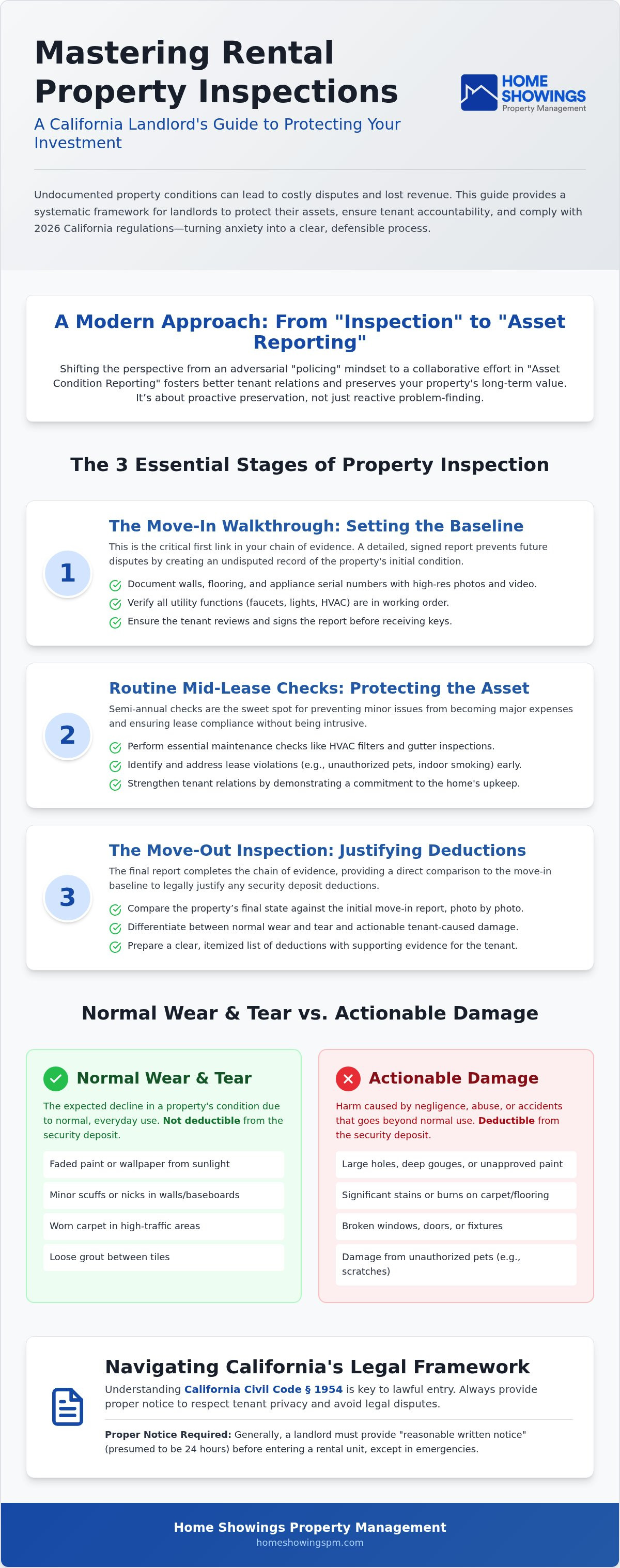
Normal Wear and Tear vs. Tenant Damage
One of the most common points of friction during rental property damage inspections is the gray area between natural aging and actual neglect. As a property owner, you need a clear, defensible standard to avoid disputes and potential legal challenges. Normal wear and tear is the unavoidable deterioration that happens from everyday use. Think of it as the "cost of doing business" as a landlord. Damage, on the other hand, results from abuse, negligence, or accidents that go beyond what is expected in a typical living situation.
California courts generally follow a "useful life" framework to determine how much you can deduct from a security deposit. For instance, interior paint is often expected to last 2 to 3 years, while standard rental carpet typically has a lifespan of 5 to 7 years. If a tenant ruins a three-year-old carpet, you can't charge them for the full replacement cost. Instead, you must calculate a pro-rated deduction based on the "un-used" portion of that item's life. This ensures your claims are fair and legally sound if they're ever scrutinized in small claims court.
Common Examples of Wear and Tear
Faded paint from the intense Sacramento sun or minor scuffs on floorboards from walking are classic examples of wear and tear. You might also notice loose door handles, cabinet hinges that need tightening, or slightly worn carpet in high-traffic hallways. These are considered part of the building's natural lifecycle. For a deeper dive into these nuances, you can review our wear and tear meaning guide to see a full list of what usually stays on the landlord's tab.
Identifying Actionable Tenant Damage
Actionable damage is far more obvious and often requires professional repair or replacement. This includes large holes in drywall, broken window panes, deep gouges in hardwood floors, or pet urine stains that have reached the subfloor. Excessive filth or abandoned property that requires a specialized cleaning crew also falls into the damage category. This is where your photo evidence from move-in and move-out rental property damage inspections becomes your strongest asset. By showing side-by-side comparisons of the same room, you provide undeniable proof that the damage occurred during that specific tenancy.
If you're tired of the emotional friction that comes with security deposit disputes, let Home Showings Property Management handle the documentation for you. Our systematic approach ensures your property is protected and your deductions are always backed by clear, digital evidence.
Streamlining Inspections with Home Showings Property Management
Managing a rental property can feel like a full-time job, especially when you have to balance tenant privacy with the need for rigorous asset protection. Professional management removes the emotional friction often found in DIY rental property damage inspections. Instead of having awkward conversations about a stained carpet or a broken tile, you have a neutral third party handling the documentation with professional authority. We act as your "Boots-on-the-Ground" across Sacramento, Elk Grove, Roseville, and Folsom, ensuring that every detail is managed with a steady, confident hand. These thorough, tech-enabled checks are the foundation of our property management sacramento ca service model, designed to maximize your ROI while minimizing your personal stress.
Tech-Enabled Property Preservation
We pride ourselves on operational systems and modern efficiency. Our digital checklists ensure that no corner of your property, from the kitchen cabinets to the HVAC closet, is overlooked during rental property damage inspections. By utilizing our Tenant Portal, residents can submit maintenance requests the moment a leak starts or a handle feels loose. This facilitates repairs before they escalate into costly "damage" that bites into your security deposit accounting. Our "Transparent Reporting" promise means you'll never have to wonder about the state of your home while you're at work or on vacation. Through our digital owner portals, you get instant access to inspection reports, including high-resolution photos and detailed notes. You see exactly what we see, which builds a foundation of trust through total visibility.
Why Local Expertise Matters in the Sacramento Region
Every neighborhood in our region has its own specific quirks and environmental demands. A home in Folsom might face different drainage challenges or sun exposure compared to a property in Rancho Cordova or the historic neighborhoods of Sacramento. Our local expertise allows us to identify these regional climate stressors early, often before they cause visible harm. Because we're deeply familiar with the local landscape, we've built a network of trusted, vetted vendors who provide quick, cost-effective repairs immediately after an inspection is completed. This proactive approach keeps your property in peak condition and ensures you're always several steps ahead of potential maintenance issues.
You don't have to navigate the complexities of California's 2026 rental laws alone. By partnering with a meticulous organizer who understands the local market, you can enjoy a worry-free ownership experience. Contact Home Showings Property Management to protect your investment today and ensure your property is preserved for the long term.
Secure Your Investment Through Proactive Oversight
Preserving the value of your Sacramento rental property doesn't have to be a source of constant anxiety. By understanding the strict requirements of California Civil Code 1954 and maintaining a meticulous chain of evidence from move-in to move-out, you protect both your equity and your reputation. Mastering rental property damage inspections is the most effective way to separate normal wear and tear from actionable damage while staying fully compliant with 2026 regulations. A structured documentation process ensures that every security deposit deduction is defensible and every maintenance need is caught early.
At Home Showings Property Management, we take the guesswork out of asset preservation. Our team provides localized expertise across Sacramento, Elk Grove, and Roseville, ensuring your properties are managed with a steady, professional hand. With our digital owner portals, you'll have 24/7 access to transparent inspection reports and financial data, giving you total visibility without the DIY headaches. We're here to provide the boots-on-the-ground support that keeps your investment secure and your tenants satisfied.
Protect your Sacramento investment with professional property inspections; contact Home Showings PM today. You've worked hard to build your portfolio; let's work together to keep it thriving for years to come.
Frequently Asked Questions
How much notice must a California landlord give before an inspection?
For most non-emergency entries, you must provide at least 24 hours' written notice. This notice should include the date, approximate time window, and the specific purpose of the visit. If you're conducting the "initial inspection" before a tenant moves out, California law requires a minimum of 48 hours' written notice to give the tenant time to prepare for the walkthrough.
Can a tenant refuse a routine property inspection in Sacramento?
A tenant cannot legally refuse entry if you've provided proper legal notice for a valid reason under Civil Code 1954. However, we don't recommend forcing your way into the home if a tenant is being uncooperative. It's better to document the refusal and seek a resolution through clear communication or legal channels to avoid potential claims of harassment or privacy violations.
Can I take photos of a tenant's personal belongings during an inspection?
You should focus your photos strictly on the condition of the real estate and permanent fixtures. While it's impossible to avoid every personal item in a wide shot, you should avoid intentionally photographing sensitive items like family photos, mail, or valuables. If personal clutter is preventing you from completing rental property damage inspections, document the obstruction in your report rather than the belongings themselves.
What happens if I find damage during a mid-lease inspection?
If you discover damage during a routine check, you should document it immediately with high-resolution photos and a written report. For minor issues that don't affect safety, you might choose to wait until move-out to deduct from the security deposit. However, if the damage is a safety hazard or a lease violation, you should issue a formal notice to repair or quit to ensure the issue is corrected promptly.
Is an annual inspection enough to protect my rental property?
While an annual check is better than nothing, semi-annual inspections are the standard for proactive property preservation in the Sacramento region. Our local climate puts significant stress on HVAC systems and plumbing throughout the year. Checking these components twice a year allows you to catch small leaks or clogged filters before they lead to expensive emergency repairs or mold growth during the wet winter months.
Can I charge a tenant for professional cleaning if the house is dirty but not damaged?
Yes, California law allows you to deduct cleaning costs from a security deposit to return the unit to the same level of cleanliness it had at the start of the lease. You can't charge for "deep cleaning" if the tenant left it reasonably clean, but you can certainly charge for professional remediation of excessive filth, grease buildup, or abandoned trash that goes beyond normal wear and tear.
What is the 'Initial Inspection' rule in California move-outs?
The "Initial Inspection" is a tenant's right to request a walkthrough during the final two weeks of their tenancy. The goal is to identify potential damage that would lead to security deposit deductions. By providing an itemized list of issues during this visit, you give the tenant an opportunity to make repairs themselves before they officially vacate the property and return the keys.
Do I need to be present for the rental inspection if I have a property manager?
You don't need to be present if you've hired a professional management team to oversee your asset. We handle the scheduling, notice delivery, and documentation on your behalf to remove the emotional friction from the process. You can review the full results of our rental property damage inspections through your digital owner portal at your convenience, ensuring you stay informed without needing to be on-site.


Comments