
How to Manage Rancho Cordova Rental Turnover Costs

The largest turnover expense may not be the visible repair bill. It can be the rent lost while a single-family home sits vacant. This Rancho Cordova landlord guide to rental property turnover covers the full process: coordinating move-out, documenting the property’s condition, arranging cleaning and repairs, and preparing to screen the next renter.
Turnover is more than a short gap between leases. Each stage affects how soon a home is ready and what work it needs. A clear schedule and organized records make the transition easier to manage.
This guide explains what tenant turnover involves, how move-out and city inspections fit into the timeline, and how photos and checklists document condition. It also covers costs that can add up for a single-family rental, from cleaning and repairs to vacancy, so you can see where careful coordination matters.
Table of Contents
What is tenant turnover?
Tenant turnover is the managed transition from one renter’s move-out to the next renter’s move-in. It includes assessing the property’s condition, arranging cleaning and repairs, preparing a listing, and coordinating the next tenancy. Use this Rancho Cordova landlord guide to rental property turnover to organize those tasks in sequence.
Start with the move-out notice and work sequence. Record the expected vacancy date, access arrangements, and known maintenance concerns. Schedule the condition assessment promptly after the tenants leave, then separate essential repairs from optional improvements. This order helps prevent painting or cleaning from being repeated after repair work. It also gives the leasing process a clear view of when the home can be shown.
Assess cleaning and make-ready work separately. The actual scope depends on the home’s condition, surfaces, and cleaning needs. Specify the rooms and tasks so the work can be assessed consistently. For exterior curb appeal, looking at service checklists from established exterior maintenance providers like Sabrina's Window Cleaning can help you outline what pressure washing and glass cleaning are needed. Cleaning should follow dusty or disruptive repairs, leaving the home ready for listing photos and showings.
Prioritize repairs before cosmetic upgrades. Check plumbing, electrical fixtures, walls, flooring, and safety devices, then document each repair need. Correct hazardous conditions before new tenants move in. Once essential work is complete, assess whether painting or small upgrades, such as replacing outdated faucet fixtures, make sense. Separating required work from optional improvements helps keep decisions tied to property condition.
Address city inspection findings on schedule. For code-related work, Rancho Cordova rental property owners must fix items listed in an inspection Notice and Order within 30 days. The city conducts a re-inspection 30 days after the initial inspection to check that issues were fixed. For renovations, define the work scope and address applicable city permit and code requirements before authorizing the project.
Coordinate access, utilities, keys, and security. A property manager can set utility transfer dates around the vacancy, arrange access for repair workers, and track keys as they move between occupants and vendors. The manager can also coordinate property checks while the home is empty, then confirm utilities and access are ready for showings and move-in. These handoffs help avoid delays between completed work and listing activity.
Track leasing expenses without confusing them with repair work. Listing preparation, marketing, and tenant screening are separate turnover activities from cleaning, painting, and repairs. Keep their scopes and records distinct so owners can see which work prepared the home and which activity supported the next lease. A Rancho Cordova landlord guide to rental property turnover should help clarify these categories, making recurring costs easier to review after each move-out.
Inspection notice and scheduling
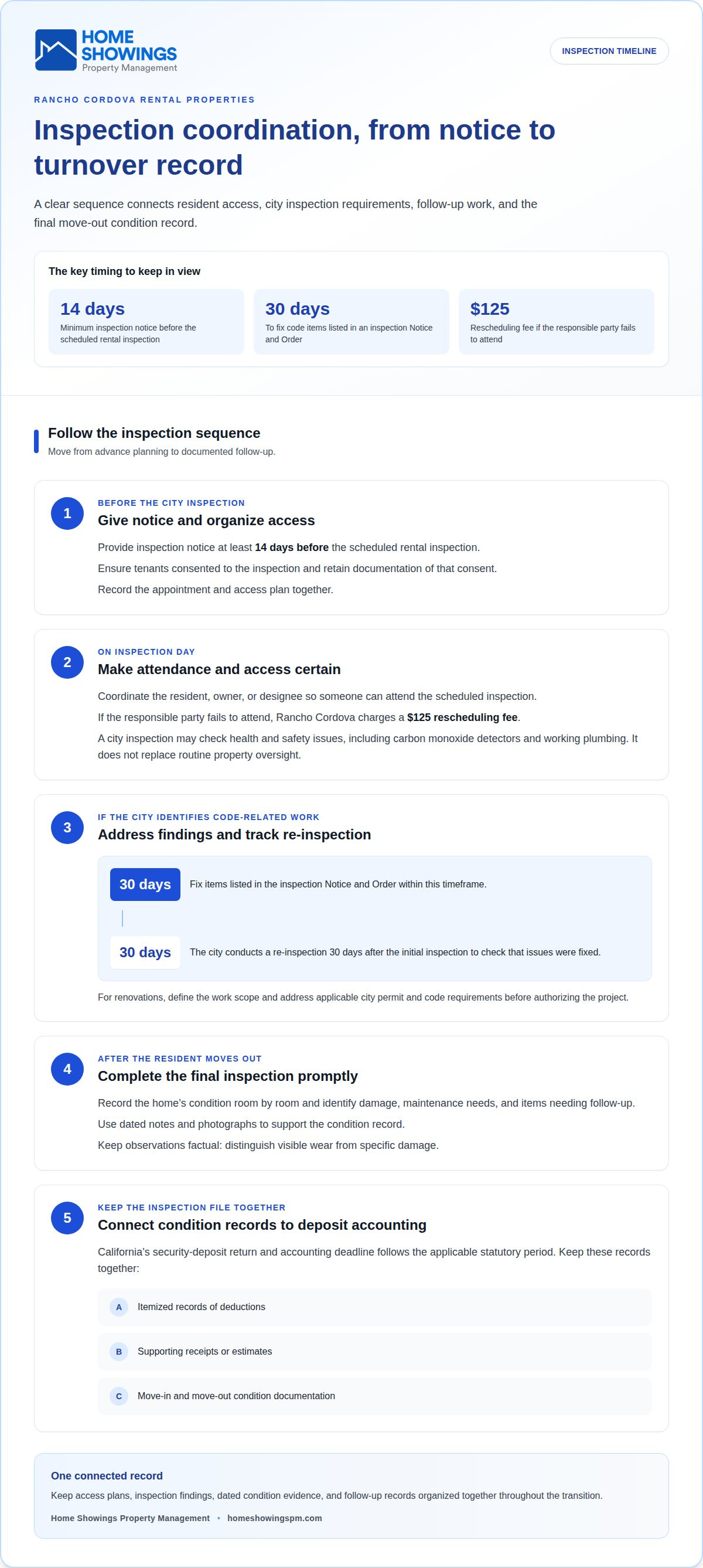
Plan inspections around resident access, city notice requirements, and the next leasing steps. A consistent schedule helps identify damage early and track each property’s condition.
How a Property Manager Schedules Regular and Rental Housing Inspections
Schedule regular property inspections with clear notice to the resident, then document visible maintenance concerns and changing conditions. For a Rancho Cordova rental housing inspection, arrange access and retain documentation of tenant consent. A city inspection may check health and safety issues, including carbon monoxide detectors and working plumbing. Do not treat a city inspection as a substitute for routine property oversight.
How a Property Manager Arranges the Pre-Move-Out Inspection
Arrange a pre-move-out inspection while the resident still occupies the home, leaving time to identify repair needs before vacancy. Walk through each room, note visible damage and maintenance concerns, and distinguish existing issues from items needing further assessment. This early review helps coordinate repairs and access, but does not replace the final inspection after the resident leaves.
Schedule the city inspection with its notice window in mind. Rancho Cordova property owners must receive inspection notice at least 14 days before the scheduled rental inspection. The owner or designee must also ensure tenants consented to the inspection and be able to show that documentation during the visit. Record the appointment and access plan together.
Keep the responsible party available for the appointment. Coordinate the resident, owner, or designee so someone can attend the scheduled inspection. Rancho Cordova charges a $125 rescheduling fee when the responsible party fails to attend. If a conflict arises, arrange a new appointment rather than leaving attendance uncertain.
Complete the final inspection promptly after move-out. Record the home’s condition room by room and identify damage, maintenance needs, and items needing follow-up. Dated notes and photographs can support the condition record and help property management organize the next steps. Keep observations factual, separating visible wear from specific damage.
Keep deposit records organized with the inspection file. California’s security-deposit return and accounting deadline follows the applicable statutory period. Keep an itemized record of deductions, supporting receipts or estimates, and move-in and move-out condition documentation together. This makes the accounting easier to prepare and ties each charge to a recorded condition or expense.
Consistent property inspection coordination connects access, documentation, and follow-up in one process.
Single-family rental vacancy risks
For a single-family home, vacancy means rental income stops while ownership expenses continue. Map the time between move-out and the next lease to see where time and income are at risk.
Identify Vacancy RisksTrack each transition from notice through listing, showings, approval, and move-in. A delay at any handoff can extend vacancy, even when the home needs little work. Identify what must happen before prospective tenants can view the property and what can proceed at the same time. A single-family home has one rental income stream, so an empty unit means no rent collected for that period.Separate controllable delays from factors outside the schedule. Repairs, incomplete listing details, and slow coordination can hold up leasing. Job relocation or personal changes may prompt a resident to leave despite good property management. Record the expected move-out date and major tasks together, then identify which task could delay showings or a new lease.
Calculate Lost Rental IncomeEstimate vacancy loss using the rent you would have collected during the empty period.Use the comparison to weigh rent against occupancy, not to assume the higher asking rent always produces more income. The calculation covers rent only; it doesn’t include cleaning, repairs, or leasing expenses. Estimate the likely vacancy period from the work remaining, listing readiness, and applicant process. Then compare expected collected rent across the same 12-month period.
Minimize Vacancy TimeCoordinate the end of the current lease with make-ready work and leasing milestones. If the home’s condition allows, prepare the listing and arrange showings before the resident leaves. Schedule the inspection and identify needed improvements early, so essential work can be planned rather than discovered after move-out. Allowing a week between tenants can help with planning in some situations.Keep the next steps moving together: complete condition checks, handle necessary work, market the home, and screen applicants. A landlord may aim for the next tenant to move in the day after the previous tenant leaves. That depends on the home being ready and a suitable applicant being available, so avoid promising a move-in date before both are in place. Track each milestone to spot delays quickly.
Documenting property condition with photos and videos
Build a visual record at move-in and move-out, using the same checklist for both inspections. Consistent documentation helps clarify findings and keeps turnover organized.
Start with a signed move-in checklist.Record each room’s condition before the tenants take possession. Note existing damage, such as a wall mark, stained carpet, or chipped countertop, and pair each item with a clear photo. Have the tenants sign the checklist to document the starting condition. Keep the signed record with the lease agreement and inspection file for comparison at move-out.
Use a consistent route through the property.Document the entry, living areas, kitchen, bedrooms, bathrooms, storage spaces, and exterior in the same order. A room-by-room sequence makes findings easier to locate later. Capture wide views to show overall condition, then closer images of specific damage. Include fixtures and appliances when their condition matters to the turnover assessment.
Pair each photo with a specific note.Describe what each image shows, where it is, and whether it appeared on the move-in checklist. For example, identify a loose kitchen cabinet hinge rather than writing “repair needed.” Specific notes help distinguish a maintenance request from a condition first observed after the tenants leave. Avoid conclusions that the image alone cannot support.
Record move-out findings before cleaning or repairs.Take photos and videos while the property still reflects its post-tenancy condition. Document areas needing cleaning separately from damage or repairs. If a stained carpet needs cleaning, record its condition before work begins. This makes comparison with the move-in record clearer and keeps completed work from obscuring the original finding.
Use video to show context, not replace photographs.A steady walkthrough can connect room views and show how an issue relates to the surrounding space. Pause at each finding, then capture a still image for easier review. Keep the recording focused on the property and its condition. Photos are useful for comparing individual surfaces, fixtures, and checklist entries.
Organize the record for the coming turnover.Store move-in and move-out files together, label them by room, and connect each image to its checklist entry. Add repair and cleaning records as work is completed, keeping before-and-after images distinct. A dated, orderly file helps property management review condition, plan follow-up, and prepare the home for its next tenants.
Turnover costs for single-family rentals
Estimate turnover as a set of separate expenses, not one repair bill. For a single-family home, cleaning, paint, repairs, vacancy, and leasing can each affect the total.
Treat those figures as planning context, not a fixed quote for every home. Property condition, repair scope, and time vacant all affect the final expense. Record each cost category separately to see what drives the total.
Separate necessary repairs from optional improvements.List health, safety, and functional repairs before considering upgrades that might attract renters. These are example costs, not guaranteed amounts. The home’s size, condition, and required work determine the actual scope.
Assess replacement cycles against tenant stability.Frequent tenant changes can increase wear and prompt earlier flooring or paint replacement. With a stable tenant, flooring and paint might last 7-10 years before replacement. Compare inspection records across leases to spot repeated damage or deferred maintenance. That history helps distinguish a needed repair from an improvement that can wait for a later budget cycle.
Include leasing work without confusing it with property work.Preparing a listing, marketing the home, and screening applicants take time, so include them in the turnover plan alongside cleaning and repairs. Keep these activities separate from physical make-ready expenses so owners can see where coordination is needed. Thorough screening can review credit history, rental background, and employment stability, giving a clearer picture of applicants for the next tenancy.
Use the cost estimate to make decisions, not just total expenses.Compare the repair plan with expected rent and likely vacancy before approving optional improvements. A new fixture or refreshed paint may help attract renters, but its value depends on the home’s current condition and local competition. Prioritize work that makes the property safe, functional, and ready to show. Then track actual expenses against estimates to improve planning for the next turnover.
For help coordinating listing preparation and applicant screening, explore rental marketing and tenant screening.
Home Showings Property Management: Rental Marketing
Home Showings Property Management can support the transition from a vacant home to a prepared rental with Rental Marketing, Tenant Screening, and Rent Collection. Turn to the team for help coordinating these steps and managing the next leasing cycle.
Rental Marketing presents the home to prospective renters, while Tenant Screening supports the applicant review. Once a lease begins, Rent Collection helps manage an ongoing part of the rental process. Together, these services connect property preparation with securing and managing the next tenancy.
For help with your rental, contact Home Showings Property Management.
Make Your Next Turnover Easier to Plan
Use this Rancho Cordova landlord guide to rental property turnover as the basis for a repeatable process, not a one-time checklist. After each lease, note which decisions were straightforward and where coordination slowed down. Those records can help shape a more workable plan for the next tenancy.
If managing each transition alongside your other responsibilities feels difficult, professional Property Management can bring the leasing process into one organized approach. Home Showings Property Management provides Property Management for rental owners seeking support with their homes. Contact the team to discuss how that support fits your property and priorities.
Contact Home Showings Property Management to discuss your rental management needs. With a clear next step, you can approach the next transition with greater focus and confidence.
Frequently Asked Questions
How can a property manager manage rental turnover?
A property manager coordinates the handoffs that move a rental from one tenancy to the next. They organize access, assess work needs, schedule maintenance, prepare the home for showings, and manage applicant screening and lease steps. For example, if a repair affects a room’s readiness, the manager can adjust the listing schedule around the work. Clear records help owners track decisions and expenses throughout the transition.
How does a property manager handle the steps for a rental property turnover in Rancho Cordova, California?
A manager coordinates the move-out condition review, repair planning, listing preparation, and leasing activities for a Rancho Cordova rental. The schedule should account for city inspection access and documentation of tenant consent. A city rental inspection may identify health and safety concerns that need follow-up. Keeping appointments, findings, and work records together gives owners a clear view of progress before the next tenancy begins.
What California laws govern move-out inspections, security deposit deductions, and deposit returns?
California’s security-deposit rules govern deposit deductions and returns, while AB 12 limits residential security deposits to one month’s rent for most units. Keep move-in and move-out condition records, along with itemized expense documentation, organized with the tenancy file. The specific deadline and allowed deductions depend on applicable California law and the circumstances. This article’s provided facts don’t establish a precise return deadline, so don’t rely on an invented date.
What are typical rental turnover costs in Rancho Cordova for cleaning, painting, repairs, and landscaping?
Turnover costs depend on the property’s condition and the work needed. Assess cleaning, painting, repairs, and landscaping separately because their scope varies by home. A documented inspection helps distinguish necessary work from optional improvements and makes expected costs easier to understand.
What inspections should a property manager complete before listing a rental after a tenant moves out?
Before listing, a property manager should assess the home’s move-out condition and identify maintenance, cleaning, and safety concerns that could affect showings or occupancy. The review can cover rooms, fixtures, plumbing, and visible damage, with notes linked to the property record. If a Rancho Cordova city inspection has identified an issue, include its status in the readiness review. List the home after completing work needed to make it ready.
How long does rental turnover typically take in Rancho Cordova, and how can landlords reduce vacancy time?
A turnover example places the period from move-out inspection through signing a new lease at 1.5-2 months. The actual timeline depends on property condition, repair needs, showing readiness, and the applicant process. To reduce idle time, coordinate listing preparation and applicant screening while repair work is underway when practical. Track dependencies, such as work that must finish before showings, so scheduling conflicts become visible early.
What rental licensing, registration, or inspection requirements apply to landlords in Rancho Cordova?
Rancho Cordova requires annual rental registration, with a separate rental housing license for each property. The registration requirement covers apartment complexes and single-, two-, three-, and four-family homes. The city’s Rental Housing Inspection Program is governed by RCMC Chapter 16.20. Keep registration and inspection records organized by property, so requirements for a single-family rental remain distinct from those for another unit.
What local permits or code requirements apply to rental property repairs and renovations in Rancho Cordova?
For renovations, define the work scope and address applicable city permit and code requirements before authorizing the project. Correct hazardous conditions before new tenants move in.


Comments