
Elk Grove Rental Vacancy Costs: A Landlord’s Guide

What if a rental’s vacancy costs more than the rent you’re missing? The cost of vacancy for rental property in Elk Grove can include lost rental income, ongoing expenses, and costs tied to getting the home ready for its next resident. The total depends on your property and how long it sits empty, so a rough guess can leave important costs out.
It’s understandable to want to fill the unit quickly. But rushing tenant selection can create a different kind of expense, while avoidable delays in pricing, marketing, or preparing the property can extend the income gap. A clear estimate helps you weigh both concerns without treating speed as the only goal.
This guide shows you how to calculate vacancy costs using your own rent and property expenses, identify which bills continue and which may be avoidable, and compare practical ways to reduce lost time. You’ll also learn how coordinated rental marketing, leasing, and screening can support an organized process without rushing toward a poor tenant fit.
Table of Contents
What Does a Rental Vacancy Cost in Elk Grove?
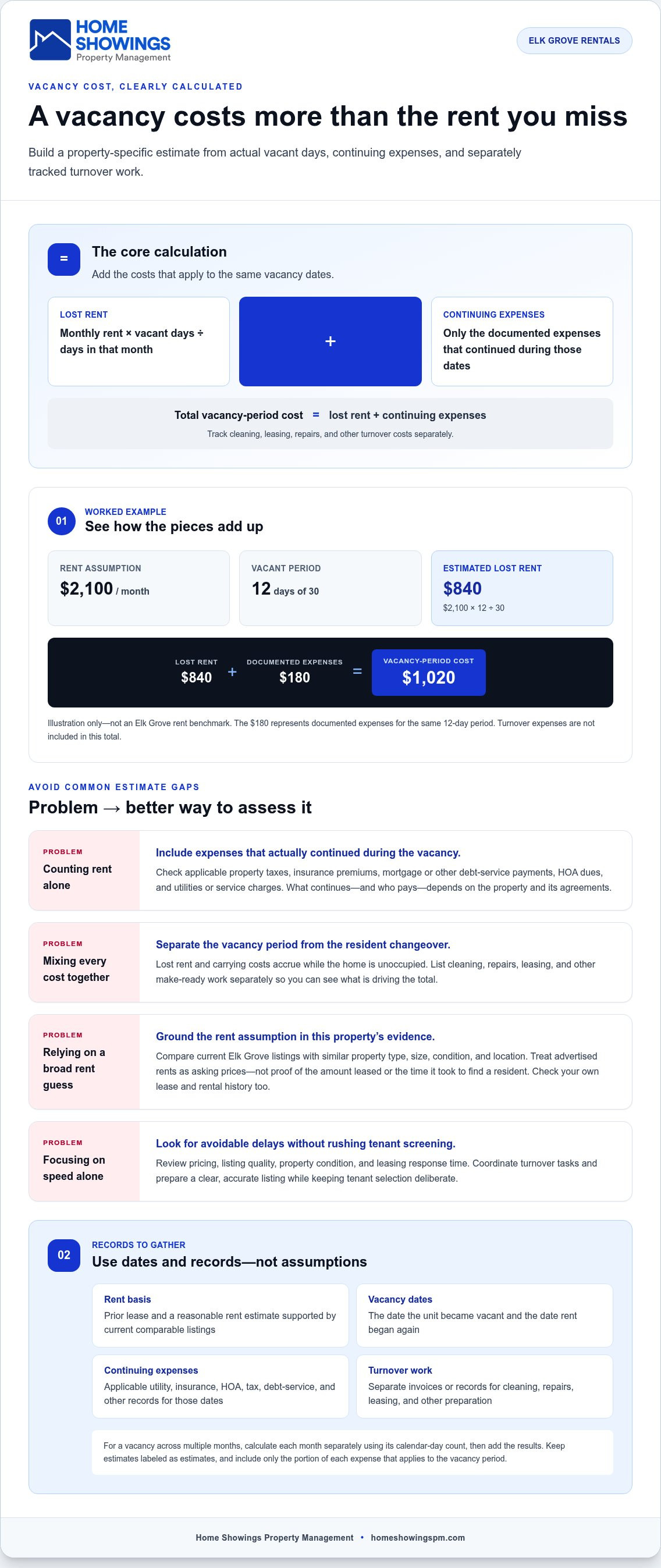
Lost rent is the income a landlord misses while a unit is empty; total vacancy cost also includes property expenses that continue during that period. An empty home may still have bills even when no rent is coming in. To estimate the cost of vacancy for rental property in Elk Grove, consider both the rental income you could reasonably have collected and the expenses that remain your responsibility.
Keep vacancy-period expenses separate from turnover expenses. Lost rent and ongoing carrying costs accrue while the home is unoccupied. Cleaning, repairs, leasing, and other preparation costs relate to the change between residents and may happen before or during the vacancy. Tracking these costs separately shows whether the income gap, ongoing bills, or make-ready work is driving the total.
For a simple illustration, if a home could reasonably rent for $2,400 per month and you use a 30-day month, 10 vacant days represent $800 in potential lost rent. That is only an example of the rent component, not a local rent benchmark or the full vacancy cost. Add applicable carrying expenses and track turnover costs separately.
Which expenses may continue while an Elk Grove rental is vacant?
Review actual bills, agreements, and account statements rather than relying on a standard checklist. What continues, and who pays it, can vary by property, insurance policy, lender, and service arrangement.
Property taxes and insurance premiums
Mortgage or other debt-service payments
Homeowners association dues
Utilities or service charges that remain active
Some usage-dependent expenses may fall when the unit is empty, while other services may remain active for maintenance or property care. Check each account for the vacancy period and record the amount that actually applies. Don’t assume every bill stops or that every bill stays unchanged.
Why the local market matters to your vacancy estimate
Base your rent estimate on the property, not just a citywide average. Compare current Elk Grove listings that are similar in property type, size, condition, and location. An apartment, a detached home, and a home with different features may attract different renters, so broad averages can hide meaningful differences.
Advertised rents are asking prices, not proof of the amount a home leased for or how long it took to find a resident. Use them as reference points, then weigh them against your property’s condition and leasing history. Verify the dates and source of any local market trend before using it in your estimate. A rental vacancy rate describes vacant rental housing as a share of the overall rental supply. It provides market context, but doesn’t calculate your property’s lost rent or predict its leasing time.
How to Calculate Your Elk Grove Rental Vacancy Cost
Build your estimate from the property’s actual vacancy dates and records. Start with a reasonable monthly rent, calculate the rent lost during the empty period, then add only the expenses that continued over those same dates. The core calculation is straightforward: total vacancy cost equals lost rent plus continuing expenses, with turnover, leasing, and repair costs itemized separately.
A simple formula using your property’s actual figures
For a vacancy contained within one month, calculate lost rent as: monthly rent × vacant days ÷ days in that month. If the unit is vacant across multiple months, calculate each month separately using its calendar-day count, then add the results. This avoids treating every month as if it had the same number of days.
For example, assume a property’s reasonable rent is $2,100 per month and it is vacant for 12 days in a 30-day month. The estimated lost rent is $840. If documented expenses for those same 12 days total $180, the estimated vacancy-period cost is $1,020. These figures are an illustration only, not an Elk Grove rent benchmark. List cleaning, leasing, and repairs separately, and label estimates clearly so they aren’t mistaken for recorded charges.
Which figures should Elk Grove owners gather?
Gather the records that anchor each part of the calculation. Current comparable listings can help inform the rent assumption, while your lease and rental history show what the property previously earned. Keep estimates distinct from amounts supported by bills or account records.
The prior lease and a reasonable rent estimate supported by current comparable listings
The date the unit became vacant and the date rent began again
Utility, insurance, HOA, tax, debt-service, and other applicable records for those dates
Separate invoices or records for cleaning, repairs, leasing, and other turnover work
Check whether utilities, HOA charges, or service arrangements continued during the vacancy. Include only the portion that applies to the specific period. Don’t add a full monthly bill if the account statement shows a different amount or billing span.
Keep the rent assumption open to revision. If a listing shows only an asking price, record it as an estimate, not confirmed rental income. Update the estimate when reliable comparable evidence or your own leasing records provide a better basis. The U.S. Census Bureau Housing Vacancies and Homeownership provides broader housing-vacancy context, but national statistics can’t replace property-specific dates, rent, and expense records. A clear owner financial report can also help organize property-level figures; digital owner reporting supports a more orderly view of rental activity and expenses.
How to Compare Vacancy Costs and Responses in Elk Grove
After estimating the vacancy loss, compare each possible response with the time and expense it may involve. Review the property’s inquiry history, showing activity, applicant feedback, and records from previous leasing periods. The cost of vacancy for rental property in Elk Grove is property-specific, so a change that works for one home may not suit another. No rent adjustment or marketing improvement can guarantee a faster lease.
Look for evidence before acting. Few inquiries may point to a pricing or listing issue, while inquiries that don’t turn into showings could indicate a response or scheduling bottleneck. Repeated comments about a property feature may warrant a closer look at its presentation or condition. Treat each pattern as a clue, not a conclusion.
When should an owner review the asking rent?
Compare the asking rent with current Elk Grove listings that closely match the property in type, size, condition, and location. Review inquiry volume, showing activity, and applicant feedback together. If the evidence points to a mismatch, reassess the price alongside other possible barriers. Revisit the decision after meaningful changes to the listing or market instead of reacting to a single competing ad.
How do self-management and professional oversight differ?
Self-management gives the owner direct control but also requires time for marketing coordination, inquiries, applicant handling, rent collection, and financial records. Professional oversight can coordinate those leasing tasks and organize reporting, while tenant screening remains a deliberate step rather than a shortcut. If your records show delayed responses or scattered handoffs, compare the time demands with the value of coordinated professional property management in Sacramento. For tax reporting questions about rental income and expenses, consult IRS Publication 527, Residential Rental Property or a tax professional.
How to Reduce Avoidable Vacancy Time Without Rushing Tenant Screening
A careful leasing process can still move efficiently. The goal isn’t to remove every vacant day; it’s to avoid preventable pauses while preserving time for sound tenant screening. A task left until move-out, incomplete listing details, or slow follow-up can extend the income gap. Planning ahead helps owners identify bottlenecks without letting the cost of vacancy for rental property in Elk Grove push them into a rushed decision.
Prepare the Elk Grove rental before it is ready to show
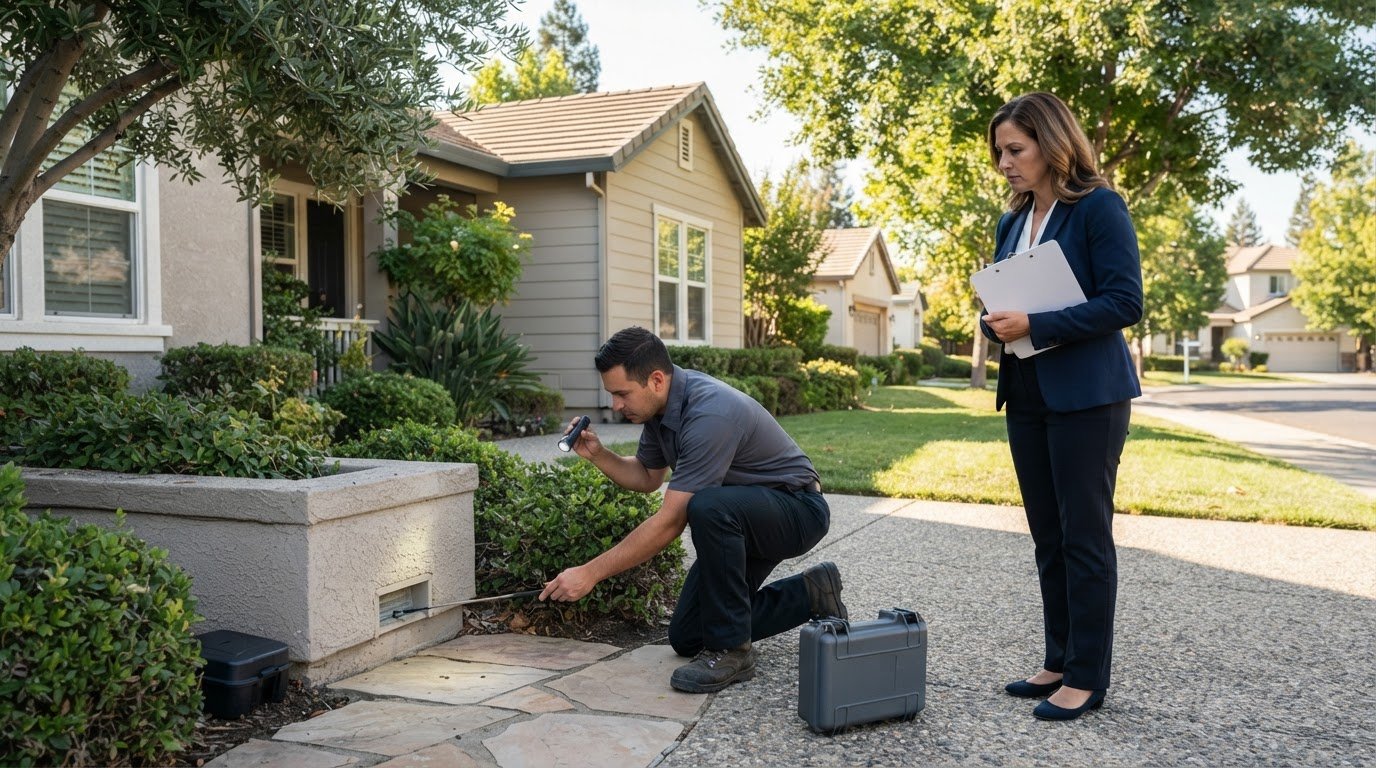
Where permitted, plan turnover work before the home is vacant. Use inspection findings to identify maintenance needs, then coordinate cleaning, repairs, photography, and listing preparation in a sensible order. Keep a simple task log with the person responsible and completion date. This can reveal whether a delay came from repair coordination, missing property information, or another handoff.
Confirm property features and details for the listing.
Schedule necessary cleaning and maintenance based on inspection findings.
Prepare current photographs and arrange showing logistics.
Write clear application instructions and organize the next steps for interested renters.
Accurate presentation matters. Describe the home’s actual features, condition, and showing process rather than relying on vague claims that may prompt extra questions or disappoint visitors. A focused rental marketing and leasing process connects listing preparation with the next steps and helps set realistic expectations for owners and prospective renters.
Keep marketing and screening moving together
Once the listing is active, review its performance and inquiry response time consistently. Track inquiries, showings, common questions, and feedback to identify where prospects lose momentum. If people ask for details already available in the listing, clarify the description. If inquiries aren’t converting to showings, review how scheduling is handled. These adjustments can improve the process, but they can’t guarantee a faster lease.
Efficiency means organization, not cutting corners. Apply consistent applicant criteria, handle applications fairly, and follow applicable fair housing requirements. Set a clear sequence for reviewing applications and communicating next steps, then allow time for the screening needed to assess each applicant. A rushed approval may exchange a few days of vacancy for a poor fit, so keep screening standards steady even when the unit is empty.
Coordinate the handoffs: the person responding to inquiries should know the property’s availability and showing arrangements, and the screening process should follow a clear, consistent path. If a repair affects a feature in the listing, update the description or showing plan so renters receive accurate information. Review task completion dates alongside leasing activity to distinguish a market challenge from an avoidable operational delay.
These steps won’t eliminate vacancy, but they can make the process more deliberate and help owners see where time is being lost. Home Showings Property Management coordinates rental marketing, leasing, and tenant screening for residential owners in Elk Grove and the Sacramento region. Explore rental marketing and leasing support to learn how coordinated steps can keep a property’s leasing process organized without rushing tenant selection.
How Property Management Can Help Control Vacancy Costs in Elk Grove
Property management can keep the leasing process organized by connecting marketing, showing coordination, applicant handling, and tenant screening. Clear task ownership can reduce gaps, such as an inquiry waiting for a response while showing arrangements are unclear. That structure may help limit avoidable delays, but it can’t guarantee a vacancy-free property or a faster lease.
For an Elk Grove owner weighing the cost of vacancy for rental property, the practical value is consistent oversight. A coordinated process keeps leasing activity moving while preserving time for careful applicant review. Property condition matters too: regular inspections can flag maintenance needs, and coordinated maintenance helps owners track and address work. These steps support ongoing asset oversight, not a promise that vacancies or repairs will disappear.
What a coordinated leasing process can cover
Rental marketing presents the home and its features to prospective renters. Leasing coordination connects showing arrangements, application steps, and communication, while tenant screening provides a structured way to review applicants. When responsibilities and follow-up are clear, fewer process details are left to memory or scattered messages.
Prepare accurate listing information and coordinate rental marketing.
Organize showing arrangements and respond to inquiries consistently.
Communicate clear application steps and handle applicant information carefully.
Apply consistent screening standards while allowing time for due diligence.
Efficient screening means having an orderly process, not skipping review to fill the home sooner. Owners should use consistent applicant criteria and follow applicable fair housing requirements. A clear process also helps ensure each applicant receives the same instructions and that decisions are based on established criteria, rather than pressure to shorten the vacancy.
How owners can track vacancy and rental performance
Management works best when owners stay informed about their property’s specific activity. A digital owner portal can provide access to communication and financial reporting, helping owners review rent activity, expenses, and property updates. Use those records to compare actual vacancy periods with your own rental history. Note the dates, leasing activity, and costs for each vacancy so patterns become easier to spot.
Owner review remains important. Check the property-specific information behind reports, consider whether a cost belongs to vacancy or turnover, and use the details to guide future planning. For example, repeated preparation delays may point to a need to organize inspection findings and maintenance tasks earlier. A slower lease may have a different cause, such as pricing, listing presentation, or response coordination, so records are more useful than assumptions.
If managing marketing, leasing, screening, maintenance coordination, and reporting takes more time than you can consistently give, full-service property management can bring those responsibilities into a more coordinated process. Home Showings Property Management supports residential owners in Elk Grove and the Sacramento region with rental marketing, tenant screening, rent collection, inspections, and owner reporting. Explore full-service property management to see how ongoing oversight can fit your rental’s needs.
Make Your Next Leasing Decision With Confidence
A vacancy can feel urgent, but the next step doesn’t have to be rushed. Use your property’s records to spot where the process can improve, then decide which responsibilities you can manage consistently and where coordinated oversight would help. A clear plan won’t remove every unknown, but it can make the cost of vacancy for rental property in Elk Grove easier to anticipate and manage.
Home Showings Property Management serves residential owners in Elk Grove and the Sacramento region, including Sacramento, Folsom, Roseville, Rancho Cordova, Natomas, North Lake Sacramento, El Dorado Hills, Citrus Heights, and Carmichael. Its coordinated property management brings rental marketing and tenant screening together with maintenance coordination, inspections, and owner reporting, helping owners keep leasing activity and property oversight connected. The goal is a more organized process, not a promise that a rental will never sit vacant.
If you’re ready to consider a more coordinated approach for your rental, explore full-service rental property management in Elk Grove. Home Showings Property Management can help organize rental marketing, tenant screening, rent collection, inspections, and maintenance. Take the next step toward coordinated oversight for your rental.
Frequently Asked Questions
What is a normal vacancy rate for rental properties in Elk Grove?
There isn’t one vacancy rate that’s normal for every Elk Grove rental. A broad planning range cited for well-managed properties is 3% to 5%, but it shouldn’t be treated as a current citywide measurement or a target for every home. Your property’s unit-days vacant over a year can provide a more useful comparison with its own history. Property type, condition, rent, and leasing period all affect the result.
How long does it usually take to rent a property in Elk Grove?
Available 2024 data accessed in October 2026 puts leasing time at about 14 to 22 days for a properly priced and marketed property. Treat that as a general estimate, not a promise or a countdown for your specific rental. Property readiness, renter demand, showing access, and application decisions can change the timeline. Track the date your listing goes live and the date a new lease begins to measure your own results.
Does homeowners insurance cover a rental property while it is vacant?
Coverage depends on the policy, and a vacant home may be treated differently from an occupied rental. Some policies have conditions or limits tied to how long a property is unoccupied, so don’t assume your usual coverage applies unchanged. Review the policy language and ask your insurer how it defines vacancy, what protections remain, and whether any steps are required during the empty period. Keep a record of the guidance you receive.
Can I deduct rental property vacancy expenses on my taxes?
Some expenses may be deductible, but eligibility depends on the expense, how the property was held and used, and your tax circumstances. Keep invoices and records showing the dates and purpose of each charge, and separate rental expenses from personal costs. The IRS explains rental income and expenses in Publication 527, Residential Rental Property. For advice on your return, consult a qualified tax professional rather than assuming every bill during a vacancy qualifies.
Should I lower rent if my Elk Grove rental is sitting vacant?
Consider a rent change only after checking whether the asking price fits comparable Elk Grove rentals and reviewing the response to your listing. Compare the income impact of a lower rent over the expected lease period with the ongoing loss from additional vacant days. Also consider whether listing details, showing access, or property condition may be discouraging interest. One competing advertisement alone isn’t enough evidence to make the decision.
What happens to a rental property if it remains vacant for several months?
A long vacancy can mean continued carrying expenses and greater exposure to problems going unnoticed, such as leaks, pest activity, or damage. Depending on the property and its systems, an extended empty period may also require attention to utilities, security, and routine upkeep. Create a regular property-check schedule, document its condition, and keep a record of any issues found and addressed. Review your insurance terms as the vacancy continues.
Can a property manager help reduce vacancy time without skipping tenant screening?
Yes. A property manager can coordinate marketing, showings, application handling, and screening so each step has clear ownership, while keeping applicant review part of the process. Organized leasing can help avoid preventable handoff delays, but it can’t guarantee a shorter vacancy or replace careful decisions. Home Showings Property Management serves residential owners in Elk Grove, Sacramento, Folsom, Roseville, Rancho Cordova, Natomas, North Lake Sacramento, El Dorado Hills, Citrus Heights, and Carmichael.


Comments