
California Landlord Tenant Background Check Laws: 2026 Compliance Guide
- Steven Lunetta
- 2 minutes ago
- 12 min read

What if a single box checked on your rental application could trigger a five-figure discrimination lawsuit? It's no secret that keeping up with california landlord tenant background check laws feels like trying to hit a moving target in a high-stakes environment. You want to protect your property and find a reliable neighbor for your community, but the fear of accidentally overstepping a new regulation is enough to keep any property owner up at night. We understand that the high cost of a bad tenant turnover is often eclipsed by the potential legal pitfalls of an improper screening process.
This 2026 compliance guide is designed to replace that anxiety with a steady, systematic approach. You'll learn how to handle these complex regulations with confidence so you can safeguard your investment and avoid costly mistakes. We will break down the latest criminal history restrictions, clarify the specific application fee limits adjusted for this year, and provide a clear checklist to help you find a reliable tenant without the legal risk. By the end of this guide, you'll have a meticulous roadmap for your next screening cycle.
Table of Contents
The 2026 Landscape of California Landlord-Tenant Background Check Laws
Essential Components of a Compliant California Screening Report
Navigating California’s Application Fee Caps and Financial Disclosures
Fair Housing and Criminal History: Avoiding Discrimination Pitfalls
Why Professional Screening in Sacramento Protects Your Investment
The 2026 Landscape of California Landlord-Tenant Background Check Laws
As we move into 2026, the framework governing california landlord tenant background check laws has become increasingly complex. While the primary goal remains a balance between protecting applicant privacy and ensuring landlord security, the scale has tipped significantly toward consumer protection. The California Civil Rights Department (CRD) now maintains a much more active oversight role, monitoring how property owners collect and use personal data. If you're managing property in the Sacramento region, you're likely aware that a "one-size-fits-all" approach to screening no longer works. It's about meticulous documentation and understanding that the rules are constantly evolving to prevent bias.
Federal vs. California State Regulations
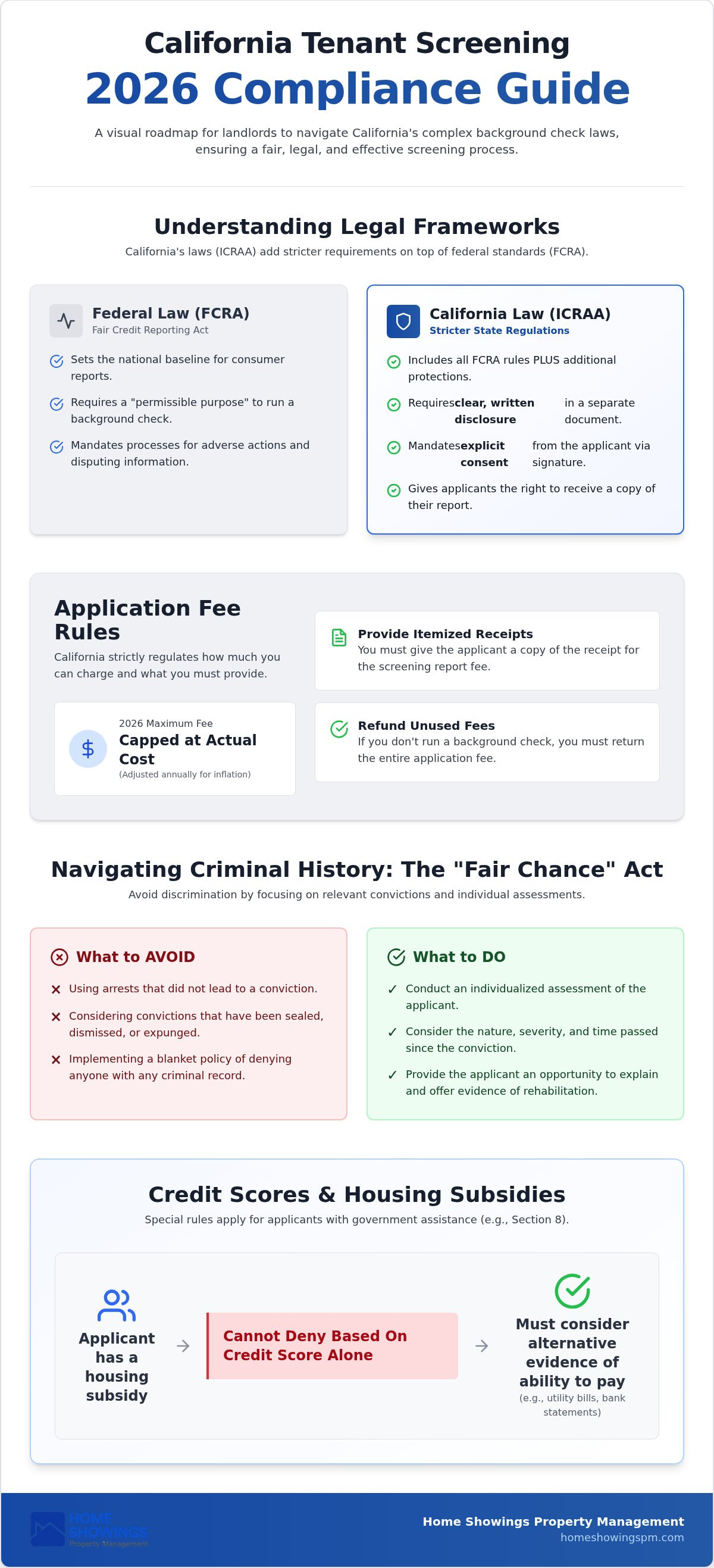
Understanding the hierarchy of laws is essential for staying out of legal trouble. At the base level, the Federal Fair Credit Reporting Act (FCRA) sets the national standard for how consumer information is handled. However, California landlords must also comply with the California Investigative Consumer Reporting Agencies Act (ICRAA), which is significantly more stringent. To pull any report, you must have a "permissible purpose," which in our industry is the evaluation of a potential tenant. The ICRAA mandates that Sacramento landlords provide clear, written disclosures and obtain explicit consent before initiating any investigative background check. This state-level act ensures that every investigative report is handled with a high degree of transparency and accountability.
Key 2026 Legislative Updates for Rental Applicants
The legislative environment in 2026 has introduced new layers of protection for applicants, particularly regarding financial history. Building on the foundation of SB 267, there is a growing shift toward how credit scores are utilized for subsidized housing applicants. Many landlords are now required to consider alternative evidence of ability to pay rather than relying solely on a credit score. This shift aims to provide a more equitable path for renters who may have limited credit history but stable income. It's a proactive change that requires property owners to look at the "big picture" of a tenant's financial health.
The "Right to a Copy" of the report has also evolved into a more immediate requirement. Applicants now have a more streamlined path to access the exact data you've reviewed during the application process. If a report is used to make an adverse decision, you must be ready to provide a copy within a specific timeframe. Additionally, we're seeing more "blind" screening practices where certain data points, like specific criminal dates or minor infractions, are filtered out before the landlord even sees the report. This approach helps eliminate accidental bias, ensuring your screening process remains both legal and ethical. Utilizing professional property management services can help automate these compliance steps, making the entire process worry-free.
Essential Components of a Compliant California Screening Report
Building a compliant screening report in 2026 requires a meticulous eye for detail. It's no longer enough to simply glance at a credit score and make a gut-level decision. To stay within the bounds of california landlord tenant background check laws, you must understand exactly which data points are fair game and which are protected. A truly professional report balances financial data with historical behavior, ensuring you get a complete picture of an applicant's reliability without infringing on their rights. This methodical approach is what separates a successful long-term lease from a potential legal headache.
Credit Reports and Financial Responsibility
When you pull a credit report in 2026, you're looking for a history of financial stability, but the law now dictates how you interpret that data. If an applicant uses a government housing subsidy, such as Section 8, you cannot use their credit score as the sole reason for denial without first considering their ability to pay their portion of the rent. You're legally required to offer the applicant the chance to provide alternative evidence of financial responsibility. This might include records of consistent utility payments or bank statements showing steady savings. For a deeper dive into these nuances, consult our California Tenant Screening Laws: A 2026 Guide to ensure your financial criteria are up to date.
Eviction History and Public Record Restrictions
Understanding the limitations of eviction records is vital for property preservation. In California, the "7-year rule" under Civil Code 1785.13 generally prevents consumer reporting agencies from including Unlawful Detainer (eviction) actions that are more than seven years old. Furthermore, many eviction cases are "masked" or sealed if the tenant prevails or if the case is settled within a specific timeframe. If you rely solely on automated databases, you might miss these nuances or, worse, see data you aren't legally allowed to use in your decision. We find that a "boots-on-the-ground" approach to verifying previous landlord references often provides a much clearer picture than a filtered database ever could.
Beyond the numbers and court records, verifying employment and income remains a cornerstone of a solid application. We recommend utilizing a PATH (Previous Address Tenant History) report to cross-reference an applicant's stated history with actual records. This helps catch discrepancies before they become problems. If you're feeling overwhelmed by these technical requirements, a professional tenant screening service can manage these moving parts for you, providing a worry-free experience that protects your investment. By focusing on verifiable facts and following a structured process, you can find a reliable tenant while maintaining total legal compliance.
Navigating California’s Application Fee Caps and Financial Disclosures
Money is often where compliance issues begin for many property owners. Under california landlord tenant background check laws, the application fee is strictly regulated to ensure it remains a cost-recovery mechanism rather than a profit center. If you charge more than the legal limit or fail to provide the required documentation, you're opening yourself up to unnecessary liability. It's about being meticulous with your accounting and transparent with your applicants from the very first interaction. In a competitive market like Sacramento or Elk Grove, it's common to receive a stack of applications at once. However, you should only collect fees from those you intend to screen immediately.
Calculating the Maximum Allowable Fee
The state of California sets a maximum ceiling for screening fees that adjusts annually based on the Consumer Price Index (CPI). While the 2025 limit was $62.02, you must verify the exact 2026 adjustment to stay compliant. This fee is designed to cover two specific things: the actual cost of the credit report and the reasonable value of the time spent gathering and checking information. You cannot simply "markup" these services for a profit. To keep your records clean, every receipt you issue should include:
The date the fee was received.
The specific cost of the credit report.
The administrative cost for processing the application.
A clear statement of the applicant's right to a copy of the report.
Documenting and Refunding Fees
Transparency doesn't end once the fee is paid. If you collect a fee but don't actually run the credit check, perhaps because you've already filled the unit, you're legally required to refund that money. "Double-dipping" by collecting and keeping fees from multiple applicants while only screening one is a fast track to a legal dispute. Additionally, if you do run the report, you must provide a copy to the applicant if they request it, or if you take an adverse action based on the findings. This protects the applicant's right to verify that the data used to judge them is accurate.
Managing these financial disclosures is much simpler when you utilize modern digital portals. These systems can automate the receipt process and track fee usage, ensuring every penny is accounted for legally. If you're looking for a way to streamline this process, our residential leasing services include automated fee management that keeps you fully compliant without the manual paperwork. By sticking to a clear, documented process, you protect your reputation and your bottom line while providing a professional experience for every applicant.
Fair Housing and Criminal History: Avoiding Discrimination Pitfalls
Rigid "no criminal record" policies are a relic of the past. Under current california landlord tenant background check laws, blanket bans are strictly prohibited. The Fair Chance Act mandates that you cannot even inquire about criminal history until a conditional offer of housing has been extended. This proactive approach ensures that every applicant is judged first on their merits as a potential tenant before their past is considered. If a background check reveals a conviction, you can't simply issue a denial. You must follow a specific legal procedure that includes an individualized assessment and a notification process that gives the applicant a chance to respond. This creates a transparent environment where applicants feel respected and landlords remain protected from accidental bias.
The Individualized Assessment Process
When applying california landlord tenant background check laws to specific cases, you must perform a formal Individualized Assessment. This isn't a suggestion; it's a requirement. You'll need to evaluate the nature and gravity of the offense, the time that has passed since the conviction, and any evidence of rehabilitation. For instance, a minor infraction from ten years ago carries much less weight than a recent violent felony. This leads into the "interactive process," which is a gap often missed by DIY landlords. You must provide the applicant with a written notice of your "preliminary decision" to deny. They then have at least five business days to provide mitigating information or correct inaccuracies in the report. Documenting every step of this conversation is your best defense against a discrimination claim.
Reasonable Accommodations and Screening
Fair housing also extends to how you handle "protected classes" and specific household needs. You cannot treat an applicant differently because they use a Section 8 voucher or require a service animal. Service and support animals are not considered pets; therefore, pet policies and fees do not apply to them. When screening these tenants, focus strictly on their rental history and ability to meet the lease terms. For a broader look at how these rules have evolved, see our guide on California Landlord Tenant Laws 2024, which remains the foundation for current compliance. Our residential leasing team can help you manage these sensitive interactions to ensure you remain on the right side of the law. This professional oversight reduces the anxiety of property ownership while maintaining a high standard for your community.
Why Professional Screening in Sacramento Protects Your Investment
Managing a rental property in a highly litigious state like California is a full-time job in compliance. If you're a local owner, you know that california landlord tenant background check laws are just the beginning of your responsibilities. Local ordinances in Sacramento and Elk Grove often add specific layers of complexity that a generic, automated online report won't catch. Professional management bridges this gap by providing human oversight and deep local market expertise. This meticulous approach directly impacts your bottom line; for instance, high-quality screening is the first step in effective property maintenance management. When you place a tenant who respects the property and communicates well, you're investing in the long-term preservation of your asset.
The Home Showings Advantage in Sacramento
We take a "local expert" approach to every selection, ensuring we're several steps ahead of potential issues. Our team doesn't just look at a piece of paper; we use our boots-on-the-ground familiarity with the Sacramento landscape to verify the details that matter. This proactive strategy helps us minimize vacancy through targeted rental marketing services that attract the right audience from day one. By utilizing secure owner and tenant portals, we maintain a clear, digital paper trail for every application. This transparency ensures that you're always informed and that your screening process is fully documented for legal compliance.
Reducing Liability with a Systematic Process
The key to defending against discrimination claims is a standardized, systematic process. We apply the same meticulous criteria to every applicant, which is your best defense if your decision is ever questioned under california landlord tenant background check laws. Our philosophy means that our inspections actually start with the application process itself. We look for patterns of reliability and stability that automated systems often overlook. If you want to move from a reactive "what-if" mindset to a feeling of controlled stability, protect your investment with professional management. We handle the technicalities so you can enjoy the benefits of property ownership without the legal stress.
Securing Your Rental Investment for 2026 and Beyond
Staying ahead of california landlord tenant background check laws requires more than just a passing interest in regulation; it demands a systematic commitment to transparency and fairness. You've seen how the 2026 landscape prioritizes applicant privacy through strict fee caps and individualized criminal history assessments. By focusing on verifiable data and maintaining meticulous digital records, you can protect your property while building a foundation of trust with your future tenants. This proactive approach doesn't just prevent legal pitfalls; it preserves the long-term value of your rental portfolio.
If the weight of constant legislative updates is causing you anxiety, then a partnership with a local expert can provide the stability you need. We specialize in the Sacramento and Elk Grove markets, implementing meticulous screening protocols that are fully compliant with current standards. Our secure owner portals offer real-time transparency, ensuring you're always informed without being overwhelmed by data. Let Home Showings Property Management Handle Your Tenant Screening to ensure your investment remains secure and worry-free. You don't have to navigate these complex legal waters alone, and we're ready to help you move forward with confidence.
Frequently Asked Questions
What is the maximum application fee a landlord can charge in California in 2026?
The maximum application fee is set by state law and adjusts annually based on the Consumer Price Index. While the 2025 limit was $62.02, you must verify the specific 2026 adjustment released by the state to stay compliant. This fee is strictly for cost recovery and must only cover the actual price of the credit report plus the reasonable value of the time spent processing the application.
Can I legally deny a tenant in California based on a criminal record?
You cannot implement a blanket ban on applicants with criminal records. Under california landlord tenant background check laws, you must perform an individualized assessment for every applicant. This means evaluating the nature of the offense and the time passed since the conviction. If you decide to deny based on these findings, you must provide a written preliminary notice and allow the applicant five business days to respond.
Am I required to provide a copy of the background check to the applicant?
Yes, you're legally required to provide a copy of the report if the applicant requests it or if you take an adverse action against them. This transparency ensures the tenant can verify that the data used to make your decision is accurate. If you use our professional screening services, our digital portals make this process seamless by providing a secure way for both parties to access the necessary documentation.
How far back can a California background check go for rental history?
California law generally limits the reporting of public records, such as evictions and bankruptcies, to a seven-year window. Under the Investigative Consumer Reporting Agencies Act, reporting agencies are prohibited from including records that exceed this specific timeframe. While you can ask for previous landlord references directly, the formal data found in a background check report will respect these look-back periods to protect the applicant's long-term housing access.
Is it legal to require a minimum credit score for a rental in California?
You can set a minimum credit score, but your policy must be applied consistently to all applicants to avoid discrimination claims. If an applicant uses a government housing subsidy, you cannot use their credit score as the sole reason for denial. In those specific cases, you must allow them to provide alternative evidence of their ability to pay, such as bank statements or utility payment histories, before making a final decision.
What happens if I take an "adverse action" against a tenant based on their report?
If you take an adverse action, such as denying an application or requiring a higher security deposit, you must provide the applicant with a formal notice. This document must state the reasons for your decision and provide the contact information of the reporting agency that supplied the data. It's a critical requirement within california landlord tenant background check laws that ensures applicants understand why they were not selected for the unit.
Can I charge an application fee if I haven’t pulled a report yet?
You can collect the fee with the application, but you must refund it if you don't actually pull the report. If you fill the unit with another tenant before processing an applicant's background check, that money must be returned to them immediately. Charging for "processing time" without actually performing the screening tasks is a significant legal risk. It's best to only collect fees from the applicants you are actively considering.
Do California screening laws apply to ADUs and single-family homes?
Yes, these screening regulations apply to almost all residential rental properties, including Accessory Dwelling Units (ADUs) and single-family homes. While some specific fair housing exemptions exist for owner-occupied properties with shared living spaces, the rules regarding application fees and background check procedures remain strict. Whether you're a small-scale landlord or a large management firm, following these state-wide mandates is essential for protecting your investment and staying compliant in the local market.


Comments