
What to Include in a Folsom Rental Property Tenant Welcome Package

A good Folsom rental property tenant welcome package does more than say hello: it helps new tenants settle in and understand what to do. Bring together rent-payment instructions, maintenance contacts and request steps, utility details, property rules, and move-in information. A few practical essentials or a family-friendly touch can make the first day easier, too.
It’s easy to focus on the gift, but clear, useful information is what tenants are most likely to rely on after moving day. Make key details easy to find without overwhelming new residents with a dense stack of paperwork.
Here’s what to include, from lease and payment guidance to maintenance procedures, neighborhood information, and thoughtful gifts for renters, children, and pets. You’ll also see how to organize the materials so tenants can find the right answer when they need it.
Table of Contents
1. What Should a Tenant Welcome Package Have?
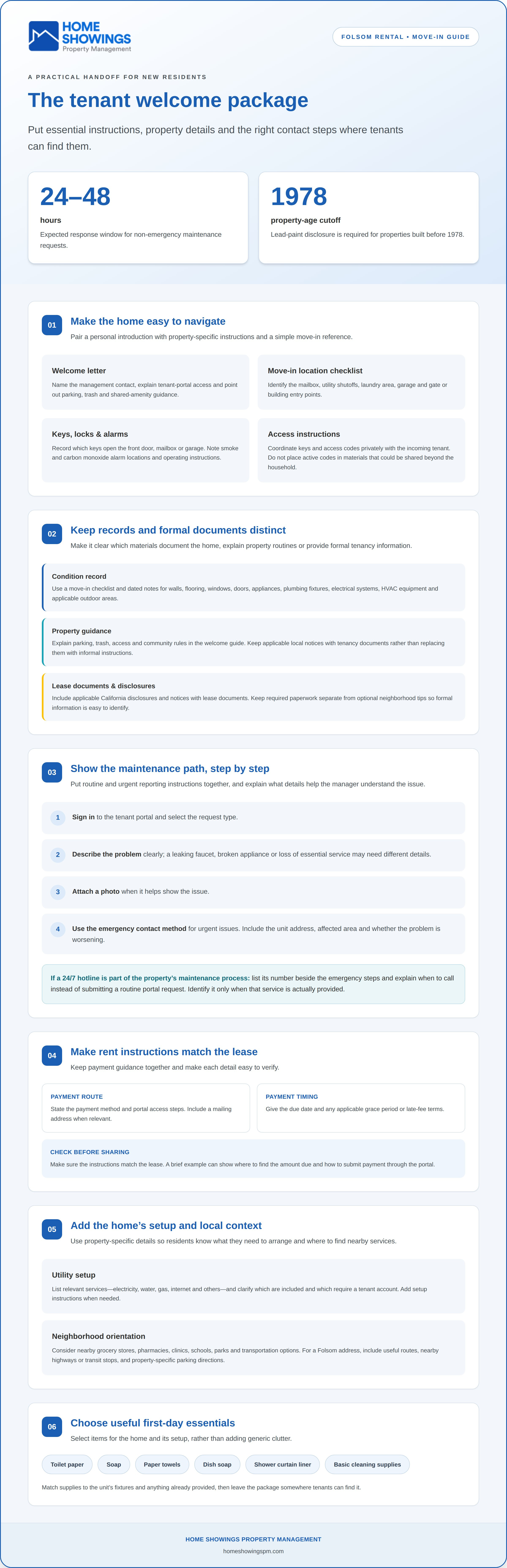
A useful Folsom rental property tenant welcome package pairs a personal introduction with practical instructions for the specific home. A property manager can prepare a letter that names the management contact, explains how to use the tenant portal, and highlights move-in reminders. For example, the letter can point out where to find parking guidance, trash instructions, and information about shared amenities.
A move-in checklist helps tenants locate important features without searching the home. It can identify the mailbox, utility shutoffs, laundry area, garage, and any gate or building entry points. The property manager should coordinate access codes and keys, then give instructions privately to the incoming tenant. Avoid putting active codes in materials that could be shared beyond the household.
Include a clear contact list for routine questions and urgent problems. Explain how to reach the property manager, where to submit maintenance requests, and which contact method to use for urgent issues. Portal access instructions can make the right process easier to find, while a printed contact sheet remains useful during move-in.
Document the unit’s condition with a move-in checklist and dated notes. Record walls, flooring, windows, doors, appliances, plumbing fixtures, electrical systems, and HVAC equipment, along with applicable outdoor areas. This gives both parties a shared reference for existing wear or damage and a timely way for tenants to flag a missed observation.
For Folsom and Sacramento County rentals, separate property-specific guidance from formal tenancy documents and notices. A welcome guide can explain parking, trash, access, and community rules. Provide any applicable local notice as a tenancy document, rather than replacing it with informal instructions.
California move-in materials should include applicable disclosures and notices with the lease documents. According to the U.S. Environmental Protection Agency, lead paint disclosure is required for properties built before 1978. Keep required documents distinct from optional neighborhood tips, so tenants can readily identify formal information.
For keys, locks, smoke alarms, and carbon monoxide alarms, document what was provided and explain access or operating instructions. Note which keys open the front door, mailbox, or garage, and identify alarm locations. These handoff details clarify what the tenant received without substituting for applicable safety requirements.
Utility guidance should name the services connected to the rental and explain which accounts tenants need to arrange. List electricity, water, gas, internet, and other relevant services, with setup instructions when needed. Clarify whether each service is included or requires a tenant account, based on the property’s arrangements.
A neighborhood page can orient new residents with nearby grocery stores, pharmacies, clinics, schools, parks, and transportation options. For a Folsom address, include useful local routes, nearby highways or transit stops, and property-specific parking directions. Add community contact details or location notes when they help tenants find a relevant service, such as residential housekeeping from Valley Clean.
Choose move-in essentials for the home rather than adding generic clutter. Toilet paper, soap, paper towels, dish soap, a shower curtain liner, or basic cleaning supplies can help tenants handle first-day needs. Match the items to the unit’s fixtures and supplies already provided, then leave the package somewhere tenants can find it.
2. Rent payment and maintenance requests
A smooth first month depends on clear instructions for paying rent and reporting problems. Use the welcome letter to explain where tenants find payment details, how to submit a maintenance request, and which channel to use for urgent issues. Keep these instructions together instead of scattering them across lease documents, portal messages, and emails.
For maintenance, show the steps in order. Explain how to sign in to the tenant portal, select the request type, describe the problem, and attach a photo when useful. A leaking faucet, broken appliance, and loss of essential service may each need a different description. Clear examples help the manager understand the issue and route the request appropriately.
Distinguish emergency reports from routine repairs. The packet should identify the emergency contact method and explain what details to provide, such as the unit address, affected area, and whether the issue is worsening. For non-emergency maintenance requests, tenants can expect a response within 24-48 hours. The manager can also explain how residents will receive updates through the portal or another designated channel.
If the property’s established maintenance process includes a 24/7 hotline, the manager should list its number and explain when to call instead of submitting a routine portal request. Place this information beside the emergency steps, not in a general contact list where it may be overlooked. The package should not describe a hotline as available unless the property’s service arrangement actually provides one.
Cleaning supplies can support day-to-day upkeep, but the guide should clarify what tenants handle and what belongs in a maintenance request. A welcome kit might include a sponge, dish soap, and paper towels, while the guide explains how to report a persistent leak or faulty appliance. It can also note where property-provided supplies, such as trash bags or replacement filters, are stored.
Rent directions need to be precise. Give the payment method, portal access steps, due date, any applicable grace period or late-fee terms, and mailing address when relevant. Make sure the instructions match the lease so tenants aren’t left comparing conflicting documents. A brief example can show where to find the amount due and how to submit payment through the portal.
A property manager can coordinate these procedures so payment and repair instructions remain consistent from move-in onward. Owners who want help organizing tenant communication and ongoing property oversight can explore property management support.
3. Rent payment instructions
A rent guide should show tenants how to pay, where to find the current balance, and which details apply to their lease. Provide instructions in the tenant portal and a move-in document, giving residents a digital reference and a copy to review while unpacking. Clear directions reduce uncertainty around a regular household obligation.
Explain each payment method accepted for the rental, such as electronic payment through the tenant portal or mailing payment to the listed address. If the portal is used, describe how to sign in, locate the rent balance, choose a payment method, and save or view the transaction record. Keep the steps specific to the property’s actual process. A welcome letter shouldn’t suggest a payment option that the manager doesn’t accept.
State the lease’s due date and explain any grace period or late-fee terms exactly as they appear in the rental documents. Don’t paraphrase terms in a way that could change their meaning. If a tenant has a question about a charge, show where the ledger appears in the portal and how to send a message. This keeps payment records and questions organized.
Separate rent from other household expenses. Identify whether a utility is paid through the tenant’s own provider or handled through the rental’s payment process, when applicable. This helps residents plan moving costs and avoid confusing a utility bill with rent. If payment by mail is available, include the full payment address and any required account or unit reference exactly as provided.
On-time rent and credit reporting need especially careful wording. If the property’s payment process includes rent reporting, explain whether payments are reported, what the tenant must do, and where to find relevant records. Don’t promise a credit benefit or imply every payment is reported unless that applies to the specific arrangement. Portal payment history and credit reporting are not interchangeable.
Residents may appreciate a simple calendar-style summary of the lease due date, payment route, and contact method for billing questions. Keep it consistent with the signed lease and portal instructions. Electronic payment directions can be convenient for residents with busy work or travel routines, while mailing details remain useful for those who prefer paper. Aim for practical clarity, not pressure to choose one method.
Before move-in, the property manager can review the payment instructions for consistent wording across the welcome letter, lease documents, and portal. That small coordination step gives tenants one dependable process to follow each month.
4. Gift cards and family-friendly welcome items
A welcome gift can make a positive first impression without competing with practical move-in information. A useful item might be a local coffee shop or grocery gift card, or a small set of household essentials. A handwritten note can make the gesture feel personal while keeping the message simple and respectful of the tenant’s privacy.
Choose items to suit the rental and household rather than assuming every resident wants the same gift. A grocery card can help with first-day shopping; a home improvement card may suit someone furnishing a new space. A welcome basket could pair toilet paper with dish soap or paper towels. These items are handy during a move and don’t require tenants to make room for decorative objects.
These are general examples, not fixed Folsom prices; the final total depends on the items and quantities selected.
What affects the cost of a rental tenant welcome basket in Folsom? The main factors are the number and type of items, gift card value, packaging, and whether the basket includes extras for children or pets. A focused set of useful essentials will differ from a larger, personalized assortment.
For families, coloring books, crayons, or puzzles can give children a quiet activity while adults unpack. For households with pets, a small toy or pet treat can acknowledge a furry family member. Review the lease for relevant pet information before selecting pet-specific items, and avoid gifts that create extra responsibilities for the renter.
Plants may seem welcoming, but they can pose allergy, choking, or poisoning risks for tenants, pets, or children. Baked goods may also be unsuitable because of food allergies. If you include snacks, choose sealed, clearly labeled options, or skip food and offer a practical household item instead. Welcome tenants without making assumptions about dietary needs.
A property manager can coordinate the gift with the home’s features and move-in timing. For example, a shower curtain liner may be useful in a rental with a tub, while a laundry card only makes sense where laundry facilities use one. Keep the lease, safety instructions, and gift separate, so tenants can distinguish an optional welcome gesture from their responsibilities. A thoughtful selection is often modest, relevant, and easy to accept.
5. Welcome package purpose and tenant experience
A welcome package works best as a quick-use guide, not a second lease agreement. It should help residents move from receiving keys to handling everyday questions independently. Tenants should be able to find the rent portal, maintenance process, trash instructions, and mailbox location without searching through unrelated paperwork. That practical first impression can set a considerate tone for the tenancy.
Organization matters as much as the information itself. Keep the packet focused, with a short contents list and clear labels for urgent contacts, routine tasks, and reference documents. A digital copy can make details searchable on a phone, while printed pages help during move-in when devices may be packed away. Keep the main guide to 10-15 pages so key instructions remain easy to locate.
A property manager can introduce the guide during the move-in walkthrough. Spend 10 minutes pointing out high-use details, such as how to report a repair, where the toilet shutoff is, and how to access the tenant portal. Then send a digital follow-up within 24 hours after the move-in meeting. That gives residents a usable reference after the initial rush.
Design the experience around questions that arise during a tenant’s first days. Put access and urgent contacts near the front, followed by daily routines and property-specific instructions. A checklist can track keys received, parking details reviewed, and utility responsibilities explained. This helps identify missing handoff information before it becomes a confusing first-week problem.
Local orientation makes a guide relevant to the actual address. A neighborhood page can identify nearby grocery stores, pharmacies, parks, and transit options, while a simple map helps residents understand routes. Include practical property details alongside local suggestions, such as guest parking instructions or where deliveries should be left. Keep recommendations factual and useful, not promotional.
Package delivery and timing also shape the tenant experience. Leave essential instructions where residents can find them immediately, and provide bulky or optional items after there’s space to unpack. If several household members are moving in, ensure each can access the digital guide and understand the property’s procedures. A short, readable resource is more useful than a 40-page packet of dense text.
After move-in, use tenant questions to improve the next version. If residents repeatedly ask where to submit maintenance requests or how shared amenities work, clarify those steps in the guide. Keep property-specific information current when access instructions, service arrangements, or community procedures change. For support coordinating rental operations and resident communication, explore property management support.
Home Showings Property Management: Rental Marketing
Home Showings Property Management supports owners who want a clear process from marketing a rental through welcoming a new tenant. Rental Marketing presents the home to prospective renters, while Tenant Screening supports the selection process. Rental Property Management and Rent Collection help organize ongoing rental operations.
Turn to Home Showings Property Management when preparing a home for a new tenancy involves more than a welcome letter or gift basket. Coordinated leasing and management connect tenant onboarding with the practical work that follows, including clear rent procedures and resident communication.
For help with rental marketing and property management, contact Home Showings Property Management.
Make the Next Move-In More Intentional
Treat each tenancy as a chance to refine the resident experience. After move-in, note which instructions tenants needed most and where they had trouble finding them. Those observations can guide the next version of the Folsom rental property tenant welcome package, keeping it useful as the home, procedures, or resident needs change.
Review the materials before each new tenancy to keep property-specific details current. Confirm that they match the home’s access arrangements, resident communication process, and available amenities. Prepare the welcome information as part of the broader leasing workflow, rather than as a last-minute task after selecting a new renter.
If you’re planning an upcoming tenancy and want professional support with the rental process, discuss your property needs with Home Showings Property Management. A considered start can help set a clear, welcoming tone for the next chapter of your rental.
Frequently Asked Questions
What Should a Tenant Welcome Package Have?
Give residents a practical reference for settling in and managing the tenancy. Include the lease documents, property-specific instructions, payment and maintenance procedures, and contact details. Make urgent contacts easy to find separately from routine guidance. A brief contents page can direct tenants to the right section without requiring them to search every document during a busy move-in.
What is a resident welcome packet?
A resident welcome packet is a set of documents and useful information provided to someone moving into a rental home. It may be printed, digital, or available in both formats. Unlike a welcome gift, its main purpose is to explain how the tenancy and property work. A searchable digital copy helps residents locate instructions later, while printed pages remain handy during move-in.
What should a tenant welcome package include for a Folsom rental property?
Include information tailored to the specific Folsom home, rather than relying on a generic packet. Explain where deliveries belong, how residents access shared amenities, and which parking spaces are available to them. Add a local orientation page with nearby services or transportation options that suit the address. Keep property instructions separate from the lease so tenants can quickly find practical guidance.
What are the Folsom trash, recycling, and yard-waste pickup rules?
A Folsom welcome guide should state the collection schedule and bin instructions for the rental’s address. Identify where trash, recycling, and yard-waste containers are kept, and where to place them for pickup. Include the property’s sorting instructions and guidance for bulky items. Make sure the details match the home, rather than applying one household’s collection information to another address.
What local emergency contacts and after-hours maintenance details should a Folsom welcome guide include?
List the property manager’s contact details, the approved method for submitting routine maintenance requests, and the designated procedure for urgent property problems. Explain what information tenants should provide, such as the rental address and the affected area. If the property has an after-hours maintenance contact, identify its purpose and when to use it. Keep emergency-service information distinct from routine repair instructions.
What move-in inspection steps and forms should Folsom landlords provide?
Provide a move-in condition checklist that records visible features such as walls, floors, windows, doors, appliances, plumbing, and applicable outdoor areas. The manager can document observations and provide space for tenants to note discrepancies. A return window of typically 3-7 days after move-in is suggested for the checklist. Dated photos can add context to written notes and help clarify the condition recorded at handoff.
What are California landlord requirements for keys, locks, smoke alarms, and carbon monoxide alarms at move-in?
At move-in, document which keys are provided and what they open, identify smoke and carbon monoxide alarm locations, and explain access or operating instructions. These handoff details do not replace applicable safety requirements.



Comments