
Sacramento Rental Property Security Best Practices: A Landlord Checklist for 2026

What if the biggest security gap at your Sacramento rental isn’t a missing device, but a lock that no longer works or a concern that never made it onto the repair list? Sacramento rental property security best practices start with reliable basics and a process for keeping them reliable. Resident safety, privacy, and owner oversight all matter, so it helps to know which improvements to prioritize.
This checklist covers how to assess entry points, locks, lighting, and safety devices before a tenancy and maintain them while residents are in place. It also explains how to document concerns, communicate about access, and prioritize follow-up based on the property’s needs. With a repeatable process for reporting, tracking, and addressing issues, security becomes part of responsible property management rather than a one-time installation.
Table of Contents
Sacramento Rental Property Security Best Practices Start with a Property Risk Review
Build Rental Security in Layers: Access, Life Safety, and Resident Procedures
Are Locks and Cameras Enough? Compare Rental Security Approaches
A Recurring Rental Security Checklist for Sacramento Landlords
Make Rental Security Easier with Consistent Property Management
Sacramento Rental Property Security Best Practices Start with a Property Risk Review
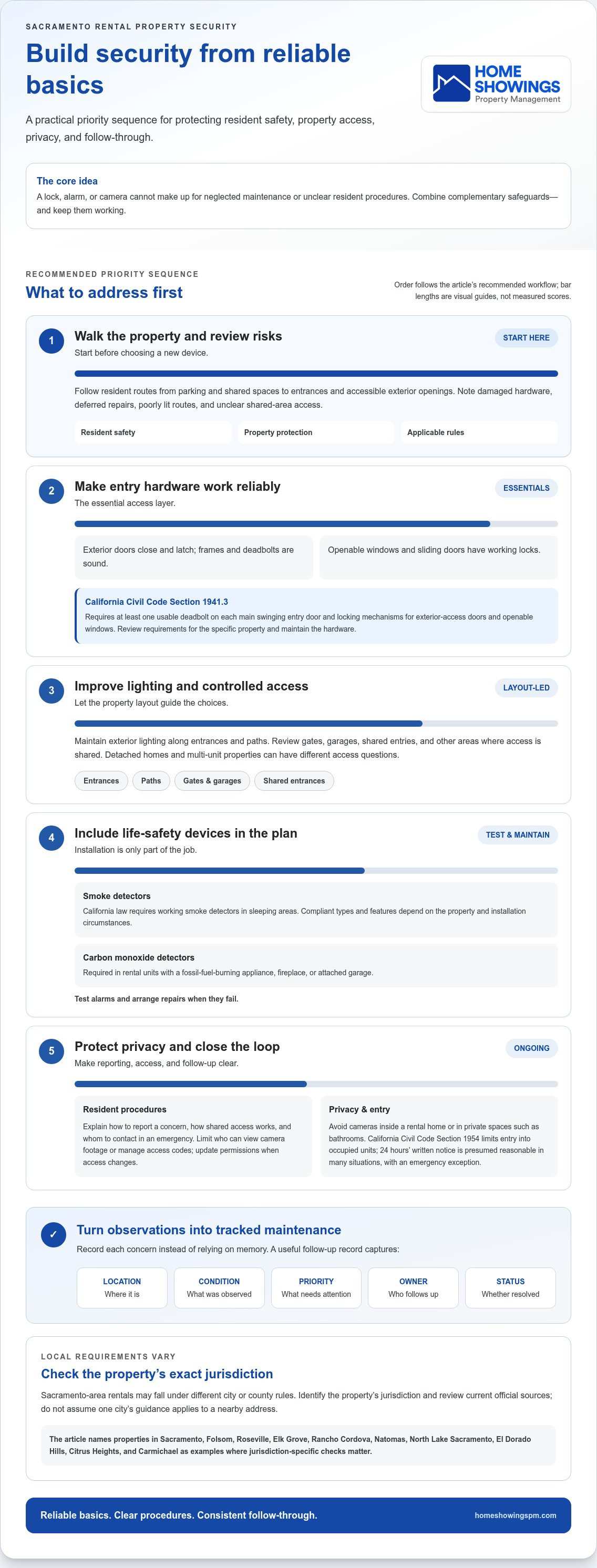
Before choosing a new lock or camera, walk the property as a resident would: from the parking area to the front door, through shared spaces, and around accessible exterior openings. For long-term residential rentals, Sacramento rental property security best practices start with a property-by-property review, not a one-size-fits-all device list. Identify conditions that could affect resident safety, leave the building or belongings vulnerable, or require attention under applicable rules.
Assess these goals separately. Resident safety includes clear, usable routes and functioning safety features. Property protection focuses on access points, hardware, and conditions that could make unauthorized entry easier. Compliance means identifying the state, city, or county rules that apply and keeping reliable records of follow-up. A single improvement may support more than one goal, but it doesn’t replace reviewing each one.
Layered rental-property security combines complementary safeguards rather than relying on a single device. This approach connects with Crime Prevention Through Environmental Design, which considers how the physical environment can shape safety and access.
What should landlords check during a Sacramento rental security walkthrough?
Start at the property boundary and follow the routes residents and visitors use. Check exterior doors, frames, deadbolts, windows, sliding doors, and accessible ground-floor openings for visible damage or hardware that sticks, fails to latch, or otherwise doesn’t work smoothly. Review exterior lighting, paths, gates, garage access, and visibility around entrances. For a multi-unit property, include shared entries and other areas where access is shared.
Record what needs attention instead of relying on memory. Note damaged hardware, deferred repairs, poorly lit routes, and unclear shared-area access procedures. A useful record identifies the location, observed condition, priority, person responsible for follow-up, and status. This turns walkthrough observations into trackable maintenance actions.
How should owners account for Sacramento-area property differences?
“Sacramento” can refer to properties governed by different local jurisdictions. A rental in the City of Sacramento may have different local requirements from one in another incorporated city or an unincorporated county area. Identify the property’s exact jurisdiction, then use current official sources to review applicable safety and inspection requirements. Don’t assume one city’s guidance applies to every nearby address.
Let the building’s layout guide priorities, too. A detached home with its own entrance presents different access questions from a multi-unit building with shared doors, parking, or common paths. Consider how residents enter, where visitors approach, and which spaces are shared. For owners with rentals in Sacramento, Folsom, Roseville, Elk Grove, Rancho Cordova, Natomas, North Lake Sacramento, El Dorado Hills, Citrus Heights, or Carmichael, check the requirements for each property’s jurisdiction instead of making assumptions based on the city or neighborhood name. Regular inspections can help identify changing conditions and route security-related maintenance for follow-up.
Build Rental Security in Layers: Access, Life Safety, and Resident Procedures
A lock, alarm, or camera can help, but none can make up for neglected maintenance or unclear resident procedures. Layered safeguards address different weaknesses, so one missed or failed measure doesn’t leave the whole property without protection. For Sacramento rental property security best practices, combine sound entry hardware, life-safety devices, appropriate lighting, and communication residents can rely on.
Which rental-property security features deserve priority?
Start with the essentials. Check that exterior doors close and latch properly, door frames and deadbolts are sound, and opening windows and sliding doors have working locks. California Civil Code Section 1941.3 requires at least one usable deadbolt on each main swinging entry door and locking mechanisms for exterior-access doors and openable windows. Review the requirements for the specific property and keep hardware maintained.
Next, consider the layout. Maintain exterior lighting along entrances and paths, and review gates, garages, and shared entrances for controlled access where appropriate. A camera or smart lock may add a layer, but neither replaces functioning hardware or a clear access plan. Limit who can view camera footage or manage access codes, and update permissions when access changes.
Include life safety in the same plan. California law requires working smoke detectors in sleeping areas, with compliant detector types and features depending on the property and installation circumstances. Carbon monoxide detectors are required in rental units with a fossil-fuel-burning appliance, fireplace, or attached garage. Test alarms and arrange repairs when they fail; installation alone isn’t enough.
How can landlords protect residents without compromising privacy?
Before move-in, explain how residents can report a security concern, how shared access works, and whom to contact in an emergency. For entry into an occupied unit, California Civil Code Section 1954 limits the reasons for entry and generally requires reasonable advance notice. Twenty-four hours’ written notice is presumed reasonable in many situations, with an emergency exception. Review current rules before setting procedures; the California Department of Justice provides guidance on California landlord-tenant law.
Consider privacy before installing recording technology. Avoid cameras inside a rental home or in private spaces such as bathrooms, and be deliberate about any device that could capture activity inside a resident’s home. For common-area cameras or other recording tools, consider placement, who can access recordings, and how residents are informed. Review applicable law for the specific setup.
Regular property inspections and coordinated maintenance help owners track whether safeguards remain in working order. Home Showings Property Management provides residential property management, including inspections and maintenance coordination. Learn more about property management in Sacramento.
Are Locks and Cameras Enough? Compare Rental Security Approaches
A camera may record an event, but it can’t secure a failed lock, replace a burned-out light, or resolve a maintenance hazard. Each safeguard has a different role and needs upkeep. The most useful Sacramento rental property security best practices pair physical measures with recurring checks and resident-conscious procedures, without treating any device as a promise of safety.
What can physical security features do, and what can’t they do?
Locks and reinforced entry points can make access more controlled, but only while they remain functional. Lighting helps residents see entrances and paths, but it won’t help if a fixture is out or poorly positioned. Cameras may preserve useful information, but they don’t prevent every incident or repair a physical weakness. They also require decisions about where footage is stored, who can view it, and how residents are informed.
When do inspections and management procedures add more value?
An occasional owner check may catch an obvious problem, but a documented schedule makes it easier to notice changes and track unresolved work. If a walkthrough reveals a sticking lock or damaged door frame, record the condition, arrange maintenance, and check the item again after repair. Coordinated inspections and follow-up connect security features to the property’s ongoing condition.
Procedures must also respect resident rights. Before arranging access to an occupied unit, review California landlord-tenant law and follow applicable notice requirements. For broader context on protecting a rental as an asset, see this Sacramento rental property protection guide. For repair coordination, explore the Sacramento property maintenance management guide.
A Recurring Rental Security Checklist for Sacramento Landlords
A security review is useful only when observations lead to clear next steps. Use the same simple record before move-in, during the tenancy, and after a concern is reported. For each item, note its condition, priority, responsible person, and completion status. That record keeps Sacramento rental property security best practices practical and makes follow-up easier to track.
Before move-in: establish the property’s baseline
Complete a walkthrough before residents take possession. Test entry locks, windows, gates, and exterior lighting. Check applicable smoke and carbon monoxide alarms, and document visible damage or needed repairs with dated notes or photographs. Give residents access instructions and a clear way to report urgent concerns.
During the tenancy: review and follow through
Set recurring security reviews that fit the property and comply with applicable inspection rules. Focus on property condition, not intrusive monitoring. Respect residents’ privacy, provide required notice before entry, and don’t treat a checklist as permission for unannounced access. Recheck repaired items and arrange follow-up when hardware or alarm components fail.
After a reported concern: close the loop
Record the report, arrange appropriate follow-up, and keep the resident informed about the next step. Once work is complete, document the outcome and verify that the affected item functions. A consistent maintenance process helps ensure reported concerns don’t get lost between communication and repair.
Record the condition: Describe the issue and its location. Add dated notes or photographs when useful.
Assign responsibility: Identify who will coordinate or complete the follow-up.
Set priority and next action: Note what needs attention and what will happen next.
Document completion: Record when the item was addressed and whether it was rechecked.
Each identified concern needs an owner, a next action, and documented follow-up. Keep inspection observations, maintenance coordination, completed work, and resident updates together. A clear process helps owners see what remains open and gives residents a consistent channel for raising concerns. For broader inspection context, review the rental property management approach.
Home Showings Property Management coordinates residential property inspections and maintenance as part of ongoing property oversight. Explore Sacramento property management for support turning this checklist into a repeatable routine.
Make Rental Security Easier with Consistent Property Management
A checklist works only if someone owns the next step. Regular inspections, organized maintenance coordination, and clear communication turn a security review from a one-time task into a steady part of managing a rental. For Sacramento rental property security best practices, the goal isn’t to promise that every risk can be prevented. It’s to make sure concerns are recorded, assigned, and followed through.
How does ongoing management support rental security follow-through?
During an inspection, a manager may notice a loose entry latch, damaged gate, or exterior light that needs attention. Recording the observation creates a starting point for maintenance coordination: describe the condition, assign responsibility, track the work, and note when it’s complete. A follow-up check can help confirm that the issue was addressed.
Resident communication matters just as much. Residents need a clear way to report concerns, while owners benefit from consistent updates about inspection findings and maintenance progress. Dedicated owner and tenant portals support organized communication and recordkeeping. They don’t replace judgment or repair work, but a consistent process makes it easier to keep relevant information together and see what still needs follow-up.
Regular inspections can surface concerns residents haven’t reported, while reported issues can help direct attention between scheduled reviews. Keep records factual and respect resident privacy and applicable entry requirements. For a broader view of how oversight fits into the management process, read the Sacramento property management owner guide.
What are the next steps for Sacramento-area rental owners?
Start with a walkthrough. Note immediate repair or life-safety concerns, identify who will handle each item, and document completion. Then set a recurring review process that reflects the property’s layout and applicable inspection requirements. Keep communication open, explain how residents can report concerns, and don’t treat routine checks as permission for intrusive monitoring or unannounced entry.
A reliable routine depends on clear ownership. Inspection findings should lead to documented maintenance requests. Share repair updates with the people who need them, and keep open items visible until follow-up is complete. This helps owners stay informed without losing sight of residents’ privacy and comfort.
If you’d like support coordinating inspections, maintenance, and resident communication, explore Sacramento property management support. A consistent management process makes security checks a practical part of caring for your rental.
Make Security a Routine Part of Rental Care
Strong Sacramento rental property security best practices depend on more than choosing locks, lights, or cameras. Start with the property’s specific risks, combine safeguards that serve different purposes, and make every concern part of a clear follow-up process. A documented routine helps you see what needs attention and whether the next step is complete.
Consistent oversight makes that routine easier to sustain. Regular property inspections can identify security and maintenance concerns, while coordinated maintenance helps organize repair follow-through. Dedicated owner and tenant portals support transparent communication, giving updates and reports a clear place to go.
Home Showings Property Management provides residential property management, including inspections, maintenance coordination, and owner and tenant portals. Explore Sacramento property management support to make security reviews part of ongoing rental care.
Frequently Asked Questions
What are the most important security measures for a rental property?
Start with secure doors and windows, functioning locks, maintained exterior lighting, and working life-safety alarms where required. Then set clear access procedures, give residents a reliable way to report concerns, and document repairs through completion. These Sacramento rental property security best practices should reflect the property’s layout and applicable local requirements. Recheck each feature over time rather than assuming it will remain effective without maintenance.
Are landlords responsible for providing locks on rental properties in California?
Landlord responsibilities depend on applicable California law, the rental type, and relevant local requirements. Before making legal decisions or changing access hardware, review current official guidance or consult qualified counsel. As a practical starting point, inspect locks and entry points, address known defects, and explain access procedures clearly to residents. Keep a record of conditions and follow-up so repairs and communication don’t rely on memory.
Can landlords install security cameras at a rental property?
Cameras may raise privacy and recording-law concerns, particularly if they capture private areas or record audio. Before installing or using surveillance equipment, verify current California and local requirements for the specific setup. Consider placement, who can access recordings, how long footage is retained, and how residents are informed. Cameras should be an additional safeguard, not a substitute for secure entry points, maintained equipment, and responsive property upkeep.
How often should a landlord inspect rental-property security?
Set a recurring review schedule suited to the property and applicable inspection rules, and revisit security after a reported concern or completed repair. Follow lawful notice and entry procedures, and respect residents’ privacy. Record the inspection date, observed condition, needed action, and follow-up status. A consistent schedule makes it easier to track a repaired lock or lighting issue than relying on memory or waiting for another problem to be reported.
Do Sacramento rental properties have special security requirements?
Requirements can depend on the property address, type, and governing jurisdiction. Rules may differ across Sacramento, Folsom, Roseville, Elk Grove, Rancho Cordova, Natomas, North Lake Sacramento, El Dorado Hills, Citrus Heights, and Carmichael. Check current state, city, and county requirements for the specific rental, including applicable safety and access obligations. The City of Sacramento Tenant Protection Program addresses tenant protections, but it doesn’t replace review of security or habitability requirements.
Are smart locks a good choice for a Sacramento rental property?
Smart locks can simplify access management, but they still require reliable hardware, secure account controls, and a plan for outages or battery failure. Consider whether the lock suits the property, how access permissions will be managed, and how resident privacy will be protected. Before changing existing locks, verify applicable requirements and ensure residents receive secure access. Document who can manage codes and how access will be updated when circumstances change.
What should a landlord do after discovering a broken lock or security issue?
First assess whether residents face an immediate safety concern, then communicate promptly and arrange an appropriate repair or temporary safeguard. Document the issue, actions taken, and any remaining follow-up. Follow applicable notice and entry rules when accessing an occupied unit. If there’s immediate danger or suspected crime, direct residents to appropriate emergency services rather than treating the situation as routine maintenance. Keep residents updated as the concern is addressed.

Comments