
Sacramento Landlord Property Wear and Tear: Damage Costs

Tenant damage is different from ordinary wear: California landlords may deduct for tenant-caused damage that goes beyond normal wear and tear. According to the California Legislature, a residential security deposit, less lawful deductions, must be returned with an itemized statement within 21 days after the tenant moves out. This Sacramento landlord guide to property wear and tear explains how to make that distinction and handle the deadline.
It’s understandable to want to recover repair costs, but not every mark or sign of age is a tenant’s responsibility. The key question is whether the condition reflects normal use or damage beyond ordinary wear, supported by clear records of the property’s condition.
This guide explains how common examples differ, what photographs and inspection notes can document, and what California’s move-out inspection and security-deposit rules require. A consistent process helps you make informed decisions about deductions and keep move-out clearer for everyone.
Table of Contents
What is the deadline in California for returning a security deposit?
California sets a firm deadline for returning a residential security deposit after move-out. According to the California Legislature, landlords must return the deposit, less lawful deductions, within 21 days after the tenant moves out and provide an itemized statement. The deadline applies even when a landlord has deductions to explain. The statement should identify each deduction and its amount, so the tenant can understand how the remaining deposit was calculated.
A deduction must have a lawful basis, such as tenant-caused damage beyond normal wear and tear, unpaid rent, or eligible cleaning. Ordinary aging, pre-existing defects, and repairs resulting from normal use aren’t tenant damage. A landlord can’t charge a tenant to replace a worn item just because a newer one would improve the property. Any deduction should reflect a reasonable repair or replacement tied to the documented condition.
Documentation helps support each deduction. According to the California Legislature, a landlord must provide copies of receipts for each security deposit deduction over $125.00. Keep invoices, receipts, estimates, and notes that connect the work to a specific condition, such as a damaged door or a stained carpet. If repair work remains incomplete, California allows landlords to provide estimates first and final documentation after completion. The itemized statement should still explain the deduction clearly.
Tenants can protect their deposit by keeping move-in records and reporting maintenance concerns during the tenancy. California tenants may request a pre-move-out inspection, and landlords must give at least 48 hours’ notice before conducting one. The inspection gives both sides a chance to identify possible issues before move-out. Tenants can ask for the proposed deductions in writing, address conditions they’re responsible for, and keep dated photos or messages showing what they reported or repaired.
California disputes over wear and tear often hinge on the evidence and whether a deduction was lawful and reasonably necessary. Comparing a dated move-in photo with a move-out photo may help establish whether a mark was already there or resulted from tenant-caused damage.
To assess a Sacramento dispute, compare the itemized statement with the lease, inspection notes, photos, and repair records. Ask in writing about any unclear charge, identify the specific condition you dispute, and keep copies of the response and supporting documents. A clear record keeps the focus on whether the condition exceeded normal wear, rather than general claims about the property.
Save move-in and move-out photos, inspection reports, and maintenance messages.
Review each charge against the itemized statement and its supporting records.
Keep receipts for repairs and request clarification about disputed deductions in writing.
What is tenant property damage?
Tenant property damage is harm caused by neglect, abuse, or misuse, rather than ordinary use of a rental. For Sacramento rental properties, this distinction matters because it affects whether a landlord may deduct costs from the security deposit.
Damage From Neglect or Abuse
Tenants are responsible for damage caused by their neglect or abuse, including harm caused by family, guests, or pets. For example, failing to report a leak may contribute to damage that ordinary use would not cause. The landlord must still connect the claimed repair to the tenant’s actions, rather than charging for unrelated maintenance or a pre-existing defect.
Distinguishing Damage From Ordinary Wear
Ordinary wear is gradual deterioration from everyday use; tenant-caused damage is a specific condition beyond that normal aging. Small nail holes or sunlight-faded paint differ from large screw holes that damage drywall. A five-year tenancy generally produces more wear than a one-year tenancy, so age and duration help put a condition in context. For California tenancies covered by Civil Code 1950.5(b),(e), tenants aren’t responsible for normal wear and tear.
Sacramento-specific question: the facts here establish California habitability and inspection rules, not a separate Sacramento damage standard. California landlords must keep rental units safe and well-maintained under Civil Code § 1941.1, according to the California Legislature. A damaged floor or broken window may need repair as a safety issue, regardless of who caused it.
Examples of Tenant-Caused Damage
Examples include carpet burns or pet stains, holes in doors or walls, ripped or missing curtains, broken windows, and missing screens. Chipped enamel on a sink, toilet, or bathtub can also indicate damage. Each example needs context: compare the move-in condition with the damage and consider whether neglect, misuse, or ordinary aging best explains it.
Lifespans and Damage Deductions
Carpet, paint, flooring, and appliances all age with use, so their condition before the tenancy matters when assessing a deduction. A stained carpet may support a damage claim, while worn carpet may reflect ordinary deterioration. Similarly, a broken appliance differs from one that has simply aged. Assess the specific item’s condition instead of assuming every replacement is the tenant’s responsibility.
There are no fixed lifespan figures here for carpet, paint, flooring, or appliances. Use the item’s documented age and condition to distinguish repairable tenant-caused harm from normal aging. For example, a newly documented hole in flooring differs from gradual surface wear. Any proposed charge should relate to the damage, rather than automatically shifting the cost of a full replacement.
For a clear assessment, compare each condition with move-in records, note the cause when it can be established, and separate urgent safety repairs from deposit questions. This helps landlords address habitability promptly while determining whether a tenant was responsible for additional damage.
When is it NOT Wear and Tear?
A move-out condition goes beyond ordinary wear when it involves damage, unusual soil, or cleaning beyond the home’s move-in standard. For California landlords, that distinction affects whether a security-deposit deduction is appropriate. Compare the specific condition with the initial inspection record and rental agreement, rather than expecting residents to return an older home in new condition.
Cleaning deductions are limited: a landlord may deduct only the amount needed to restore the property to the cleanliness level it had when the tenant moved in. If the kitchen was professionally cleaned before move-in but the oven and refrigerator are left with heavy food residue, cleaning may be needed to restore that baseline. If the home is as clean as it was at the start, California law doesn’t allow a cleaning deduction.
Apply the same standard room by room. Compare move-in notes and photos for the bathroom, kitchen, floors, and appliances with their move-out condition. Ordinary dust or expected use doesn’t by itself justify charging residents for a deeper clean. A documented layer of grease on the range, food left in cabinets, or trash left behind raises a different question: does cleaning address a condition beyond the recorded starting point?
The rental agreement can set expectations about routine care, but it cannot make tenants responsible for ordinary wear or pre-existing defects. A move-out inspection helps identify conditions while the home is still available to the departing resident. If the tenant’s right to occupy began after January 1, 2003, California Civil Code Section 1950.5(b)(3) provides a practical standard for assessing wear and tear. Apply the standard to the evidence, not a blanket rule that every turnover needs repainting or replacement.
Turnover budgeting works best when it separates routine upkeep from tenant-caused cleaning or repairs. For example, plan for ordinary painting between residents as property maintenance, while documenting a specific wall stain that needs extra cleaning. This distinction gives owners a more realistic picture of turnover expenses and avoids treating normal aging as a deposit charge.
Clear expectations also matter. Explain cleaning responsibilities at move-in, give residents a written record of the property’s condition, and respond to maintenance reports during the tenancy. When tenants know what condition to leave the home in, they can address preventable messes before moving out. Consistent tenant screening supports a stable rental process, while inspection records help tie later cleaning decisions to the property’s actual condition.
Normal wear and tear examples
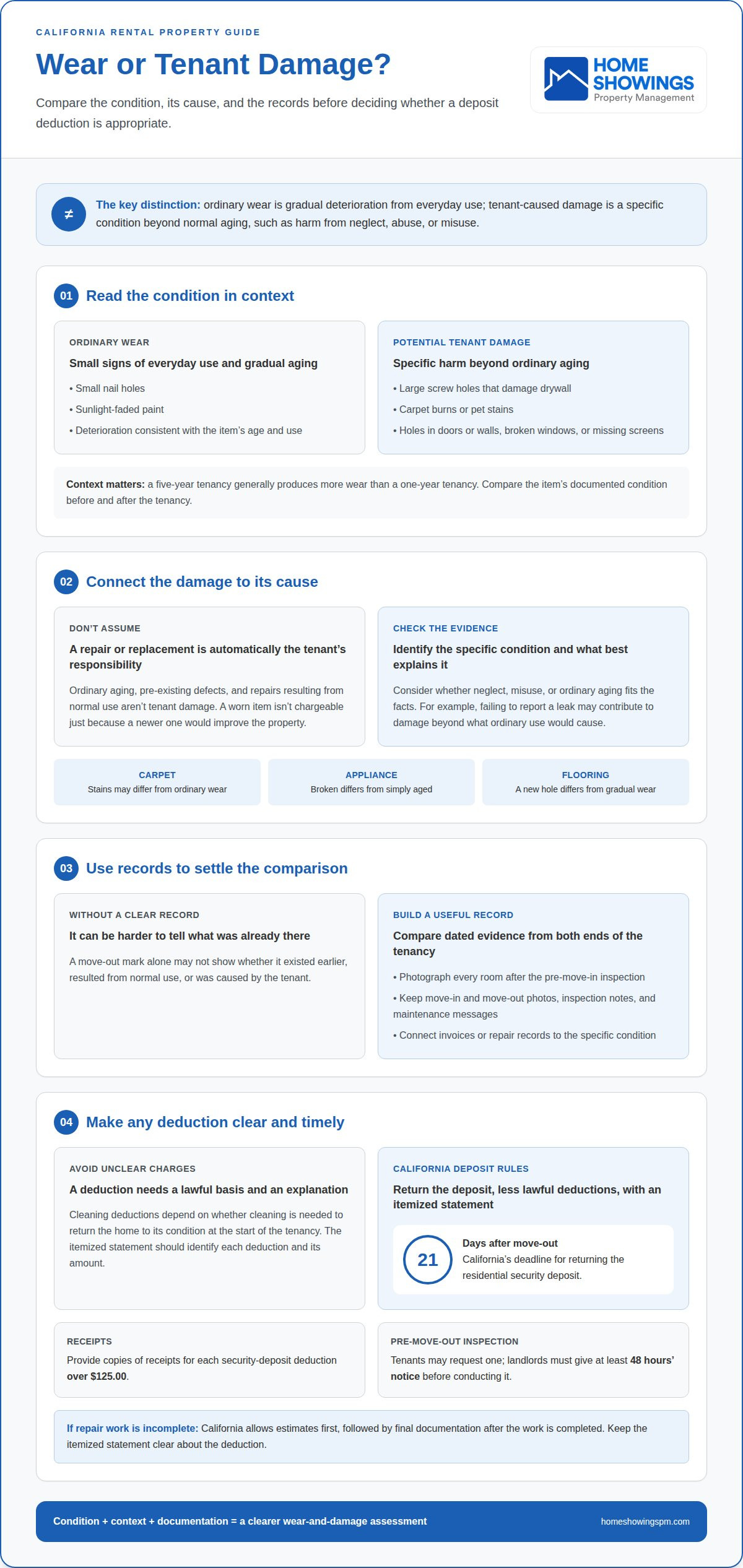
Normal wear and tear is gradual deterioration from ordinary use during a tenancy, not harm caused by a specific act or neglect. A Sacramento landlord guide to property wear and tear should account for the home’s condition at move-in and how long residents have occupied it. A longer tenancy generally produces more wear than a shorter one, so compare similar items in context instead of expecting every rental to remain unchanged.
Everyday use can leave visible signs without making an item damaged. A hallway may develop light scuffs where residents regularly walk, while a floor finish may lose some of its original sheen. Small nail holes and paint faded by sunlight are examples of conditions that generally aren’t chargeable as tenant damage. Their presence alone doesn’t show abuse or neglect.
Common examples that may reflect normal use include:
Minor carpet wear along a well-used walking path.
Small nail holes that don’t materially damage the wall.
Paint that has faded gradually from sunlight exposure.
Light scuffs or finish changes that don’t affect an item’s function.
Compare those signs with conditions that are concentrated or unusually severe. Gradual floor wear across a frequently used room differs from a deep gouge in one area. Light wall marks differ from large screw holes that damage drywall. The Sacramento landlord guide to property wear and tear centers on this distinction: assess the specific change and its context, not simply whether the property looks different.
At move-out, review each room against the move-in inspection report and photographs. Note the location, size, and effect of each condition. For example, photos of the same hallway before and after occupancy can help clarify whether scuffs accumulated through ordinary traffic or a specific area was damaged. Descriptive records are more useful than a general note that a room needs attention.
California landlords can’t deduct for repairs needed because of ordinary wear and tear. An itemized deduction should identify the condition and connect the charge to a lawful repair, rather than label routine aging as damage. A worn finish may call for ordinary upkeep; a broken fixture requires closer assessment of its cause and supporting records.
For Sacramento rentals, applying the same comparison to each tenancy helps owners make consistent decisions. Consider the item’s starting condition, the length of occupancy, and the nature of the change. This approach can distinguish ordinary deterioration from tenant-caused harm without treating every mark as a reason to charge residents.
Photographic documentation of property condition
Photographs taken after the pre-move-in inspection give owners a visual record of the home’s starting condition. Photograph every room, then pair the images with written notes identifying the location and visible condition of key surfaces and fixtures. At move-out, comparable images help show whether a change appeared during the tenancy or was already present.
Consistency matters more than a large collection of unlabelled pictures. Photograph each space from a broad angle, then take closer views of existing marks, worn finishes, or damaged items. For example, a carpet overview can show its general condition, while a close-up records a specific stain. Use the same room names in the photos and inspection report, such as “north bedroom” or “kitchen.”
A useful condition report connects each image to a clear description. Record the room, item, observed condition, and whether it needs attention. “Living room wall, small existing scuff near doorway” is more useful than “wall marked.” If an appliance has a dent or a cabinet door sticks before move-in, note and photograph it. That detail helps prevent later confusion about what residents caused.
Keep move-in and move-out records organized together. Group them by room or property area, and retain the original image files alongside dated inspection notes. When a photo is unclear, a written description can add context, such as the location of a mark or whether an item worked during the inspection. Rely on records rather than memory to show what owners observed.
Photographs support an assessment, but don’t explain every cause on their own. Compare each image with inspection notes, maintenance reports, and the condition observed during the tenancy. A close-up of a damaged cabinet, for instance, may show the extent of the harm, while a maintenance record may clarify when it was reported. Together, these records create a more complete timeline.
An owner and tenant portal can keep inspection reports, detailed notes, and property photos accessible in one place. Residents can also use the tenant portal to submit maintenance requests with photos, creating a record of reported conditions. Clear labels and organized files make it easier to find the relevant image when reviewing a room or repair.
For a reliable record, make property inspections part of the documentation process. Arrange property inspections to help record rental condition and keep observations organized for future comparisons.
Home Showings Property Management
Home Showings Property Management helps Sacramento-area rental owners manage their properties and tenancies through an organized process. Regular inspections using the Zinpector software application and coordinated maintenance support property preservation. Clear records also help owners compare a home’s condition over time and assess wear versus damage.
When overseeing the rental process becomes difficult, property management can bring inspections, tenant screening, rental marketing, and rent collection together. These services support day-to-day ownership, from preparing a rental for residents to tracking its condition over time. They don’t replace a landlord’s responsibility to make fair, lawful deposit decisions, but organized management can make the process easier to oversee.
For support managing your Sacramento rental property, contact Home Showings Property Management.
Build a steadier rental process from here
A consistent property care process can shape more than move-out decisions. Clear expectations, organized records, and timely maintenance help owners approach each tenancy with a shared understanding of the home’s condition. Keep this Sacramento landlord guide to property wear and tear as a reference when preparing, managing, and reviewing your rental between residents.
Home Showings Property Management supports residential owners with property management, rental marketing, and tenant screening. These services bring key parts of the rental process into a coordinated plan, while keeping owners informed about decisions affecting their property. Discuss how property management can fit your ownership goals and day-to-day needs.
Talk with Home Showings Property Management about your rental and explore a practical path forward for your property.
Frequently Asked Questions
Does landlord have to provide copies of receipts for deductions that were made?
Yes, according to the California Legislature, a landlord must provide copies of receipts for each security deposit deduction over $125.00. Keep each receipt connected to the work described in the itemized statement, such as a repair invoice for a damaged cabinet. The paperwork should identify the work and amount charged. The receipt rule doesn’t replace the need to explain each deduction in the statement.
What are tenant’s responsibilities?
Tenants are responsible for damage caused by their neglect or abuse, including damage caused by family, guests, or pets. They should also report maintenance concerns promptly, since an unreported leak can worsen and affect other areas. The lease can explain care expectations, but tenants aren’t responsible for correcting pre-existing defects or ordinary deterioration from normal use.
What counts as normal wear and tear in a California rental property?
Normal wear and tear is gradual deterioration associated with ordinary residential use, not a distinct act of damage. California examples include minor carpet wear, small nail holes, and paint faded by sunlight. The length of the tenancy and the item’s move-in condition help put those signs in context. A landlord should assess the overall condition rather than treat every cosmetic change as a repair charge.
How does California distinguish wear and tear from tenant-caused damage?
California distinguishes the two by considering whether a condition reflects ordinary use or harm caused by neglect, abuse, or misuse. A gradual change to a frequently used surface differs from a broken fixture or a large hole in a door. The move-in condition, tenancy duration, and available inspection records help explain the difference. The cause and extent matter more than simply finding a flaw at move-out.
What can Sacramento landlords deduct from a security deposit for damage?
Sacramento landlords may deduct reasonable amounts for tenant-caused damage beyond normal wear and tear, along with other deductions permitted by California’s security-deposit law. For instance, a repair for a tenant-caused broken window may qualify, while replacing a fixture solely because it has aged does not. The deduction should connect to a specific condition and lawful purpose, not general property improvements.
How should Sacramento landlords document a property's condition at move-in and move-out?
Use a written condition report and photographs at both inspections, with matching room names and descriptions. For a Sacramento rental, the move-in record might note a carpet stain’s exact location, while the later report records whether it changed. Keep maintenance messages and repair records with the inspection files. Owners in Sacramento, Folsom, Roseville, Elk Grove, Rancho Cordova, Natomas, North Lake Sacramento, El Dorado Hills, Citrus Heights, and Carmichael can use the same organized approach.
Can a landlord charge tenants for cleaning beyond ordinary wear and tear in California?
Yes. A landlord may deduct the amount reasonably needed to restore the rental to the cleanliness level recorded at move-in. For example, if the kitchen was clean initially but is left with heavy grease or food waste, cleaning may be chargeable. If it’s returned in the same state of cleanliness, California law doesn’t allow a cleaning deduction. Compare the inspection records rather than charging for routine turnover cleaning.
What notices and itemized receipts must California landlords provide for security deposit deductions?
According to the California Legislature, landlords must return a residential tenant’s security deposit, less lawful deductions, within 21 days after the tenant moves out and provide an itemized statement. For a pre-move-out inspection, tenants must receive at least 48 hours' notice. The California Legislature also requires receipt copies for each deduction over $125.00. The itemization should identify charges clearly, so tenants can understand how the remaining deposit was calculated.


Comments