
Rental Property Damage Inspections: The Landlord’s Guide to California Compliance in 2026

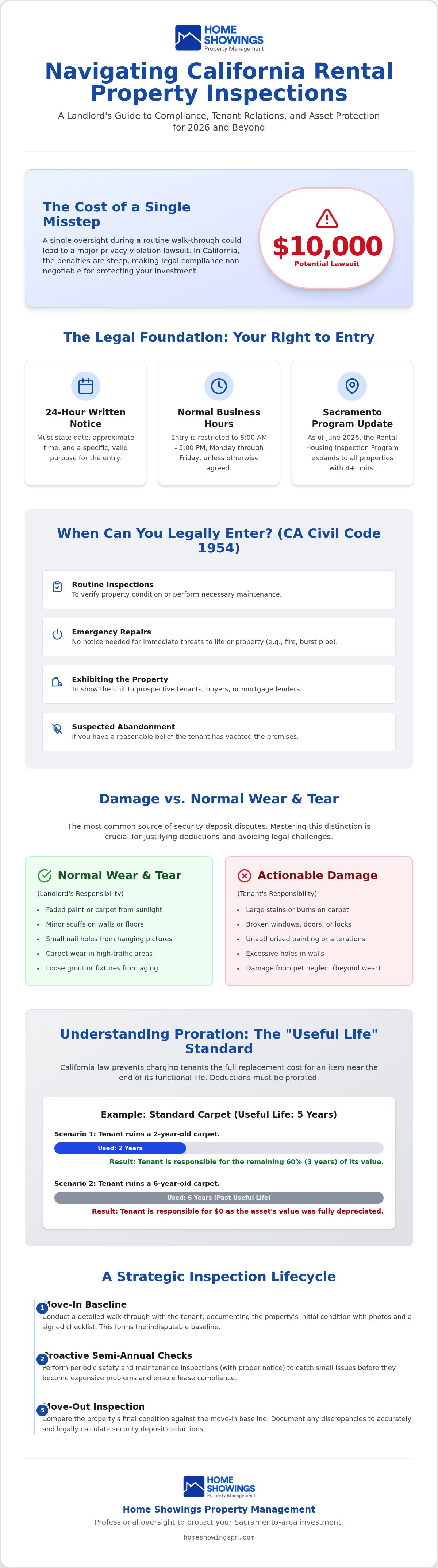
Did you know that a single oversight during a routine walk-through could lead to a $10,000 privacy violation lawsuit in California? For many owners in Sacramento and Elk Grove, the anxiety of potentially overstepping legal boundaries often leads to neglected oversight; this eventually results in property devaluation. You likely understand that regular rental property damage inspections are vital for protecting your investment, but the fear of a soured tenant relationship or a legal misstep can make the process feel like walking through a minefield.
It's a constant challenge to keep up with the shifting legal landscape, but you don't have to manage it blindly. We'll show you how to implement a clear, compliant inspection process that safeguards your assets and maintains positive tenant rapport. This guide covers the essential 2026 updates, including the new habitability requirements for stoves and refrigerators, the expanded Sacramento Rental Housing Inspection Program for properties with four or more units, and the precise documentation needed to justify security deposit deductions. By the end, you'll have a proactive strategy to keep your properties in peak condition while staying firmly on the right side of the law.
Table of Contents
The Legal Framework: California Rental Property Inspection Laws
A solid grasp of landlord-tenant law is the foundation of any successful management strategy. In California, your right to access the property you own is strictly governed by California Civil Code 1954. This statute serves as the boundary line between your need to protect your investment and the tenant's right to "quiet enjoyment." If you cross this line without a legal reason, you aren't just being intrusive; you're potentially breaking the law. Successfully conducting rental property damage inspections starts with knowing exactly when you're allowed to step through the front door.
For most non-emergency situations, you must provide at least 24 hours' written notice. This notice must state the date, the approximate time of entry, and the specific purpose. Under current standards, entry must occur during "normal business hours," which are typically defined as 8:00 AM to 5:00 PM, Monday through Friday. If you own property in Sacramento, you should also be aware of the Rental Housing Inspection Program. As of June 2026, this program expanded to include all properties with four or more units. This means local code enforcement may conduct their own audits, and your internal documentation must be ready for scrutiny.
Permissible Reasons for Entry Under CA Law
You can't enter a rental unit just to "check in." California law allows entry only under specific circumstances, including:
Routine Inspections: To verify the condition of the property or perform necessary maintenance.
Emergency Repairs: No notice is required if there's an immediate threat to life or property, such as a burst pipe or fire.
Exhibiting the Property: When you're showing the unit to prospective tenants, buyers, or mortgage holders.
Suspected Abandonment: If you have a reasonable belief the tenant has vacated the premises without notice.
Lease Violations: To investigate credible evidence of a breach of the rental agreement.
The Consequences of Non-Compliant Entry
The penalties for getting this wrong are steep. Tenants can sue for up to $10,000 in small claims court for privacy violations. If a landlord engages in a pattern of unauthorized entries, they can face civil penalties of up to $2,000 per violation under California Civil Code 1940.2. Beyond the financial hit, illegal entry can severely damage your standing in an eviction proceeding or invalidate your security deposit claims. To stay protected, we recommend maintaining a digital paper trail for every notice sent. By documenting notice delivery in your owner portal, you create a timestamped record that proves you followed the law. This meticulous approach ensures that your rental property damage inspections remain a tool for preservation rather than a legal liability.
Normal Wear and Tear vs. Actionable Property Damage
Distinguishing between everyday use and actual damage is where most landlord-tenant conflicts arise. According to California security deposit and inspection laws, landlords cannot charge for deterioration that occurs naturally through ordinary, non-negligent use. This means that during your rental property damage inspections, you must look beyond the surface level to determine if a repair is truly the tenant's responsibility or simply the cost of doing business.
If you mistakenly deduct for a faded carpet or a few small nail holes, you risk a legal challenge that could cost you much more than the repair itself. Taking a methodical approach to these audits protects your reputation and your bottom line. If you're feeling overwhelmed by these nuances, our team can help you maintain compliant property oversight to ensure your assets stay protected.
The Life Expectancy Framework for CA Landlords
California courts use the concept of proration to determine how much a tenant should pay for damaged items. You cannot charge a tenant the full cost of a new replacement if the item was already near the end of its functional life. For instance, California courts generally view the life expectancy of standard apartment-grade carpet as five years. If a tenant ruins a six-year-old carpet, you typically cannot charge them for any portion of the replacement, as the asset had already reached the end of its expected cycle. Useful life is the standard for proration in California.
Common Comparison Scenarios
To help you navigate your next walkthrough, consider these common distinctions between wear and damage:
Paint: Faded or slightly scuffed paint from years of occupancy is normal wear. However, unapproved neon colors, large holes from mounted televisions, or deep gouges in the drywall constitute actionable damage.
Flooring: Minor scuffs on hardwood or light traffic patterns on rugs are expected. Deep gouges from dragging furniture, water warping from neglected spills, or pet urine stains are clear examples of damage.
Hardware: A loose door handle or a worn faucet washer is usually wear and tear. A cracked window, a broken cabinet door, or a missing light fixture is damage.
The pre-move-out inspection is your best tool for preventing disputes. By offering this within the final two weeks of a tenancy, you give the tenant an itemized list of potential deductions, allowing them to fix issues before they leave. For a deeper analysis of these distinctions, refer to our guide on Normal Wear and Tear Meaning for California Rentals. This proactive step ensures that your final rental property damage inspections are straightforward and free of surprises.
The Inspection Lifecycle: Timing Your Property Audits
Timing is everything when it comes to preserving your asset. A reactive approach often leads to expensive surprises; however, a structured lifecycle for rental property damage inspections ensures you catch minor issues before they escalate. By scheduling audits at critical milestones, you create a transparent record that protects both your financial interests and your relationship with the tenant. This methodical rhythm replaces the stress of the unknown with a steady, predictable oversight process.
The Move-In Baseline Strategy
The first step in any successful tenancy is establishing a clear, undeniable baseline. Without a signed Move-In/Move-Out Statement, you have no legal ground to claim damages later. We recommend using high-resolution video to document the exact condition of appliances, flooring, and walls before the tenant receives the keys. This visual evidence is far more persuasive than a simple checklist if a dispute reaches small claims court. Integrating these records into your digital property management system allows for instant retrieval years down the road. It provides a permanent "before" snapshot that is accessible to both you and your management team, ensuring nothing is left to memory.
Mid-tenancy oversight is equally vital for long-term property health. Semi-annual safety inspections allow you to check essential items like smoke detectors, carbon monoxide alarms, and HVAC filters. This is also the perfect time to identify early signs of leaks under sinks or unauthorized occupants. Additionally, periodic drive-by inspections help you monitor exterior maintenance and look for unauthorized pets without disturbing the tenant's privacy. These "boots-on-the-ground" checks ensure the property isn't being neglected from the outside in, allowing you to address lease violations before they cause lasting damage.
The 14-Day Pre-Move-Out Inspection
California law provides tenants with the right to request an "initial inspection" within the final two weeks of their tenancy. This is a critical window for landlords in the Sacramento market. According to California Security Deposit Laws, the purpose is to give the tenant an itemized list of necessary repairs or cleaning. You must provide at least 48 hours' written notice before this inspection unless the tenant waives it in writing.
This proactive step significantly reduces turnover time. If the tenant knows exactly what will be deducted from their deposit, they often choose to handle the repairs or deep cleaning themselves. For the landlord, this means the unit returns to the market in better condition, often ready for the next occupant with minimal downtime. It transforms the move-out process from a potential conflict into a collaborative effort to restore the property, ensuring your rental property damage inspections lead to a smooth transition rather than a legal headache.
California Rental Property Inspection Checklist: Room-by-Room
Moving from the legal schedule to the actual walkthrough requires a sharp eye and a systematic approach. A thorough room-by-room audit ensures that nothing is overlooked, from minor leaks to major safety hazards. When performing rental property damage inspections, it's helpful to view the property through the lens of both preservation and liability. By identifying small issues early, you prevent the kind of deferred maintenance that can lead to significant property devaluation in the Sacramento market.
In the kitchen, your focus should be on functionality and moisture control. Check under sinks for any signs of slow leaks or water damage to the cabinetry. As of January 1, 2026, California law requires landlords to maintain a working stove and refrigerator for a unit to be considered habitable. Test every burner and ensure the refrigerator maintains a safe temperature. In bathrooms, look for early signs of mold or mildew, and check the integrity of the grout and caulking around tubs and showers. These small seals are your first line of defense against costly subfloor rot.
Health and Safety Compliance (California Standards)
Your checklist must prioritize state mandated safety features to protect both your tenants and your investment. Verify that functional smoke alarms are installed in every bedroom and in the central hallway of each floor. Carbon monoxide detectors are also required on every level of the home. If you manage older properties in Sacramento built before 1978, be particularly vigilant about lead-based paint hazards, especially if you notice peeling or cracking on window sills or door frames. Additionally, ensure your water heater is properly strapped according to seismic safety standards, a critical requirement for California compliance.
The Hidden Damage Hunt
Beyond the obvious, a meticulous organizer looks for the subtle changes that indicate unauthorized modifications or emerging risks. Test all GFCI outlets in kitchens and bathrooms to ensure they trip and reset correctly; this is a vital tenant safety check. Look for "unauthorized modifications" that tenants often overlook, such as heavy TV wall mounts that damage studs or cabinets that have been painted without permission. These changes can impact your property's value and require professional remediation at the end of a tenancy.
Finally, keep an eye out for signs of pest infestations or unauthorized occupants. Droppings in the back of cabinets or worn paths in the carpet can signal issues that need immediate attention. If you want to ensure your property meets every local and state standard without the stress of doing it yourself, contact our property management experts today to schedule a professional assessment. We'll help you maintain a worry-free investment through our proactive oversight and modern reporting systems.
Professional Oversight: How Property Management Protects Your Asset
Managing a rental property in the Sacramento region requires more than just a set of keys and a signed lease. It demands a "boots-on-the-ground" presence that understands the specific nuances of the local landscape. While DIY software can track payments, it cannot replace the expert eyes needed for thorough rental property damage inspections. A professional manager acts as your local guide, spotting red flags like slow-drip leaks or subtle lease violations that technology alone might miss. This proactive oversight is the difference between a minor repair and a deferred maintenance disaster that devalues your investment over time.
Our approach leverages modern efficiency through dedicated owner portals. Instead of waiting for a monthly summary, you receive real-time inspection reports complete with high-resolution photos. This transparency ensures you're never in the dark about your property's condition. When issues do arise, we coordinate repairs through a vetted network of local Sacramento contractors. This ensures quality work at competitive rates without the stress of vetting vendors or managing project timelines yourself.
Removing Emotion from the Inspection Process
If you've ever had to tell a tenant they won't be getting their full security deposit back, you know how quickly the conversation can turn sour. A third-party manager removes the emotional friction from these difficult discussions. We provide objective, professional documentation that stands up in California Small Claims Court if a dispute arises. By ensuring consistent California Landlord-Tenant Law compliance, we protect you from the harassment claims or legal missteps that often plague self-managed properties. Our steady hand ensures that every interaction remains professional and rooted in the lease agreement.
Streamlining Maintenance in Elk Grove and Roseville
Efficiency is critical for maintaining cash flow, especially in competitive markets like Elk Grove and Roseville. Home Showings Property Management follows a systematic approach to asset preservation that minimizes vacancy between tenancies. When rental property damage inspections reveal necessary fixes, we move quickly to coordinate repairs before the next tenant arrives. This methodical workflow keeps your property in peak condition while protecting your long-term ROI. For a detailed look at how we manage these transitions and coordinate with local vendors, explore our guide on Property Maintenance Management in Sacramento. This structured strategy replaces the stress of property ownership with a feeling of controlled stability.
Securing Your Sacramento Investment for 2026 and Beyond
Managing a rental property in California doesn't have to be a source of constant anxiety. By mastering the legal nuances of Civil Code 1954 and implementing a rigorous room-by-room checklist, you transform potential liabilities into a stable, high-performing asset. Success lies in the details, from distinguishing between a scuffed floor and actionable damage to ensuring your digital paper trail is ironclad. Regular rental property damage inspections are your most effective tool for preventing deferred maintenance disasters and maintaining healthy tenant relationships.
If you're ready to trade the stress of compliance for a proactive, worry-free management experience, we're here to help. Our team provides expert knowledge of Sacramento and Elk Grove rental regulations paired with a systematic property preservation model. You'll gain full visibility into your asset's health through transparent reporting via our secure owner portals. Protect your investment with professional inspections from Home Showings Property Management. With the right systems in place, you can focus on growing your portfolio while we handle the meticulous details of property oversight.
Frequently Asked Questions
How much notice must a landlord give for an inspection in California?
In California, you must provide at least 24 hours' written notice before entering a rental unit for a non-emergency inspection. This notice must include the date, approximate time, and the purpose of the entry. For the specific "initial inspection" held before a tenant moves out, the law requires at least 48 hours' written notice. These entries must occur during normal business hours, generally defined as 8:00 AM to 5:00 PM on weekdays.
Can a tenant refuse a property inspection in Sacramento?
A tenant cannot legally refuse entry if you have provided proper notice for a permissible reason under California Civil Code 1954. If the request is reasonable and follows local Sacramento ordinances, the tenant must allow access. However, if you attempt to enter too frequently or outside of business hours, a tenant might claim a violation of their right to quiet enjoyment. Consistent communication helps prevent these friction points and maintains a positive relationship.
What is the difference between wear and tear and damage in CA?
Normal wear and tear refers to the natural deterioration that happens through ordinary use, such as faded paint or worn carpet in high-traffic areas. Actionable damage results from negligence, abuse, or accidents, like large holes in walls or pet stains. During rental property damage inspections, you must prorate repairs based on the item's life expectancy. For example, you typically cannot charge for carpet replacement if it is more than five years old.
How often can a landlord inspect a rental property in California?
California law doesn't set a specific number of allowed annual visits, but inspections must be "reasonable." Most professional managers in Elk Grove and Roseville conduct one or two comprehensive walkthroughs per year in addition to move-in and move-out audits. Harassing a tenant with monthly inspections could lead to legal trouble or privacy violation claims. A steady, predictable schedule protects your asset while respecting the tenant's privacy and legal rights.
Does a landlord have to be present for a move-out inspection?
Either the landlord or their authorized property manager should conduct the inspection to document the unit's final condition. While the tenant has a right to be present for the "initial inspection" held within the last two weeks of the lease, they aren't required to attend the final walkthrough after vacating. We recommend that our team performs these audits to ensure professional documentation that stands up in court if security deposit disputes arise.
Can I take photos during a rental property inspection?
You absolutely can, and should, take photos during any walkthrough. Photographic and video evidence are the gold standard for documenting the condition of your property and justifying any necessary repairs. Our systematic approach uses high-resolution imagery to create a clear record of the home's state at move-in and move-out. This visual trail is vital if you ever need to defend a security deposit deduction in a Sacramento small claims court.
What happens if I find damage during a routine inspection?
If you discover damage during rental property damage inspections, you should document it immediately with photos and written notes. If the issue is a safety hazard or violates the lease, you can issue a notice to perform or quit, requiring the tenant to fix the problem. For non-urgent issues, you might choose to wait until the move-out process to deduct costs from the security deposit, provided you follow all California proration and notice rules.
Are smoke detector checks required during every inspection?
While not strictly mandated for every single entry, checking smoke and carbon monoxide detectors is a critical safety requirement under California law. Landlords must ensure these devices are functional at the start of every tenancy and maintain them in good working order. We include these checks in every semi-annual safety audit to protect our clients from liability. It's a simple step that significantly reduces risk and ensures your property remains compliant with state habitability standards.


Comments