
Rancho Cordova Rental Property Tenant Satisfaction and Owner Costs

For owners, Rancho Cordova rental property tenant satisfaction depends on well-maintained homes, responsive communication, and a rental experience that encourages tenants to stay. These factors matter to returns: a vacancy can mean lost rent as well as cleaning, advertising, and screening costs. The City of Rancho Cordova requires rental property owners to register their properties annually and periodically inspects them for health and safety issues.
It’s understandable to focus on rent when assessing a property’s performance, but the day-to-day experience can influence whether a tenant renews. Clear expectations, timely attention to maintenance, and respectful tenant relations all support a more stable tenancy.
This article explains how local conditions and property upkeep influence renter satisfaction, why retention can help control vacancy costs, and how consistent management supports owner returns. It also covers how rental marketing, tenant screening, inspections, rent collection, and coordinated maintenance fit into a practical approach to managing a Rancho Cordova rental property.
Table of Contents
1. Rancho Cordova rental market and community
Rancho Cordova’s rental experience reflects both the home itself and its neighborhood. The city had approximately 70,000 residents, and its amenities can shape what renters value. A well-presented listing should describe the property accurately, including nearby destinations and practical features.
No single neighborhood can be identified as having the highest tenant satisfaction. A renter’s experience depends on the individual home, its upkeep, access to daily needs, and the clarity of communication with the owner or manager. Evaluate each address on those factors rather than assuming a neighborhood name guarantees a better fit.
Community life offers concrete attractions to consider. The American River Parkway has 26 miles of bike and pedestrian trails, and Rancho Cordova lies along a six-mile stretch of the American River. The city also has 70 acres of creek channels and tributaries, plus over 100 mostly free events annually. For renters who value outdoor access or local activities, these features can make a location more appealing.
Rent varies by bedroom count: the average is $1,800 for a one-bedroom rental, $2,200 for a two-bedroom, and $2,800 for a three-bedroom. These figures offer context, not a promise that every home will rent at the average. Property condition, layout, location, and included features affect how renters assess a listing.
Look for practical concerns such as unresolved maintenance, unclear lease terms, and unanswered requests. These are risks to assess at a specific property, not complaints that apply to every Rancho Cordova rental. Find out how tenants submit maintenance requests and receive updates.
Before signing, renters can inspect the home, compare the lease with the listing, and note any existing damage. They can also ask how to report maintenance issues, what property inspections involve, and how rent payments are handled. These steps clarify expectations before move-in.
Clear, consistent communication supports a smoother tenancy. For example, a written repair update can record what was reported, what action is planned, and when the tenant will hear more. Consistent screening and accurate listings also help align a renter’s expectations with the home and lease.
The City of Rancho Cordova requires residential rental properties to be registered annually and periodically inspects them for health and safety issues. For owners, organized inspection information and property records support responsible oversight. For tenants, knowing how questions and requests are handled can build trust and encourage renewal.
Organized inspection information and property records can support compliance and help owners respond to questions about a home. Rental figures also vary by source, geography, and reporting period, so they are reference points rather than guaranteed prices for particular properties. Zillow's published rental data reported an average rent of approximately $2,279 per month in Rancho Cordova ZIP code 95670 in September 2026. Zillow's published rental data reported an average rent of approximately $3,047 per month in Rancho Cordova ZIP code 95742 in September 2026. Zumper reported a citywide median rent of approximately $2,058 per month in Rancho Cordova in October 2026. These figures reflect different areas, measures, and dates, and can offer context when assessing a listing.
2. Maintenance requests and emergency response
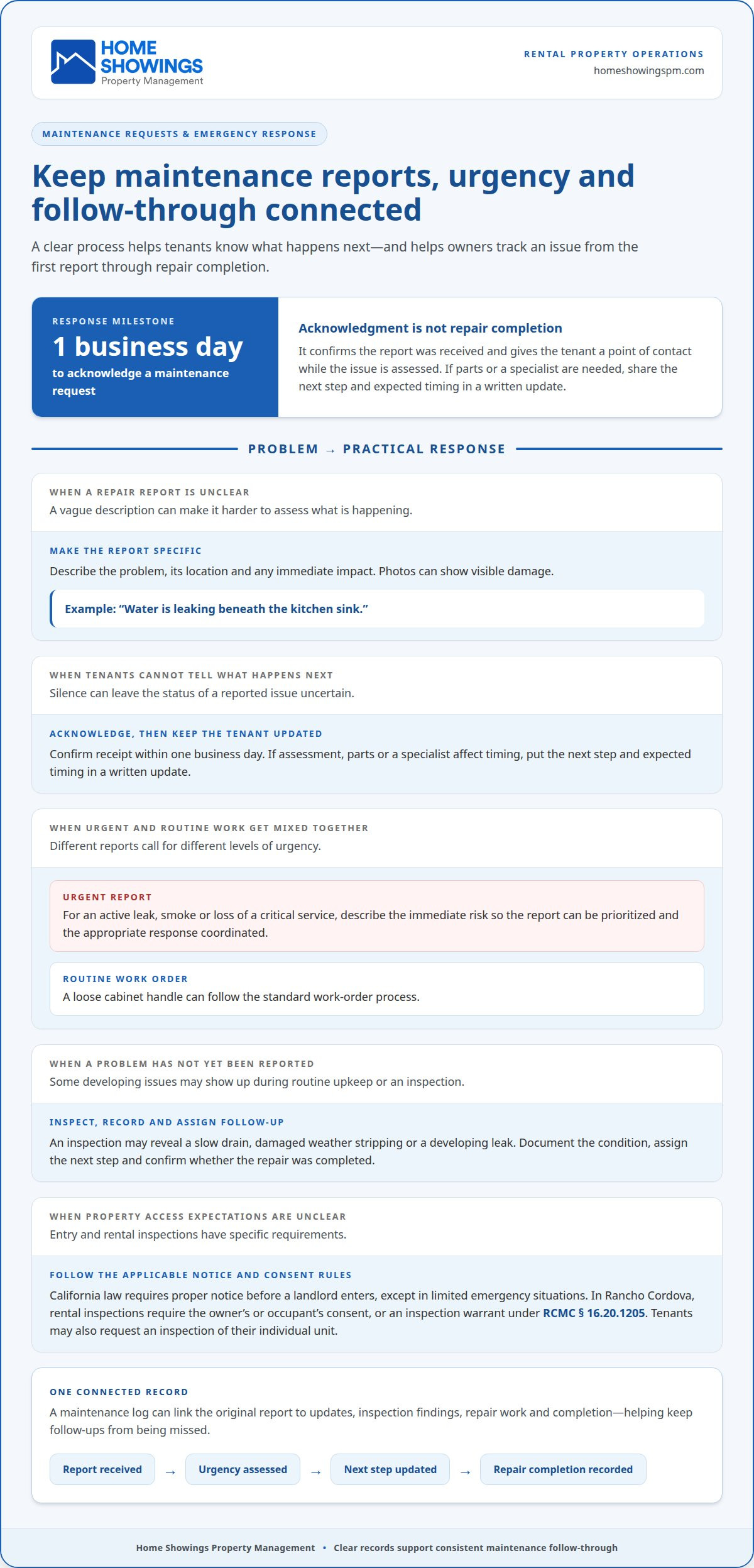
A maintenance process affects comfort and safety, and can determine whether a small defect becomes a larger repair. In a residential rental, a dripping faucet, failed heater, or water leak needs clear reporting and follow-through. A useful system records the issue, identifies its urgency, assigns the next action, and keeps the tenant informed.
When submitting a request, tenants should describe the problem, its location, and any immediate impact. For example, “water is leaking beneath the kitchen sink” is more useful than “something is broken.” Photos can show visible damage. The property manager or owner can acknowledge the request, prioritize health and safety concerns, and share a realistic repair timeline.
Landlords are advised to acknowledge maintenance requests within one business day. That acknowledgment doesn’t mean every repair will be completed immediately. It confirms the report was received and gives the tenant a point of contact while the issue is assessed. If a repair needs parts or a specialist, a written update can explain the next step and expected timing.
Emergency reports need a clear path separate from routine work orders. A tenant reporting an active leak, smoke, or loss of a critical service should describe the immediate risk. Property management can sort requests by urgency, record the reported conditions, and coordinate the appropriate response. A routine request, such as a loose cabinet handle, can follow the standard work-order process.
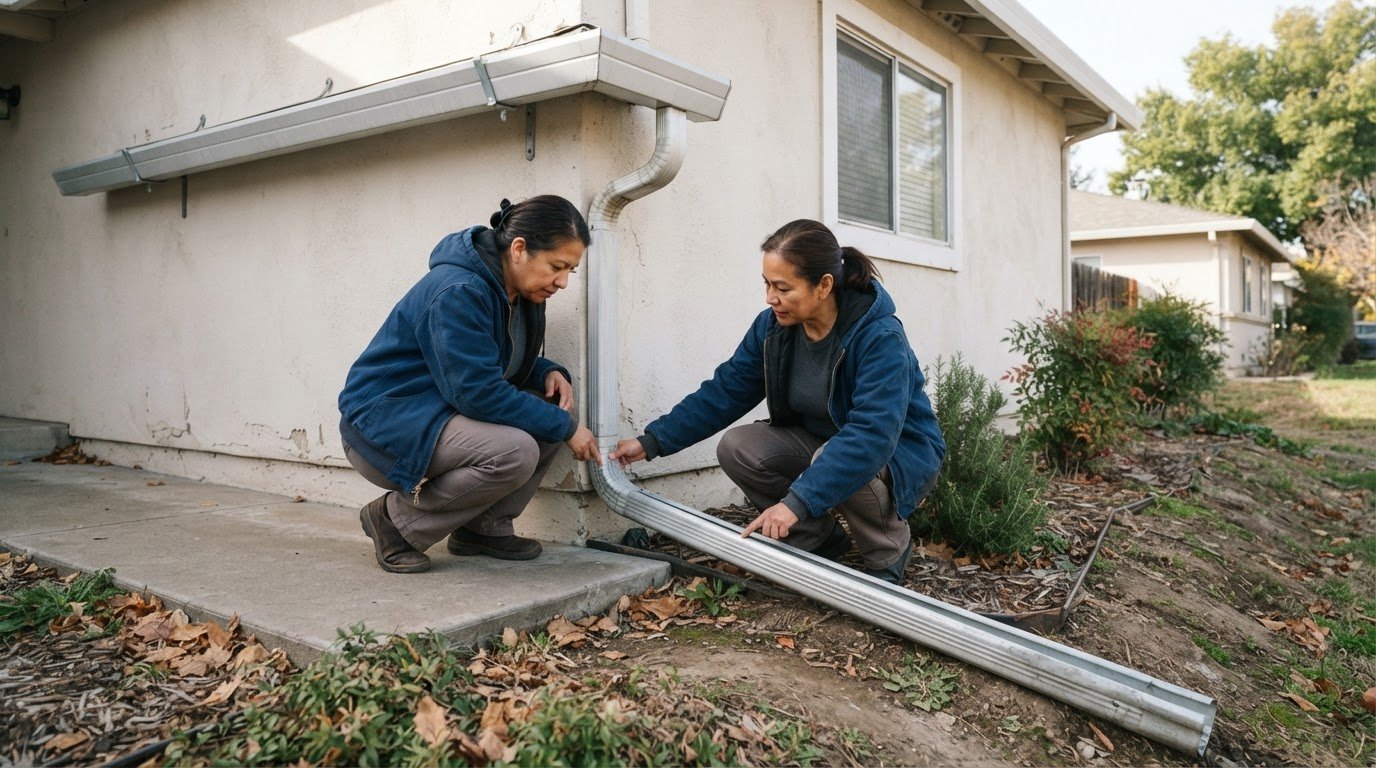
Routine maintenance and property inspections can identify concerns before they disrupt daily life. An inspection may reveal a slow drain, damaged weather stripping, or a developing leak that hasn’t prompted a tenant report. A documented inspection record helps track the condition, assign follow-up, and confirm whether the repair was completed.
California law requires landlords to provide proper notice before entering a rental property, except in limited emergency situations. In Rancho Cordova, rental inspections require the owner’s or occupant’s consent, or an inspection warrant under RCMC § 16.20.1205; tenants may also request an inspection of their individual unit.
Consistent records matter. A maintenance log can connect the original report to updates, inspection findings, repair work, and completion. This helps prevent missed follow-ups when several requests arrive at once. An organized property maintenance process gives owners a practical way to manage repairs while keeping tenants informed.
Keeping the reporting route easy to use outside office hours can help tenants share problems promptly and keeps everyone in the loop. Professional property managers commonly use online work-order systems that let tenants submit maintenance requests 24/7. A useful request still explains the condition and its urgency, giving the manager information to assess what response is needed and maintain a record for follow-up.
For urgent problems, professional property managers provide 24/7 emergency maintenance response. Landlords are advised to prioritize urgent health and safety maintenance issues and give tenants a realistic repair timeline. Tenants should know how to distinguish an emergency report from a routine request, and where to direct each one. After receiving a report, a brief confirmation of the action being taken and the next expected update can keep communication clear while repair arrangements proceed.
3. Tenant retention and vacancy costs
A lease renewal preserves continuity and can avoid lost rent and the work of finding another tenant. For a landlord, the comparison is not simply higher rent versus lower rent. Consider expected collected rent alongside vacancy, turnover tasks, and the time needed to prepare the apartment for its next occupant.
Consider the Rancho Cordova example.
Now include one vacant month at $2,800. That calculation excludes cleaning, advertising, and screening a replacement tenant, so those tasks add further owner costs without increasing rent received during the vacancy.
Use this comparison as a decision tool, not a prediction. Estimate the rent likely to be collected under each option, then account for the time needed to prepare and lease the property. Cleaning or repairs before showings can extend the period without rental income. A realistic asking rent can support a quicker match by aligning the listing with the home’s condition and nearby alternatives.
Renewal discussions should start early enough to clarify plans and schedule next steps. Landlords are advised to contact tenants 60 to 90 days before a lease expires. That conversation can surface concerns about maintenance, rent, or timing while there is still room to address them. A tenant who values the home may be more willing to discuss renewal when communication is timely and specific.
Retention also depends on whether the rental continues to meet the tenant’s needs. A clear renewal offer, reliable rent collection, and a documented response to concerns make the decision easier to assess. For an owner comparing Rancho Cordova with nearby Folsom, the useful question is not which city sounds more attractive, but whether the property’s location, condition, rent, and lease terms suit the intended renter.
Track renewal outcomes alongside vacancy duration and turnover tasks. Over time, these records can show whether pricing, property condition, or communication needs attention. Tenant screening establishes a sound starting point for a lease, while consistent follow-through can support a stable tenancy. The aim is a sustainable match, not simply the highest advertised rent.
4. Tenant relations
Strong tenant relations come from predictable, respectful interactions, not occasional friendly messages. In a California rental, explain how tenants can raise questions, receive updates, and submit important information. A move-in message, for example, can identify the preferred contact method, explain rent payment steps, and clarify how to report a concern. Consistent expectations help tenants understand what happens next.
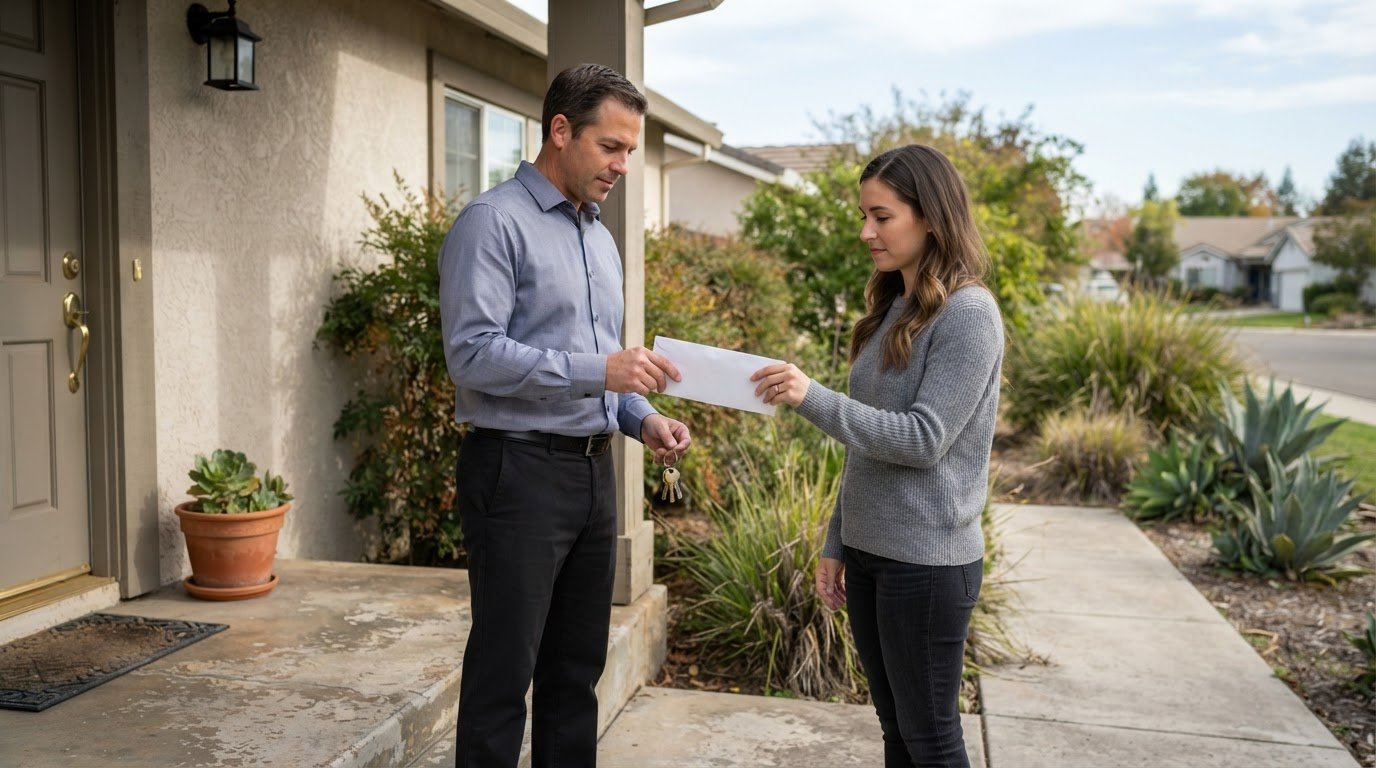
Property visits need clear communication and a legitimate purpose. California law requires landlords to provide proper notice before entering a rental property, except in limited emergency situations. Written notice, visits during reasonable hours, and entry limited to necessary purposes help set clear expectations. A message explaining that a visit concerns a specific repair is more useful than an unexplained arrival.
Keep important conversations in writing. After discussing a lease question by phone, send a brief summary of the topic, agreed next step, and any relevant date. If a tenant reports a concern about shared housing areas, record the report and response. This creates a consistent record and reduces confusion if the issue comes up again.
Respectful communication means listening before deciding how to respond. If a tenant says recurring noise affects sleep, acknowledge the concern, clarify when it occurs, and explain what follow-up will happen. Avoid making commitments before the facts are clear. A measured response shows the concern was heard without promising an outcome outside the landlord’s control.
Rent collection is another routine point of contact. Clear instructions explain how to submit payment and where to raise a question if a transaction appears incorrect. An owner and tenant portal can centralize payment details and records. If a payment question arises, respond with the relevant account information and a clear next step.
Quality tenants are more likely to build a stable relationship when expectations stay consistent throughout the lease. Apply the same communication process to routine questions, renewal discussions, and concerns about the property. For example, acknowledge a message, identify who will address it, and provide an update when circumstances change. Reliable follow-through matters more than polished wording.
Tenant relations also shape whether renters feel comfortable raising small concerns early. A tenant who can report a dripping faucet or ask about a lease clause without feeling dismissed may help prevent misunderstandings from growing. Use a calm tone, keep records factual, and avoid mixing unrelated issues in one conversation. These habits create a clearer experience for renters and owners alike.
5. Tenant satisfaction and owner returns
Rancho Cordova rental property tenant satisfaction influences owner returns through renewals, collected rent, and property care. When a tenant reports a concern early, the owner has a chance to address it before it affects the home. That makes satisfaction an operational factor, not simply a measure of friendliness.
Renters’ experiences differ by property and landlord, so no single description represents every Rancho Cordova tenant. One renter may value a well-kept home and clear lease terms, while another may prioritize timely repair updates. For owners, these examples point to controllable parts of the rental experience.
Property-management ratings and written reviews offer individual accounts, but they are not a citywide measure of tenant satisfaction. Read them for recurring themes, such as maintenance follow-up, payment clarity, or communication during a lease. A specific example is more useful than a star score without context.
Owners can connect tenant experience to returns by tracking a few operating signals together. Compare renewal decisions with maintenance records, rent collection, turnover work, and property condition. If tenants repeatedly raise the same issue, such as unclear payment instructions, improving that process may support smoother interactions and fewer avoidable disputes.
Neighborhood appeal matters, but it cannot replace consistent property oversight. A home near an amenity may attract interest, yet a confusing move-in process can weaken the first impression. Review each stage, from the listing and lease explanation to maintenance follow-through, to identify where expectations and actual service diverge.
Consider a tenant who reports a recurring plumbing issue before renewal. A documented response shows whether the concern was acknowledged, what repair followed, and whether the problem returned. This record helps an owner distinguish a one-time repair from a pattern that could affect the home’s condition or the tenant’s decision to stay.
Returns also depend on balancing rent with the costs of keeping a property ready and occupied. Raising rent without considering the renter’s experience may increase turnover risk; holding rent without addressing recurring maintenance can leave the underlying problem unresolved. Weigh renewal feedback alongside property condition and leasing activity before deciding what to improve.
Use a simple review cycle: gather tenant feedback, identify repeated concerns, assign follow-up, and assess the result at renewal. This gives owners a practical basis for improving the rental experience while protecting the property’s long-term performance. Explore rental management support for a more coordinated approach to the details that shape satisfaction and returns.
Renters’ experiences vary by property and landlord. They may value a well-kept home, clear lease terms, and timely repair updates, while individual ratings and reviews do not measure satisfaction across the city.
Home Showings Property Management: Property Management
Home Showings Property Management helps owners coordinate the rental process, from marketing a home to collecting rent. If managing listings, evaluating applicants, and organizing rent collection takes time away from other priorities, a structured approach can make ownership more manageable.
Rental Marketing presents a property to prospective renters, while Tenant Screening supports informed applicant decisions. Once a tenancy begins, Rent Collection provides a defined process for receiving payments. Together, these services cover key stages of renting and help owners manage details that shape the tenant’s experience and the property’s performance.
Consider property management when leasing tasks and ongoing rental operations become difficult to handle consistently. Contact Home Showings Property Management to discuss your rental property needs.
Make your next rental decision with confidence
Tenant experience is more than a goodwill measure. Treating Rancho Cordova rental property tenant satisfaction as an operating priority helps owners make thoughtful choices about communication, property care, and supporting a stable tenancy. Decide which parts of managing your rental need more consistent attention, whether preparing a listing, evaluating applicants, or organizing the overall process.
Home Showings Property Management offers Property Management, Rental Marketing, and Tenant Screening to support key stages of residential renting. If you’re ready to discuss how those services could fit your property and priorities, contact Home Showings Property Management. A clear conversation can help you identify a practical path forward for your rental.
Frequently Asked Questions
How satisfied are Rancho Cordova tenants with property maintenance and repair response times?
Tenant satisfaction varies by property and by how clearly maintenance concerns are handled. Assess whether tenants know how to report an issue, receive understandable updates, and learn when work is complete. For instance, asking whether a repair resolved the problem can reveal recurring concerns before they influence a renewal decision.
How do Rancho Cordova rental properties compare on amenities, safety, noise, and commute convenience?
No single comparison fits every rental because features and surroundings differ by address and unit. During a property visit, compare practical details such as parking, laundry, storage, entry lighting, and street noise. For commute convenience, consider the renter’s usual destination and travel time. A property that suits one household’s routine may be less convenient for another.

Comments