
How to Screen Tenants in California: A Step-by-Step 2026 Guide

What if the most critical detail about your next applicant is legally hidden from view until after you’ve handed over the keys? In 2026, California’s complex regulations like AB 2819 mean that many eviction records are automatically sealed for 60 days, making it harder than ever to spot a professional tenant who knows how to work the system. It’s a stressful reality for property owners who simply want to protect their investment and maintain a stable rental environment. We understand that establishing clear tenant screening criteria california landlords can rely on often feels like hitting a moving target.
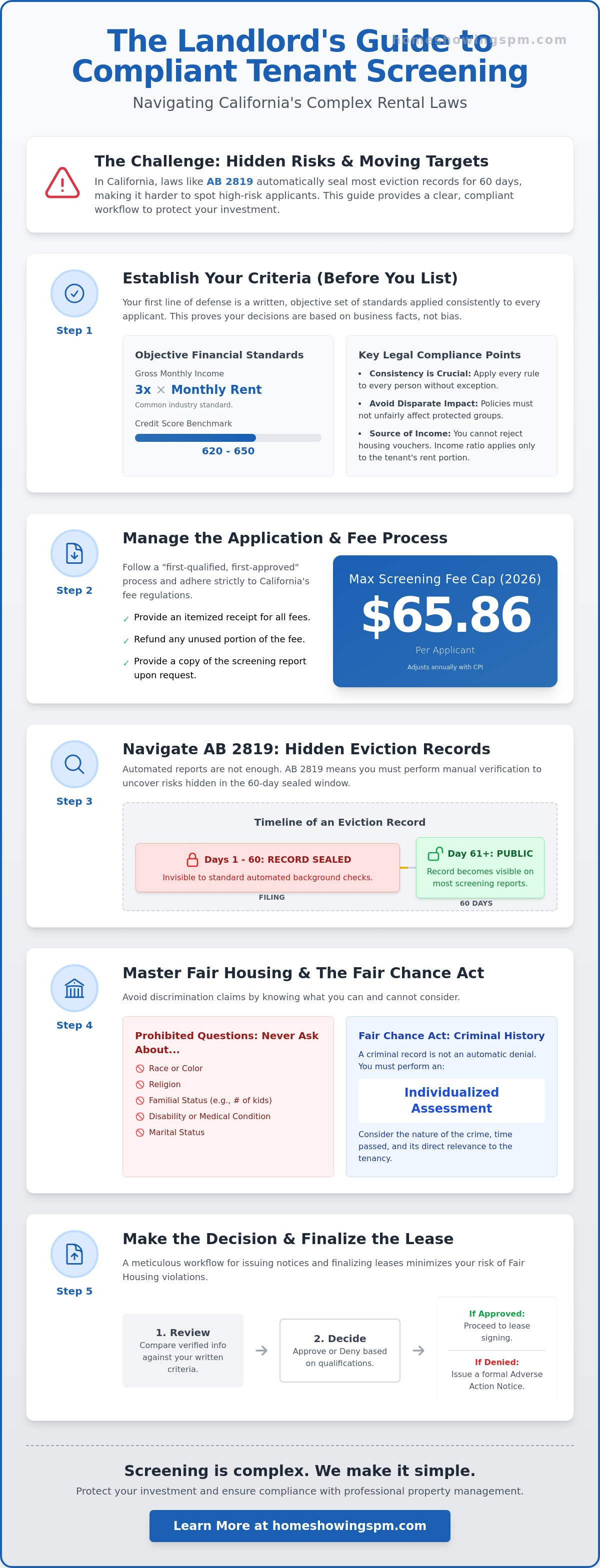
You want to be fair and follow the law, but you also need to ensure your rent is paid on time and your property is respected. This guide provides a meticulous, step-by-step workflow to help you manage the $65.86 fee cap, navigate the Fair Chance Act, and implement a first-qualified, first-approved process with total confidence. We'll walk through the exact checklist you need to stay compliant while selecting a resident who will care for your home as much as you do.
Key Takeaways
Define your written tenant screening criteria california standards before listing to ensure every applicant is treated with the same level of professional consistency.
Navigate the $65.86 screening fee cap and the "first-qualified, first-approved" mandate to keep your application process legally defensible.
Learn how to look beyond automated reports to uncover eviction records hidden by AB 2819 through strategic manual verification.
Protect your investment by mastering the timing and individualized assessments required by the Fair Chance Act when reviewing criminal histories.
Follow a meticulous workflow for issuing Adverse Action notices and finalizing leases to minimize the risk of Fair Housing violations.
Table of Contents
Establishing Your Legal Rental Criteria in California
If you start marketing your property without a written set of standards, you're already behind. In the meticulous world of California property management, your tenant screening criteria california document is your first line of defense against legal headaches. It isn't just about finding a good resident; it's about creating a repeatable, objective system that stands up to scrutiny. Before the first "for rent" sign goes up, you should have a clear list of requirements that every applicant must meet to qualify for your home.
Consistency is your best friend. Following the foundational principles of Landlord-tenant law ensures you don't accidentally cross into discriminatory territory. You must apply every rule to every person without exception. If you require a specific credit score for one applicant but waive it for another because they seemed trustworthy, you've opened the door to a potential fair housing claim. A written checklist proves that your decisions are based on business facts, not personal bias.
You also need to understand the concept of disparate impact. This occurs when a policy that seems neutral on the surface actually affects protected groups more than others. For example, a blanket ban on anyone with a criminal record might be seen as discriminatory. Instead, focus on specific convictions that directly threaten the safety of the property or other residents. In Sacramento, landlords must be especially cautious with source of income protections. You cannot refuse an applicant because they use a Housing Choice Voucher. Your income-to-rent ratio should only apply to the portion of the rent the tenant pays out of pocket, not the total monthly rent.
Fair Housing Compliance for Local Landlords
Prohibited questions are a major trap for the unwary. You can never ask a prospective tenant about their race, religion, familial status, or disability. Don't ask if a couple is married or how many children they have. Your marketing materials should reflect these legal screening standards by focusing on the property's features rather than the "type" of person you hope to attract. California's Fair Employment and Housing Act (FEHA) provides even broader protections than federal law, so staying organized and informed is vital for a worry-free experience.
Setting Objective Financial and Credit Standards
With the median rent in California hovering around $3,000 as of April 2026, setting realistic financial bars is essential. Most professional managers look for a gross monthly income of at least three times the monthly rent. For credit, a score between 620 and 650 is a common benchmark in the Sacramento market. If an applicant has a "thin" credit file or no history, you might consider alternative proof of financial responsibility, such as consistent utility payments or a larger security deposit, as long as you offer this option to all applicants who meet your other tenant screening criteria california standards.
The Application Process and Legal Fee Limits
Once you've finalized your tenant screening criteria california standards, the actual intake process begins. It's a structured sequence that protects both you and the applicant. Start by providing a comprehensive written application to every interested party. This isn't just about gathering names; it's about establishing a paper trail of fairness. In 2026, the maximum screening fee you can charge is $65.86 per applicant. This amount covers the actual out-of-pocket costs for background checks and the reasonable value of time spent processing the paperwork.
If you collect a fee, you must issue a receipt that itemizes these costs. It's a small step that builds massive trust. If an applicant asks for a copy of their screening report, California law requires you to provide one. This transparency is a cornerstone of California fair housing laws. If you find that managing these legal nuances is becoming a full-time job, professional property management can handle the entire workflow for you, ensuring every step is documented and compliant.
Calculating and Handling California Screening Fees
The fee cap isn't static. It adjusts annually based on the Consumer Price Index (CPI). For 2026, the $1.96 increase over the previous year's cap reflects these rising administrative costs. However, you can't just pocket the money. If you don't actually run the credit report or spend the time on verification, you must refund the unused funds to the applicant. Charging a fee without performing the service is a quick way to invite unwanted legal attention. You're only allowed to charge what you actually spend, up to that $65.86 limit.
Gathering Essential Documentation
Collecting IDs and proof of income requires a steady hand and a meticulous eye. You'll need government-issued identification and recent pay stubs or tax returns to verify financial stability. When dealing with Section 8 or other housing vouchers, remember that you're verifying the voucher's validity rather than the total rent amount. Since you're handling social security numbers and private financial data, managing this information securely is non-negotiable. Using secure digital portals can streamline this while ensuring you comply with strict privacy laws. This proactive approach keeps sensitive data out of reach and protects both parties throughout the selection process.
Running Background Checks and Navigating AB 2819
Relying solely on automated background checks in 2026 is a risky strategy for any property owner. While these reports are fast, they often miss the full picture due to California's strict privacy laws, specifically AB 2819. This law mandates that limited unlawful detainer cases are automatically sealed for 60 days from the filing date. A record only becomes public if the landlord wins the case within that narrow window. If a case is ongoing or settled privately, it may never appear on a standard eviction search. This means an applicant could have a pending eviction that your software simply cannot see.
To overcome this gap, your tenant screening criteria california process must involve deeper investigation. Smart landlords look for "hidden" signs of rental trouble on credit reports. Instead of just checking the score, look for collection accounts from property management firms or utility companies. These are often the footprints left behind by a tenant who skipped out on a previous lease. If you see a $3,000 debt to an apartment complex, it's a major red flag that an automated eviction report might have missed.
Criminal background checks require even more precision. Under the Fair Chance Act, landlords with five or more units cannot even ask about criminal history until after a conditional housing offer is made. Even then, you can't use a blanket "no felonies" policy. You're required to conduct an individualized assessment, considering the nature of the offense and how much time has passed. It's a meticulous process, but it's the only way to stay compliant while protecting your property.
Interpreting Credit and Eviction Data
Searching for Unlawful Detainer filings directly in Sacramento County court records can sometimes reveal cases that automated systems overlook. When reviewing credit, understand the difference between a soft pull and a hard pull. A soft pull doesn't impact the applicant's credit score, which many tenants prefer. However, you must be eagle-eyed when spotting collection accounts. A debt labeled with a previous landlord's name is often more telling than a court record that was sealed under AB 2819's 60-day rule.
Legally Using Criminal History in Screening
California generally follows a seven-year look-back period for reporting most criminal convictions. Before denying an applicant based on their history, you must perform an individualized assessment. This means looking at whether the past conduct directly affects the requirements of being a good tenant. Was it a one-time event ten years ago, or a recent pattern of behavior? Documenting your specific reasoning for a denial is vital. It creates a clear record that your decision was based on safety and risk management rather than prohibited discrimination.
The Art of Verification: Sleuthing Beyond the Report
If you rely solely on a credit score or a background check, you're only seeing half the picture. A report tells you what happened in the past; verification tells you what's happening right now. In the context of your tenant screening criteria california strategy, this is where the "sleuthing" begins. You need to verify that the person on paper matches the person who will be living in your property. This requires a proactive approach that goes beyond automated data and moves into human connection and operational oversight.
One of the most effective ways to get an honest assessment is to contact the landlord before the current one. Why? Current landlords might give a glowing review just to encourage a difficult tenant to move out. A previous landlord has no incentive to be anything but truthful. They can provide a clear view of how the tenant treated the property and whether they respected the terms of the lease over the long term. This simple step often uncovers the reality that a standard report might miss.
Mastering the Landlord Reference Call
When you pick up the phone, you're looking for consistency. Ask these three critical questions: Did the tenant consistently pay on time? Were there any documented lease violations? Most importantly, would you rent to them again? Be wary of "landlords" who answer via a personal cell phone and seem overly eager. To spot a fake reference, cross-reference the property address with local ownership records. If the name on the tax bill doesn't match the person you're speaking with, you might be talking to a friend rather than a housing provider. If you want to ensure your property is protected by these rigorous checks, our team offers professional tenant screening that handles these calls with meticulous precision.
Verifying employment follows a similar logic. Avoid calling the cell phone number provided on the application. Instead, look up the company's official business line and ask for the HR department or the applicant's supervisor. This ensures you're getting facts from an authorized source rather than a co-worker who's doing a favor. While you're at it, keep an eye out for gaps in the application. A missing year of rental history is often a sign of a prior issue that the applicant is trying to hide.
Verifying Income in the Gig Economy
Sacramento has a thriving community of self-employed and 1099 workers. When screening these applicants, paystubs aren't always available. You'll need to analyze at least three to six months of bank statements to identify stable income patterns. Look for regular deposits that align with their stated business activities. Consistent cash flow over several months proves a tenant's ability to meet monthly obligations more reliably than a high bank balance that could disappear after one large purchase.
Use social media with extreme caution. While it's tempting to search for an applicant online, doing so can expose you to information about protected classes, such as religion or family status. This could lead to an accidental Fair Housing violation. If you choose to look, stick to professional platforms like LinkedIn to verify employment history and titles. Any verbal inconsistencies during your initial walkthrough should be noted and investigated immediately to maintain the stability of your investment.
Making the Decision and Finalizing the Lease
The final stage of the screening journey is where your preparation pays off. In California, the first-qualified, first-approved rule is a critical compliance point that you can't ignore. If an applicant meets every one of your written tenant screening criteria california standards and is the first in line, you generally must offer them the property. This regulation, strengthened by AB 2493, ensures the process remains objective and fair for everyone involved. Moving quickly is essential, but moving correctly is what ultimately protects your asset from costly disputes.
When you find that ideal fit, the transition to a formal California Residential Lease Agreement should be seamless and well-documented. This contract solidifies the expectations you've set during the screening phase. For many owners, managing these timelines and legal notices is a heavy lift. Choosing professional property management in Sacramento eliminates the anxiety of missing a regulatory deadline or miscalculating a fee. It allows you to enjoy the benefits of property ownership without the constant weight of compliance-related stress.
The Legal Denial Process
If you must deny an applicant based on information found in their credit or background report, you're legally required to issue an Adverse Action notice. This letter isn't just a courtesy; it's a federal and state requirement. It must include the name and contact information of the consumer reporting agency you used. You also need to inform the applicant of their right to dispute the information and obtain a free copy of the report within 60 days. Keeping meticulous records of these communications for at least three years is vital for defending against potential discrimination claims.
Onboarding Your New Tenant
Once the lease is signed and the deposit is paid, your focus shifts to a successful move-in. Use this initial meeting to clearly outline how rent collection works and the specific protocol for requesting property maintenance. Conduct a thorough move-in inspection with high-resolution photos and detailed notes. This documentation serves as your final layer of property protection. It establishes a clear baseline for the home's condition before the keys are handed over, which is essential when it's time to handle the security deposit. If you're tired of navigating this legal minefield alone, let Home Showings Property Management handle your tenant screening and management needs for a truly stable and worry-free experience.
Securing Your Rental Future in California
Success in California's rental market requires a proactive approach that balances strict legal compliance with thorough verification. By establishing objective tenant screening criteria california standards and understanding the nuances of AB 2819, you've taken the first steps toward securing a reliable resident. It's about moving from a place of uncertainty to a position of controlled stability, ensuring every decision is backed by solid documentation and a clear, first-qualified workflow. These methodical steps are what ultimately transform a risky investment into a predictable source of income.
If navigating these complex state and local regulations feels like a heavy burden, we are here to help. Our team at Home Showings Property Management serves as your local guide in Sacramento and Elk Grove, utilizing a rigorous 10-point screening process to protect your asset. With real-time updates through our transparent owner portals, you can stay informed without the day-to-day stress of management. Let Home Showings Property Management handle your tenant screening so you can focus on the bigger picture of your investment. You don't have to face the legal minefield alone; we have the steady hand and local expertise to keep your rental property thriving.
Frequently Asked Questions
How much can a landlord charge for a screening fee in California in 2026?
In 2026, the maximum tenant screening fee is capped at $65.86 per applicant. This amount is adjusted annually for inflation and covers your actual out-of-pocket costs for reports and the time spent processing applications. If you spend less than this amount, or if you don't end up running a background check, you must refund the unused portion to the applicant.
Can I legally deny a tenant for having a criminal record in California?
You cannot use a blanket "no felonies" policy to deny an applicant. Under the Fair Chance Act, you must first make a conditional offer of housing before even asking about criminal history. If you then discover a conviction, you're required to conduct an individualized assessment to see if the past conduct directly affects the person's ability to be a good resident.
Do I have to accept the first person who applies for my rental?
Yes, if they meet your written requirements. California law generally requires landlords to follow a "first-qualified, first-approved" process. If the first person in line meets all your standards, you should approve them. If you choose to screen multiple people at once and pick someone else, you are legally required to refund the screening fees to all unsuccessful applicants.
What is AB 2819 and how does it affect my tenant screening?
AB 2819 is a law that automatically seals most eviction records for the first 60 days after a case is filed. The record only becomes public if the landlord wins the case within that window. This means automated reports might miss a pending eviction. To protect your property, you'll need to look for other signs of rental debt on credit reports or perform manual court searches.
Can a California landlord ask for a copy of a bank statement?
Yes, you can legally request bank statements to verify an applicant's income and financial stability. This is especially common when screening self-employed individuals or gig economy workers who don't have traditional paystubs. These documents help you confirm that the applicant has a consistent flow of funds to cover the monthly rent and other living expenses.
Is it legal to screen tenants based on their credit score in California?
It is entirely legal to use credit scores as part of your tenant screening criteria california standards. However, you must apply the same score requirement to every applicant to avoid discrimination claims. If you're screening a tenant with a housing voucher, remember that you should only evaluate their credit based on their ability to pay their specific portion of the rent.
What happens if I don’t provide an Adverse Action notice?
If you deny an applicant based on their credit or background report without providing an Adverse Action notice, you're violating both federal and state laws. This leaves you vulnerable to lawsuits and fines from regulatory agencies. The notice is a vital piece of documentation that proves you followed the correct legal steps during the denial process.
How do I verify a tenant’s income if they are self-employed?
Verify self-employed income by requesting three to six months of personal or business bank statements along with the previous year's tax returns. Look for steady deposits rather than just a high ending balance. You can also ask for 1099 forms or a profit and loss statement to get a clearer picture of their long-term financial health and ability to pay rent consistently.



Comments