
Folsom Rental Property Move-Out Inspection: A 2026 Checklist

What if the hardest part of a move-out inspection isn’t spotting a problem, but showing what changed? A thorough Folsom rental property move-out inspection gives you a clear way to compare the home with move-in records, document its condition, and decide what needs attention next.
It can be hard to tell cleaning needs, damage, and normal wear apart, especially when you’re checking every room on a deadline. California also requires landlords to photograph a property’s condition after a tenant moves out and before cleaning or repairs begin. For tenancies that started on or after July 1, 2025, move-in photos are required too, making dated, organized records especially useful.
This checklist covers what to inspect, which notes and photos to capture, and how to compare findings fairly with the original condition. You’ll also learn how to sort observations into practical repair and turnover steps, while keeping California’s deposit process in mind.
Table of Contents
Folsom Rental Property Move-Out Inspection: What Owners Should Document
How to Inspect Each Room and System During a Rental Move-Out
Normal Wear, Damage, and Cleaning: How to Assess Findings Fairly
A Practical Folsom Move-Out Inspection Workflow: Before, During, and After
How Professional Property Management Supports Folsom Rental Turnover
Folsom Rental Property Move-Out Inspection: What Owners Should Document
A quick walk-through can leave important details to memory: which wall had a mark, whether the refrigerator worked, or what the patio looked like before repairs. A Folsom rental property move-out inspection works best as a consistent record of observable condition, not an informal impression or an immediate judgment about blame. Document what you see first, then compare it with earlier records and decide what needs follow-up.
The lease, move-in condition report, dated photos, prior inspection notes, and maintenance history give each finding useful context. A scuff visible at move-out, for example, may already appear in the move-in photos. A stain could relate to a maintenance request. That context matters when assessing a security deposit; the linked overview is general information, not California-specific guidance.
Use the same room-by-room checklist throughout the property, covering:
Access: Record keys, remotes, and any areas you couldn’t enter.
Safety: Note visible concerns such as damaged locks, exposed wiring, or missing alarms.
Cleanliness: Describe the specific areas needing attention instead of writing only “dirty.”
Fixtures and surfaces: Check doors, windows, walls, floors, cabinets, and installed fixtures.
Appliances and systems: Record visible condition and whether you could check operation with utilities available.
Exterior areas: Include patios, yards, garages, and other spaces provided with the rental.
What to gather before inspecting a Folsom rental
Bring the signed lease, move-in report, previous inspection records, and maintenance requests. Prepare a room-by-room checklist, camera, flashlight, and a way to date your notes. At the start, record the inspection date, who is present, access limitations, and whether utilities are on. Folsom properties have different layouts, so include relevant spaces such as an attached garage, patio, or yard. Note weather exposure only when it helps describe an observed condition, such as exterior wear.
How to make the condition record useful
Describe each finding by location and observable detail. “Two-inch chip on the kitchen counter near the sink” is clearer than “counter damaged.” Take dated photos showing both the full area and a close view of the detail. Keep observations separate from conclusions. Record “dark mark on bedroom wall” rather than labeling it chargeable damage before comparing the evidence and reviewing the property history. A factual record makes follow-up easier to assess fairly.
How to Inspect Each Room and System During a Rental Move-Out
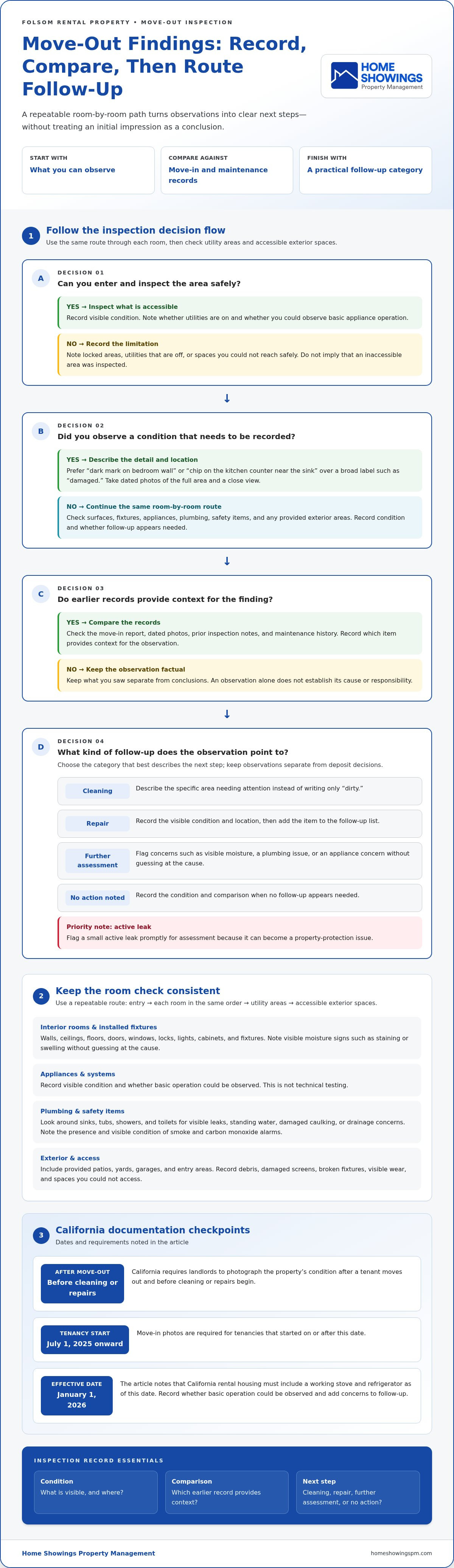
A repeatable route makes the walkthrough easier to complete and compare with earlier records. Start at the entry, move through each room in the same order, then check utility areas and accessible exterior spaces. For each item, record its visible condition, the relevant move-in or maintenance record, and whether follow-up is needed. If a closet is locked, utilities are off, or an area can’t be reached safely, note that limitation rather than implying it was inspected.
Interior rooms, surfaces, fixtures, and appliances
In each room, check walls, ceilings, floors, doors, windows, locks, lights, cabinets, and installed fixtures. Look for visible signs of moisture, such as staining or swelling, and record the location without guessing at the cause. Separate cleaning observations from physical damage, then compare both with the move-in report and dated photos.
For appliances, note visible condition and whether you could observe basic operation. For example, record whether the refrigerator appears to cool or the stove burners appear to operate, but don’t describe this as technical testing. California requires rental housing to include a working stove and refrigerator as of January 1, 2026. Add any appliance concern to the follow-up list.
Plumbing, safety items, and exterior areas
Check around sinks, tubs, showers, and toilets for visible leaks, standing water, damaged caulking, or drainage concerns. Flag a small active leak promptly for assessment because it can become a property-protection issue. Note whether smoke and carbon monoxide alarms are present and their visible condition. Verify applicable requirements before drawing conclusions about compliance.
Continue through accessible patios, yards, garages, and entry areas. Record debris, damaged screens, broken fixtures, or visible wear, and note any area you couldn’t access. Folsom homes vary in their exterior layouts and exposure, so focus on actual conditions rather than assuming weather caused a particular mark or deterioration.
Condition: Describe what is visible and where it is.
Comparison: Identify the move-in photo, report, or maintenance record that provides context.
Next step: Mark whether cleaning, repair, further assessment, or no action appears needed.
Keep deposit-related decisions separate from the walkthrough. The California Courts’ guidance on security deposits explains the state process and how inspection records fit into the broader review. For ongoing rental oversight, residential property inspections help keep property condition documented over time.
Normal Wear, Damage, and Cleaning: How to Assess Findings Fairly
A mark or repair need isn’t automatically a tenant-caused expense. Normal wear and tear is the unavoidable deterioration of a rental property from ordinary use over time, and it is generally the owner’s responsibility. A fair assessment starts with the move-in condition, not just the move-out appearance. Use the Folsom rental property move-out inspection to organize evidence and follow-up, not to assign responsibility before reviewing the records.
Compare evidence before reaching conclusions
Match each move-out observation with the closest comparable move-in photo and condition-report entry. Check whether the item was already worn, repaired, or reported during the tenancy. If the baseline is missing or unclear, mark the finding as uncertain rather than filling gaps with assumptions. Lease terms matter, but they don’t replace assessing the condition and applicable law.
Age also affects a fair review. A surface that has deteriorated over time shouldn’t be assessed in the same way as a newly broken item. Keep the evidence, maintenance history, and your interpretation distinct in the inspection record.
Apply California deposit rules carefully
California Civil Code section 1950.5 governs security-deposit deductions and returns. In general, deductions may cover permitted cleaning or repairs beyond ordinary wear, not routine upkeep or pre-existing conditions. The deposit and any required itemized statement are due within 21 calendar days after the tenant vacates. For current guidance, review the California Landlord/Tenant Guide and the statute. An inspection record supports the review, but it doesn’t make the final legal decision about a deduction.
Keep the sequence clear: record the condition, compare supporting records, identify follow-up, then assess proposed deductions under current law. This makes decisions more consistent and explainable.
A Practical Folsom Move-Out Inspection Workflow: Before, During, and After
A set sequence turns the walkthrough into a manageable handoff from inspection to turnover. Use this workflow to keep records organized and make sure urgent issues don’t get buried among routine cleaning or cosmetic work.
Prepare before the inspection. Review the lease, move-in condition report, photos, prior inspection notes, and maintenance requests. Set up a checklist in property order, plan access to each area, and note any rooms or systems that may be inaccessible. Confirm inspection and handover arrangements with the tenant using the lease and your communication records.
Walk in checklist order. Record each room before moving on. For every relevant finding, note the location, observable condition, comparison record, and follow-up needed. Take photos with enough surrounding context to identify the room and item, then add closer views when a detail needs clarification.
Document the handover. List keys, remotes, and other access devices provided, and compare them with the lease and handover records. Note missing items or access limitations factually, without assuming why they’re missing.
Sort findings by priority. Separate active safety or water concerns from routine maintenance, cleaning, cosmetic observations, and items requiring further review. This helps you address a leak promptly while keeping lower-priority turnover tasks visible.
Coordinate and close the loop. Arrange appropriate maintenance, track cleaning and repair follow-up, and retain work records with the inspection documentation. A Sacramento rental property maintenance guide offers additional context for planning repairs and preserving the property.
Keep the inspection record and legal steps distinct
The inspection documents condition; it doesn’t replace required notices or determine deposit deductions on its own. California rules include a tenant’s right to request a pre-move-out inspection during the final two weeks of the tenancy. A deposit return and itemized statement are generally due within 21 calendar days after the tenant vacates. Requirements can depend on the circumstances, so verify current California law, including notice procedures, photo documentation, accounting, and deadlines before acting.
For broader oversight beyond turnover, read this professional property management guide for Sacramento owners. To bring consistent inspection records and maintenance coordination into your rental oversight, explore residential property management in Folsom.
How Professional Property Management Supports Folsom Rental Turnover
Some owners prefer to handle every inspection and turnover task themselves. That can work well when they have time to visit the property, keep records organized, and coordinate follow-up. Professional oversight can help when an owner lives outside the area, manages multiple rentals, or has limited time to track maintenance after a tenant leaves. The aim is to create a steady process for documenting conditions and moving findings toward action while keeping the owner informed.
Consistent records keep owners informed
A Folsom rental property move-out inspection is more useful when its notes and photos follow a consistent format. Property inspections create a clear record of observed conditions, while regular inspections add context over time. That history helps show what has changed and what needs further review. Records support communication and decision-making, but they can’t guarantee there won’t be a disagreement or replace a careful review of applicable requirements.
Clear reporting matters, too. Owners need to understand what was observed, where it was found, and what follow-up is being considered. Digital owner and tenant portals provide channels for communication and reporting, helping keep inspection information and related updates organized.
Turn inspection notes into coordinated follow-through
Inspection findings help organize turnover work. A visible leak may need maintenance assessment, while a cleaning item can be tracked separately from a repair. Coordinated maintenance connects observations with practical follow-up, and keeping work records alongside inspection notes preserves a useful property history. The process works best when each next step and how updates will be shared are clear.
Home Showings Property Management supports residential rentals in Folsom and the Sacramento region with property inspections, maintenance coordination, and owner and tenant portals. Consistent documentation can make turnover easier to oversee, whether you manage a single home yourself or want a more coordinated approach. For local property management support, explore how professional oversight can fit into your rental’s ongoing care.
Make Your Next Rental Turnover More Organized
A reliable Folsom rental property move-out inspection gives you more than a list of issues. It creates a consistent record to compare with move-in documentation, helps distinguish routine wear from concerns that need review, and turns findings into an orderly plan for cleaning, maintenance, and turnover.
Keep observations factual, preserve dated photos and relevant records, and review current California requirements before making deposit decisions. When inspection notes connect to clear communication and follow-up, it’s easier to keep property care on track.
Home Showings Property Management supports residential rentals in Folsom and the Sacramento region with regular property inspections, coordinated maintenance, and digital owner and tenant portals for communication and reporting. If you’d like a more coordinated approach to property oversight, explore residential property management support.
A steady process can make each turnover more manageable and help you prepare confidently for the next step.
Frequently Asked Questions
What should a landlord check during a rental property move-out inspection?
Check each room, major system, and accessible exterior area using the same route and checklist. Review walls, floors, doors, windows, locks, fixtures, appliances, plumbing, visible moisture, safety items, patios, yards, and garages. Note cleanliness separately from physical damage, and record any areas you couldn’t access. Compare observations with move-in records and maintenance history before deciding what needs cleaning, repair, or further assessment.
Can a landlord charge a tenant for normal wear and tear in California?
No. California landlords generally can’t deduct from a security deposit for normal wear and tear, meaning deterioration from ordinary use over time. A proposed deduction must be allowed under California Civil Code section 1950.5 and supported by the circumstances and records. Consider the item’s move-in condition, age, tenancy, and maintenance history. A mark or repair need alone doesn’t establish that the tenant is responsible.
How do I document a Folsom rental move-out inspection?
Use a dated, room-by-room checklist, write factual descriptions, and take clear photos showing both the full area and relevant details. Compare findings with move-in records and note access or utility limits. California requires move-out photos before cleaning or repairs when documenting potential deposit deductions; move-in photos are required for tenancies beginning on or after July 1, 2025. The same approach applies to rentals in Sacramento, Roseville, Elk Grove, Rancho Cordova, Natomas, North Lake Sacramento, El Dorado Hills, Citrus Heights, and Carmichael.
Does a landlord have to attend a move-out inspection in California?
California law doesn’t generally require the landlord to personally attend the final condition review after the tenant leaves. However, landlords must notify tenants in writing of their right to request a pre-move-out inspection during the final two weeks of the tenancy. If requested, the inspection must be conducted with at least 48 hours’ written notice, and the tenant must receive an itemized list of potential deductions so they have an opportunity to address them.
When must a California landlord return a security deposit after move-out?
A California landlord generally must return the security deposit and provide an itemized statement of any deductions within 21 calendar days after the tenant vacates. If making deductions, keep records supporting each amount. For cleaning or repairs costing more than $125, California law generally requires copies of invoices or receipts; if the landlord or an employee does the work, the statement must describe the work, time spent, and reasonable hourly rate.
Should a move-out inspection checklist include normal cleaning?
Yes. Record cleaning needs separately from damage, and compare cleanliness with the documented move-in condition. Describe specific areas, such as an unclean oven or debris left in a garage, instead of using a general label like “dirty.” A checklist helps identify what needs attention, but not every cleaning task automatically supports a deposit deduction. Review the lease, condition records, and current California requirements before making that decision.
What happens if a move-out inspection finds repairs or damage?
Document the condition with dated notes and photos, compare it with move-in records and maintenance history, then decide whether it needs urgent assessment, routine maintenance, cleaning, or further review. Address active leaks or safety concerns promptly. Keep repair records with the inspection file. If considering a security-deposit deduction, verify that it’s permitted under California Civil Code section 1950.5 and include the required itemization and supporting documentation within the legal deadline.



Comments